



Your body doesn't know the difference between a looming work deadline and a literal predator. When cortisol floods your system, you can't just think your way out of it. You have to send your brain physical safety signals to clear the chemical backlog.

Jump to the 15 cortisol-lowering strategies
The Biological Stress Cycle
Most of us treat stress like an emotion we need to suppress. Research suggests it is actually a physical cycle we need to complete. When a perceived threat triggers your adrenal glands, your heart rate spikes, your digestion slows down, and your muscles flood with energy. If you sit at a desk and answer emails through that adrenaline spike, the cortisol has nowhere to go.
You can't just think your way out of a cortisol spike. You have to send your brain physical safety signals to clear the chemical backlog.
Lowering your baseline stress isn't about ignoring your to-do list. It's about giving your nervous system the specific biological cues it needs to stand down. What worked for me when I was managing a dual diagnosis of high blood pressure and Type 2 diabetes alongside a busy household wasn't trying to magically eliminate stress. It was learning how to flush it out of my body effectively.
15 Ways to Reduce Cortisol Naturally
1. Use the Physiological Sigh
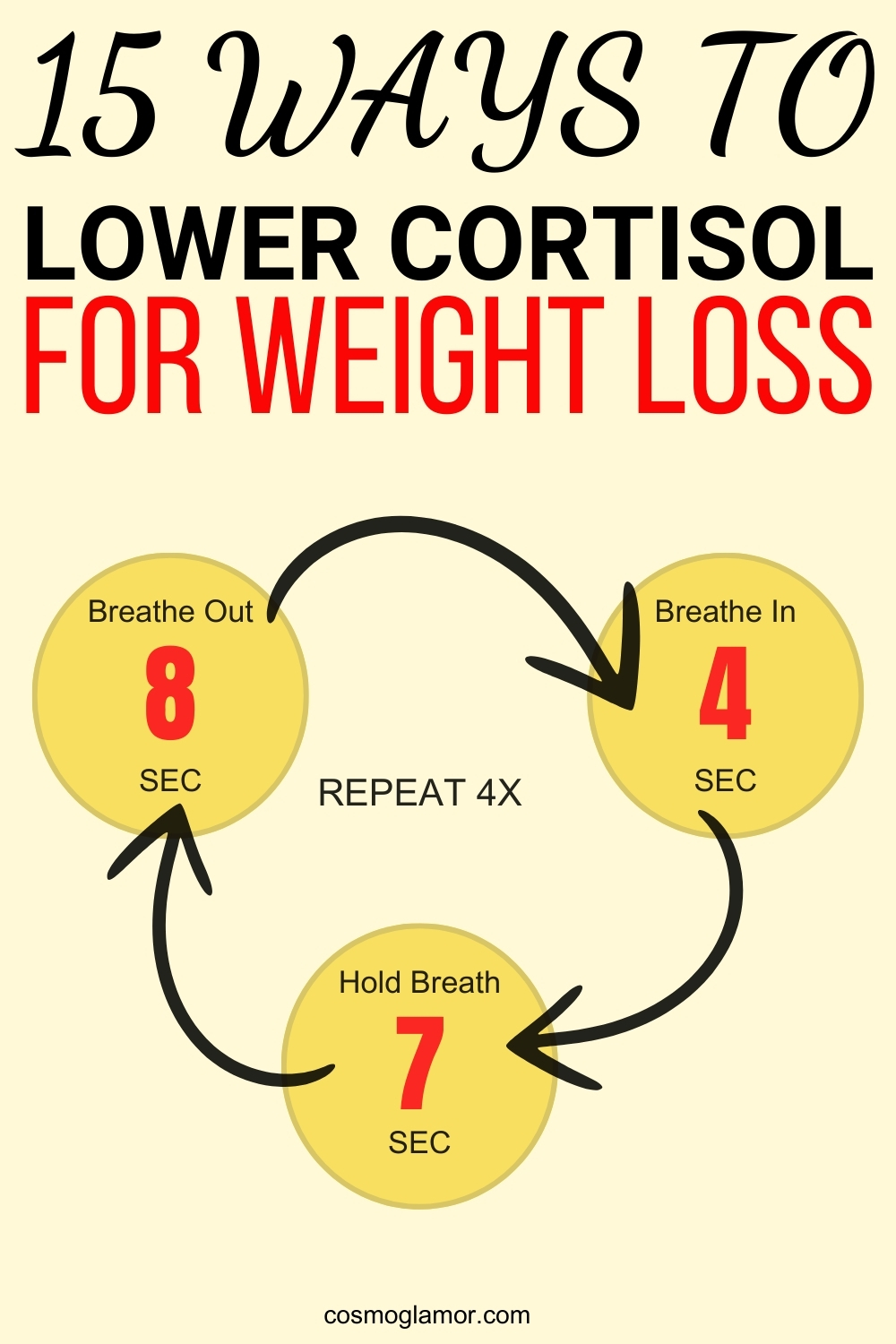
When you feel the panic rising in your chest, take two quick, sharp inhales through your nose, followed by one long, slow exhale through your mouth. Repeat this breath pattern three times. The double inhale helps expand the tiny air sacs in your lungs, while the extended exhale activates the parasympathetic nervous system, nudging your body toward a calmer state. Try to make the exhale last at least twice as long as the inhale for the best result.
2. Step Outside Within an Hour of Waking
Don't look at your phone; look at the sky. Aim for 10 to 15 minutes of natural sunlight exposure early in the morning. Early morning light triggers a healthy, necessary cortisol spike that sets your circadian rhythm, ensuring those hormone levels naturally drop by the time you need to sleep. If you wake up before the sun, flip on your bright overhead lights immediately and step outside later. On cloudy days, double your time outside to 20 or 30 minutes, as the light intensity is significantly lower.

3. Chew Your Food Until It's Liquid
It sounds incredibly basic, but digestion is closely linked to your nervous system. Chew your next meal at least 20 times per bite. The mechanical act of chewing stimulates the vagus nerve, which runs straight from your gut to your brain and acts as a biological brake pedal for anxiety. 🥗
4. Swap High-Intensity Intervals for Steady Movement
Pushing to your absolute maximum during a workout temporarily spikes cortisol. If you are already running on fumes, a HIIT class might do more harm than good. A brisk 30-minute walk, a swim, or a structured routine focused on mobility helps you move through the stress response rather than compounding it. Always listen to your body and adjust your intensity based on how much energy you actually have.
5. Eat a Savory, Protein-Heavy Breakfast
Starting your day with a pastry or sugary cereal sets you up for a glucose crash by 10 a.m. When your blood sugar plummets, your body releases stress hormones to stabilize your energy. Opt for eggs, avocado, leftover chicken, or a generous scoop of hemp seeds mixed into plain Greek yogurt to keep your morning chemistry perfectly flat.

6. Immerse Your Face in Cold Water
Fill a bowl with cold tap water and a few ice cubes, take a deep breath, and submerge your face for 10 to 15 seconds. Splashing freezing water on your cheeks and nose triggers the mammalian dive reflex, which can help interrupt a panic loop by lowering your heart rate. If you are at the office, grab an ice cube from the breakroom and hold it against your wrist or the back of your neck for a minute instead.
7. Incorporate Magnesium-Rich Foods
Magnesium acts as a chemical buffer against stress, but our bodies burn through it rapidly when we are anxious. Toss a quarter-cup of pumpkin seeds into your afternoon salad or snack on an ounce of dark chocolate (70% cacao or higher) to help replenish your reserves without needing an extra supplement.
8. Do a Literal Shake-Out
Notice how a dog shakes its entire body after a tense encounter with another animal at the park? They are discharging built-up adrenaline. Stand up and aggressively shake your arms, legs, and torso for 30 seconds. It feels ridiculous, but it physically signals the end of a threat to your nervous system.
9. Listen to Ambient, Low-Frequency Music
Put on a playlist of rhythmic, ambient music sitting at around 60 beats per minute. Slow, steady music can help calm heart rate and blood pressure, nudging you toward a resting rhythm. You don't need a specialized app; just search “60 bpm ambient” on YouTube or Spotify to find hours of free, continuous tracks.
10. Drink a Glass of Warm Water Before Bed
Going to sleep slightly dehydrated is perceived by the body as a mild survival threat, which keeps baseline stress hormones elevated overnight. Keep a glass of water on your nightstand and drink roughly eight ounces about an hour before you lie down.
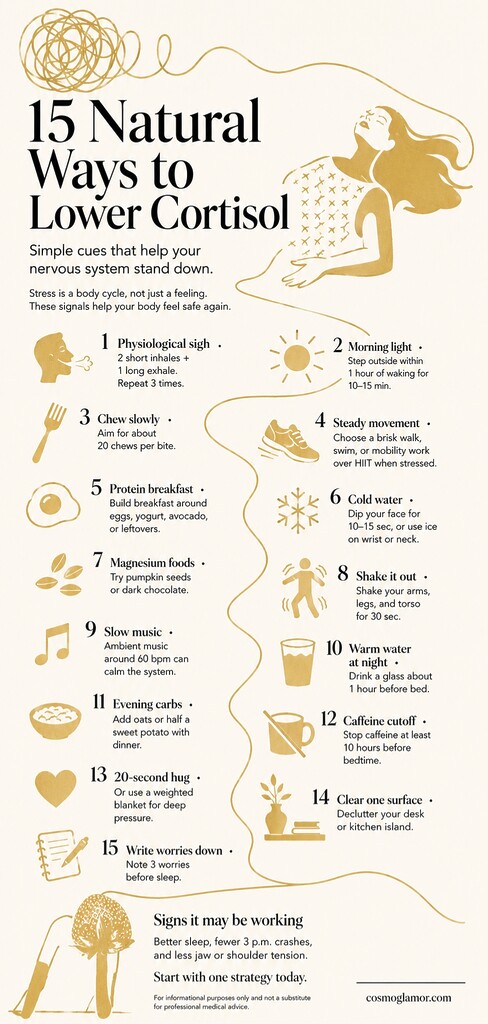
11. Prioritize Complex Carbs in the Evening
While a low-carb breakfast keeps morning energy stable, eating half a sweet potato or a small serving of oats with dinner helps your brain produce serotonin. That serotonin easily converts to melatonin, preparing your body for restorative sleep. ✨
12. Set a Hard Cutoff for Caffeine
Caffeine can affect sleep many hours later. That means your 3 p.m. cold brew may still be nudging your system awake at 10 p.m. Stop drinking caffeinated beverages at least 10 hours before your target bedtime.
13. Give a Lingering, 20-Second Hug
A quick pat on the back doesn't cut it. Extended physical touch with a partner, a child, or a pet releases oxytocin. This kind of touch can buffer the stress response, helping your body feel safer instead of more guarded. If you live alone, resting under a weighted blanket (ideally 10% of your body weight) provides a similar deep-pressure cue to your nervous system.

14. Declutter One Single Surface
Visual clutter constantly competes for your brain's attention, keeping your central nervous system on low-level alert. You don't need to reorganize your entire garage. Clearing just your immediate desk space or the kitchen island removes that environmental friction.
15. Write Down Tomorrow's Worries Tonight
Keep a notepad by your bed. Before you turn off the light, write down the three things stressing you out about tomorrow. Transferring a mental loop onto paper can help you fall asleep faster, signaling to your nervous system that it no longer needs to stay awake to remember the threat. 📚
Frequently Asked Questions
How long does it take for cortisol levels to drop?
If you use an immediate physiological tool like the sighing breath technique or a cold water plunge, your heart rate and acute adrenaline will drop within minutes. However, recovering from chronic, long-term cortisol elevation often takes a few weeks of consistent routine changes, especially regarding sleep and morning light exposure.
How do I know if these strategies are working without a blood test?
You will likely notice the changes in your sleep quality and energy crashes first. Waking up feeling rested, experiencing fewer sugar cravings around 3 p.m., and feeling less tightness in your jaw and shoulders are reliable everyday indicators that your baseline stress is stabilizing.
Pick just one strategy from this list to try today. Your nervous system doesn't need an overhaul; it just needs a little proof that you are safe right now.
Sources
- Cyclic sighing can help breathe away anxiety – Stanford Medicine, 2023.
- Transition from dim to bright light in the morning induces an immediate elevation of cortisol levels – Journal of Clinical Endocrinology & Metabolism, 2001.
- Acute effect of HIIT on testosterone and cortisol levels in healthy individuals – Scandinavian Journal of Medicine & Science in Sports, 2021.
- Physiology, Diving Reflex – StatPearls, 2022.
- The effect of classical music on heart rate, blood pressure, and mood – Cureus, 2022.
- The effect of caffeine on subsequent sleep – Sleep Medicine Reviews, 2023.
- Keep Calm and Cuddle on – Adaptive Human Behavior and Physiology, 2016.
- The effects of bedtime writing on difficulty falling asleep – Journal of Experimental Psychology: General, 2018.