

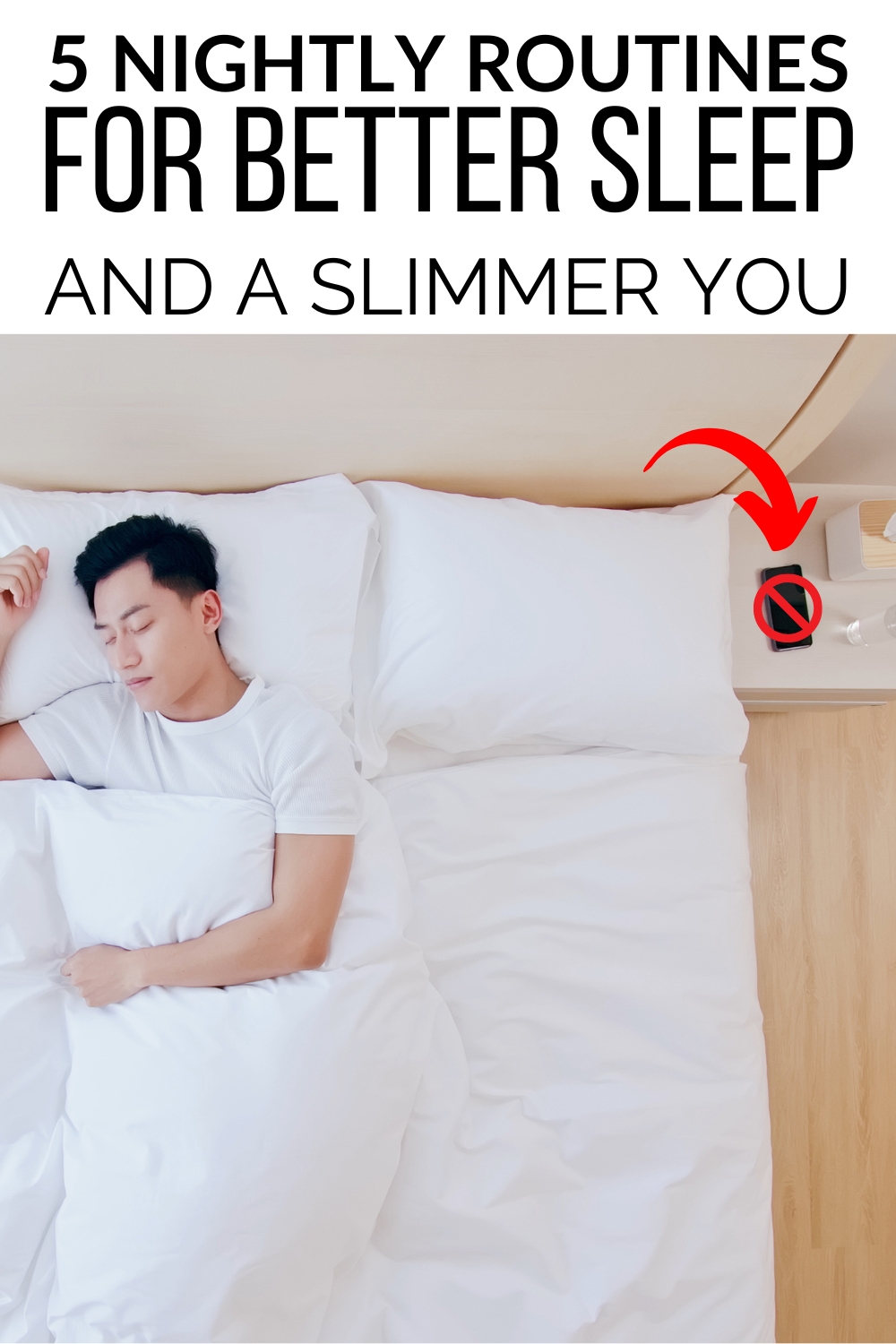



When I finally started paying attention to my metabolic health, I thought the battle was won and lost in the kitchen. I was wrong. The way you spend your final two hours awake can influence whether your body heads into the night metabolically steady or playing catch-up.

The Missing Metabolic Link
When I was staring down a dual diagnosis of type 2 diabetes and high blood pressure, I completely overhauled my daily meals and started a functional movement routine. I lost the first few pounds, but my morning fasting blood sugar stubbornly refused to budge. I was exhausted all the time. It wasn't until I started treating my evening routine with the same respect as my grocery list that my numbers really shifted.
Research shows that poor sleep can shift hunger hormones. Ghrelin, the hormone that signals hunger, may go up. Leptin, the hormone that tells you you are full, can shift too. You wake up biologically primed to crave quick, sugary energy.
“Your body views chronic sleep deprivation as a state of emergency, and bodies in a state of emergency hold onto everything.”
By shifting a few small habits, I was able to calm my nervous system enough to get the deep, restorative rest my body needed. This evening playbook is a major reason I eventually dropped 50 pounds, brought my blood pressure down to 120/80 mmHg, and lowered my A1C from 7.8% to 6.1%.
The 5 Bedtime Rituals
You do not need a perfectly serene, silent house to make these work. They are built for real life.
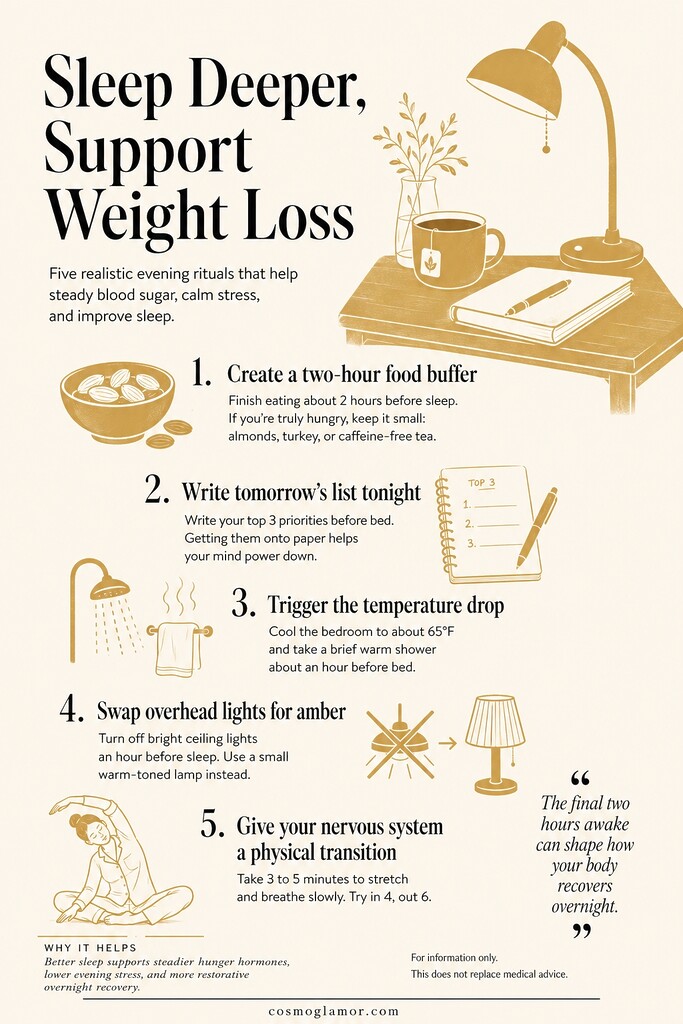
1. Create a two-hour food buffer
The classic diet advice is to stop eating at 6:00 PM. If you are balancing a full workday and a family, that is rarely happening. Instead, aim for a clean two-hour buffer between your last bite of food and the moment your head hits the pillow.

Digesting a heavy meal can keep your body more metabolically active when you want it winding down. Eating late can also push more of your post-meal glucose and insulin response into your sleep window, which is not what your body wants when it is trying to settle down. If you are genuinely hungry and cannot sleep on a growling stomach, have a small snack like roughly a dozen almonds or a single slice of turkey to take the edge off without demanding massive digestive effort. If you need a warm drink, stick to plain water or a caffeine-free herbal tea like chamomile.
2. Write tomorrow's list tonight
Anxiety is the enemy of rest. When you lie in the dark worrying about tomorrow's schedule, your cortisol levels rise. Elevated cortisol can make it harder to feel settled, and chronic stress-related cortisol patterns are linked with abdominal fat storage.

Keep a simple notebook on your nightstand and write down your top three priorities for the next day. Getting the logistics out of your head and onto paper signals to your nervous system that the threat is handled. Keeping the list capped at exactly three items prevents it from becoming another source of stress, allowing your brain to safely power down.
3. Trigger the temperature drop
Your ability to fall and stay asleep is highly dependent on thermal regulation. Your core body temperature needs to drift downward to initiate and sustain sleep.

Drop your bedroom thermostat to around 65°F and take a brief, ten-minute warm shower an hour before bed. When you step out of the warm water into the cool air of your bedroom, your body temperature rapidly drops. This physical shift acts as a biological trigger, signaling to your brain that the sun has set and it is time to release melatonin.
4. Swap overhead lights for amber
We've all heard that blue light from phones ruins sleep, but the bright overhead lights in your bathroom and hallway can do more damage than most of us realize. Staring into bright, full-spectrum light at 10:00 PM tricks your circadian rhythm into believing it is still mid-afternoon.
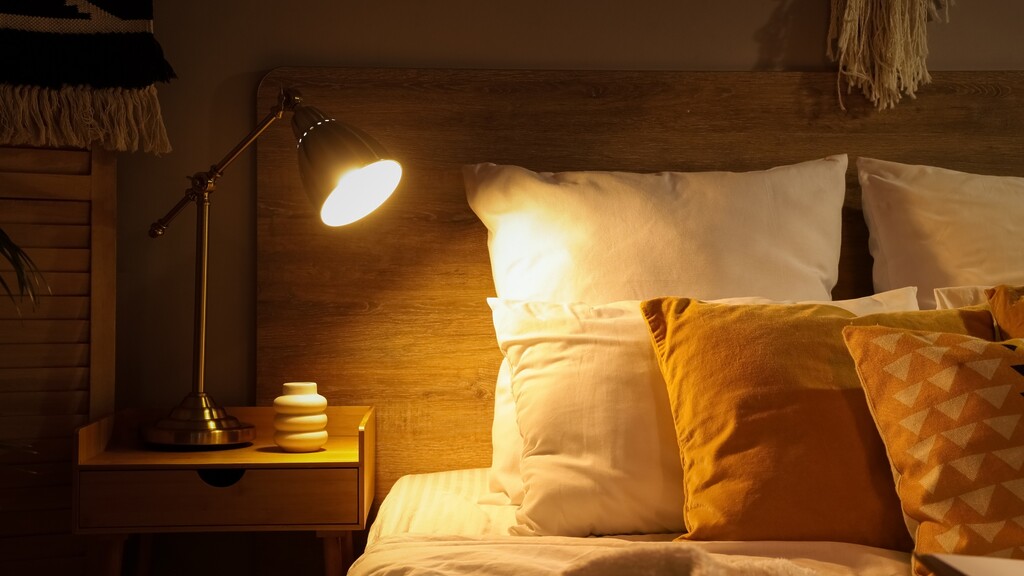
Turn off all ceiling lights an hour before sleep and switch to a small amber or red-toned lamp equipped with a low-wattage bulb under 40 watts. Warmer, dimmer light tends to suppress melatonin less than brighter, blue-heavy light does. If you read before bed, use a warm-toned bulb clip rather than a bright white LED, making it significantly easier to drift off when you finally close your book.
5. Give your nervous system a physical transition
You cannot sprint through evening chores, fold the last basket of laundry, reply to a final email, and expect to immediately flatline into deep sleep the moment you hit the mattress. Your body needs a bridge.

Spend three to five minutes doing a deliberate physical transition to slow your heart rate. This does not have to be a full yoga flow. I sit on the edge of my bed and do a slow, seated forward fold to ease the tension in my lower back, followed by about ten rounds of simple breathing: inhaling for four counts, and exhaling for six. Slow breathing can help move your nervous system from a stressed fight-or-flight state toward a calmer rest-and-digest state, which is exactly the kind of signal your body needs to settle in and recover overnight.
Frequently Asked Questions
What if I wake up hungry in the middle of the night?
If you regularly wake up at 2:00 AM with a gnawing stomach, it may mean your daytime meals are lacking, though people with diabetes should make sure low blood sugar is not the issue. If low blood sugar is not the issue, instead of automatically eating in the middle of the night, which can wake your digestion back up and make it harder to settle, drink a few sips of water. The next day, audit your meals and make sure you are getting enough protein and healthy fats, especially at dinner, to carry you safely through the night.
Does one bad night of sleep ruin my weight loss progress?
No. Your metabolism operates on a rolling average, not a daily perfection scale. If you have a terrible night of sleep, your cortisol and blood sugar might be slightly elevated the next day. You will likely feel hungrier than usual. Acknowledge the biological reality, drink plenty of water, stick to your normal meals, and focus on getting back to your evening routine that night.
Start Small Tonight
You do not have to overhaul your entire night all at once. Trying to force five new habits into a busy evening will just spike the exact stress you are trying to lower. Pick the one ritual that feels like a relief rather than a chore, whether that is turning off the harsh overhead lights or spending five minutes writing out tomorrow's worries, and start there tonight.
Sources
- Short sleep duration and appetite-regulating hormones – Obesity Reviews, 2020.
- Metabolic effects of late dinner – Journal of Clinical Endocrinology & Metabolism, 2020.
- Stress and obesity review – Current Obesity Reports, 2018.
- Warm shower or bath before bedtime and sleep – Sleep Medicine Reviews, 2019.
- Evening light spectrum and melatonin suppression – Physiology & Behavior, 2017.
- Slow-paced breathing effects review – Mindfulness, 2024.
- Hypoglycemia signs, symptoms, and treatment – American Diabetes Association, 2026.