



Most diets fail because they require a spreadsheet and endless willpower to manage. Intermittent fasting for beginners is the exact opposite. It is a weight loss strategy built entirely on doing nothing for a few hours a day. Here is how to make lazy intermittent fasting work when you have zero bandwidth for complicated rules.
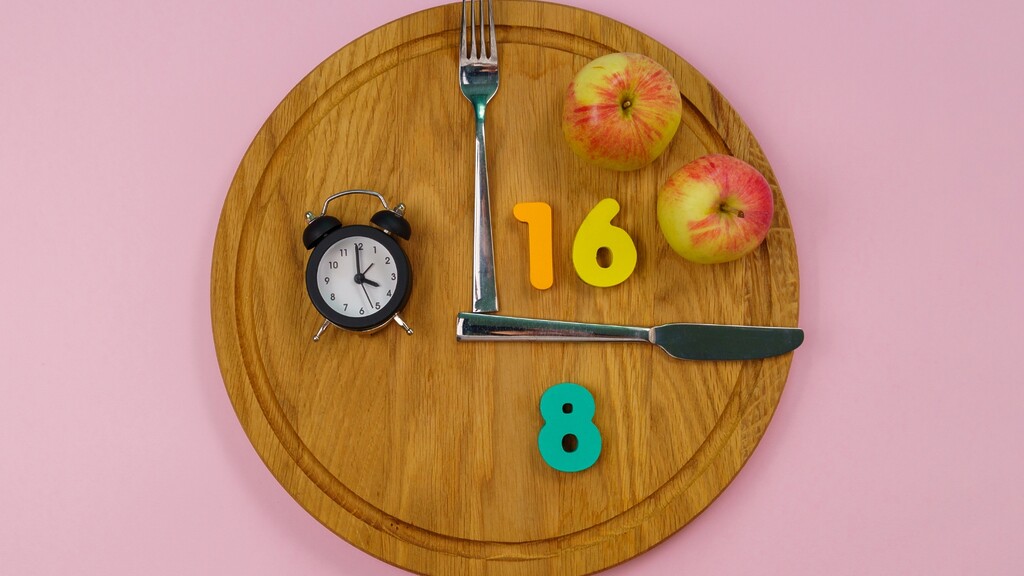
Jump to the 16:8 fasting schedule
Why Doing Less Actually Works
When I was trying to manage my blood sugar and lose weight, I completely burned out on tracking every almond I ate. I did not want another program to manage on top of raising three kids and running a household. I just needed boundaries.
Intermittent fasting weight loss happens because you are simply narrowing your eating window. When you spend a chunk of the day not eating, your insulin levels naturally drop. That signals your body to start using stored fat for energy instead of relying on the constant drip of glucose from snacks. Treating my health as a data project helped me see that less friction equals higher consistency. Over 18 months, sticking to a simple eating window helped me drop 50 pounds without feeling like I was punishing myself.
The 16 8 Fasting Schedule: The Easiest Starting Point
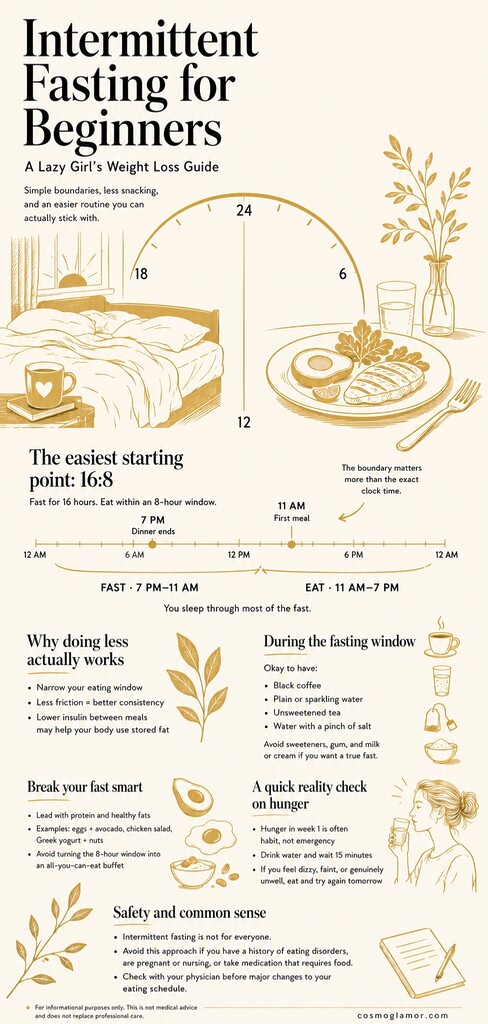
There are a dozen different ways to fast, but the 16 8 fasting schedule is the gold standard for beginners. It means you fast for 16 hours and eat all your meals within an 8-hour window.
The math sounds intimidating until you realize that you sleep through the bulk of it. If you finish dinner at 7:00 PM, you literally just skip a late-night snack, sleep, skip breakfast, and eat your first meal at 11:00 AM the next day. You are already fasting for 12 hours naturally. You are just pushing breakfast back a little bit.
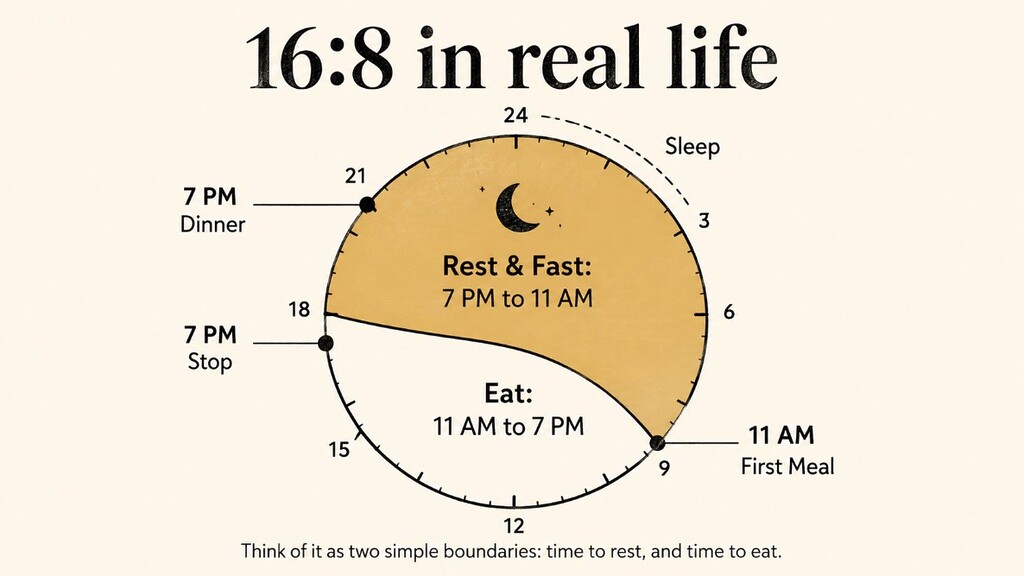
You can adjust these hours to fit your life. If you are an early riser who needs breakfast before a demanding shift, you might eat from 8:00 AM to 4:00 PM. The magic is in the boundary, not the specific hours on the clock.
The Rules of the Fasting Window
This is where most beginners trip up. A fast only works if you keep your insulin levels quiet. Anything sweet or caloric wakes up your digestive system and breaks the fast.
Here is exactly what you can have during your fasting hours:
- Black coffee. Light roast usually tastes less bitter if you are used to adding cream. The caffeine acts as a mild appetite suppressant to get you through the morning.
- Plain or sparkling water. I always keep a massive tumbler of ice water on my desk.
- Unsweetened tea. Green tea, black tea, or plain herbal tea are all fine.
- Water with a pinch of salt. A tiny pinch of salt in your morning water may help with lightheadedness for some people, but it is not a guaranteed fix for fasting headaches.
Do not chew gum, use zero-calorie flavor enhancers, or add a splash of milk. Even some fake sugars may affect insulin responses in some people, which defeats the purpose of the fast for this plan.
How to Handle the Eating Window
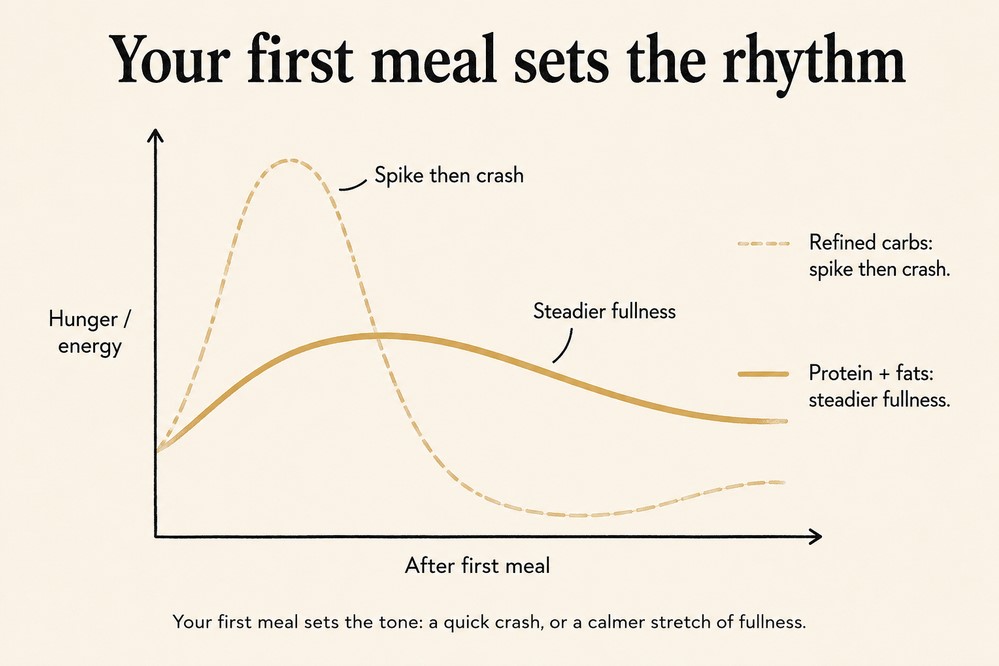
The biggest mistake you can make is treating your 8-hour window as an all-you-can-eat buffet. If you break your fast with a massive plate of refined carbs, your blood sugar will spike and crash, leaving you starving and irritable two hours later.
Instead, open your window with protein and healthy fats. Think scrambled eggs with avocado, a hefty chicken salad, or Greek yogurt with nuts. Protein takes longer to digest and sends strong fullness signals to your brain. This makes it infinitely easier to naturally eat in a caloric deficit without obsessing over the math.
A Quick Reality Check on Hunger
You will probably feel hungry around 9:00 AM during your first week. That does not mean the protocol is failing. Your body is just used to getting a bagel at that exact time. Your hunger hormone, ghrelin, tends to rise around habitual meal times, so the first week is partly about teaching your body a new rhythm.
When the morning hunger wave hits, drink a glass of water and wait 15 minutes. The physical sensation almost always passes. If you feel dizzy, faint, or genuinely unwell, listen to your body and eat something. You can always try again tomorrow.
Safety and Common Sense
As much as I love this approach, intermittent fasting is not for everyone. If you have a history of eating disorders, are pregnant or nursing, or take medication that requires food, this is not your playbook. Always check with your physician before making drastic changes to your eating schedule, especially if you have an underlying medical condition.
FAQs from Real Beginners
Can I put just a splash of cream in my coffee?
Technically, anything with calories breaks a true fast. But practically, if 20 calories of almond milk makes the difference between you sticking to the schedule for a month or quitting on day two, use the milk. It is a worthwhile tradeoff for long-term consistency.
Can I work out while fasting?
Yes. Many people prefer to exercise in a fasted state. I did all of my functional movement routines in the morning before my eating window opened. Just make sure you stay hydrated. If you lift heavy weights or do intense cardio, you might prefer to align your workout with your eating window to help with recovery.
Do I have to do it every single day?
No. Life happens. If you have a late family dinner on Friday or a brunch date on Sunday, just eat. The beauty of this framework is that you do not have to restart a complicated program if you miss a day. You just go to sleep and pick your regular schedule back up the next morning.
Give it two weeks. Once your body realizes it does not need to panic between meals, you might find that doing absolutely nothing is the most effective routine you have ever tried.
Sources
- Intermittent fasting: Fad or valid weight-loss solution? – Mayo Clinic Health System, 2022.
- What Is Intermittent Fasting? – Cleveland Clinic, 2026.
- Sucralose affects glycemic and hormonal responses – Diabetes Care, 2013.
- Protein consumption and appetite hormones – Physiology & Behavior, 2020.
- Ghrelin and habitual meal patterns – American Journal of Physiology-Gastrointestinal and Liver Physiology, 2008.



8 Responses
Okay, “Lazy Girl’s Guide” totally speaks to me! But I’m a HUGE snacker. Like, I practically graze all day. Won’t I be, like, starving during the fasting periods? Also, what about my morning coffee? I need my caffeine fix to function like a normal human. Please tell me I don’t have to give that up!
Harper, I hear you! The thought of not snacking can be scary, but trust me, your body adapts. In the beginning, you might feel a bit hungry, but it gets easier. Think of it like training your hunger. Also, good news! Black coffee is totally fine during the fast. Caffeine is still your friend! Just skip the cream and sugar, okay? You might even find you appreciate the taste of black coffee more. Hang in there, you got this!
This sounds almost too good to be true! I’ve tried every diet under the sun, and they all make me feel deprived and cranky. I like the idea of the 5:2 method, but 500-600 calories is, like, nothing! Is that even healthy? And can I still have a glass of wine with dinner on my “normal” eating days? Asking for a friend… 😉
Camila, I know, right?! It’s like the anti-diet diet! The 5:2 method can definitely work, but those low-calorie days are meant to be a challenge. It is still considered healthy, but make sure you’re getting nutrient-rich foods on those days – think veggies, lean protein, etc. As for the wine… Technically, yes, you can enjoy it within your eating window on your normal days. Just remember, moderation is key! Everything in balance. Cheers to finding what works for you (and your friend)!
Okay, ‘lazy girl’s guide’? I’m so in! 😂 But seriously, I’m a HUGE snacker. Like, I graze all day long. The thought of going 16 hours without food makes me panic a little. Is there any way to ease into this, or is it all or nothing? And what about workouts? I’m trying to get back into a routine, but I’m worried I’ll be too weak to exercise if I’m fasting.
Jene, I totally feel you on the snacking! I used to be the queen of grazing. 🙋♀️ The good news is, you absolutely can ease into IF. Don’t feel like you have to jump straight to 16 hours! Start with a 12-hour fast (basically just skipping late-night snacks) and gradually increase it by an hour every few days as you feel comfortable. Your body will adjust!
For workouts, it’s actually a great idea to time them towards the end of your fasting window, or even shortly after you break your fast. This way, you can use stored energy (fat!) for fuel during your workout, and then replenish with a healthy meal afterward. Start with lighter workouts and see how you feel. Listen to your body – it’s smarter than you think! 😉 You might be surprised at how much energy you have!
I’ve heard so much about IF, but I’m a little confused about what I can actually drink during the fasting period. Black coffee is fine, but what about tea? Herbal tea? Can I add a splash of lemon to my water? I’m also a bit worried about getting too hungry and then binging during my eating window. Any tips for avoiding that?
Sarah, great questions! The fasting period can be a little tricky at first. Black coffee is your best friend, and yes, plain herbal teas (without added sugar or milk) are totally fine too! A squeeze of lemon in your water is generally okay – it has minimal calories and shouldn’t break your fast. The key is to avoid anything that will spike your insulin levels significantly.
To prevent that binge-eating feeling, plan your meals for your eating window ahead of time. This helps you make conscious, healthy choices instead of grabbing whatever’s in sight when you’re ravenous. Focus on protein, fiber, and healthy fats – these will keep you feeling full and satisfied longer. And don’t forget to drink plenty of water throughout the day, both during your fasting and eating windows! It can really help curb those hunger pangs. If you do feel extremely hungry, don’t be afraid to break your fast a little early. It’s all about finding what works best for your body.