



When I first looked into fasting, the advice was almost identical across the board: just stop eating for 16 hours. But when your body is already juggling insulin resistance, skipping breakfast is not just a test of willpower. It is a biological risk. My own A1C was sitting at 7.8%, and while I knew I needed a change, I also knew a massive blood sugar crash was not the answer.
The truth is that intermittent fasting for women with diabetes requires a completely different playbook than standard fasting. We have to balance female stress hormones alongside a pancreas that is already working overtime. Finding that balance took me months of tracking my own numbers, reading the clinical research, and learning when to push and when to eat.
If you want to try a fasting diet for diabetes, you have to build the habit slowly. Here is what actually works in the real world.

The Biological Catch for Diabetic Women
Most popular intermittent fasting protocols were designed by and tested on healthy men. Men can often push through a 20-hour fast with a simple surge of adrenaline. Women's bodies interpret that same prolonged food restriction as a severe environmental stressor.
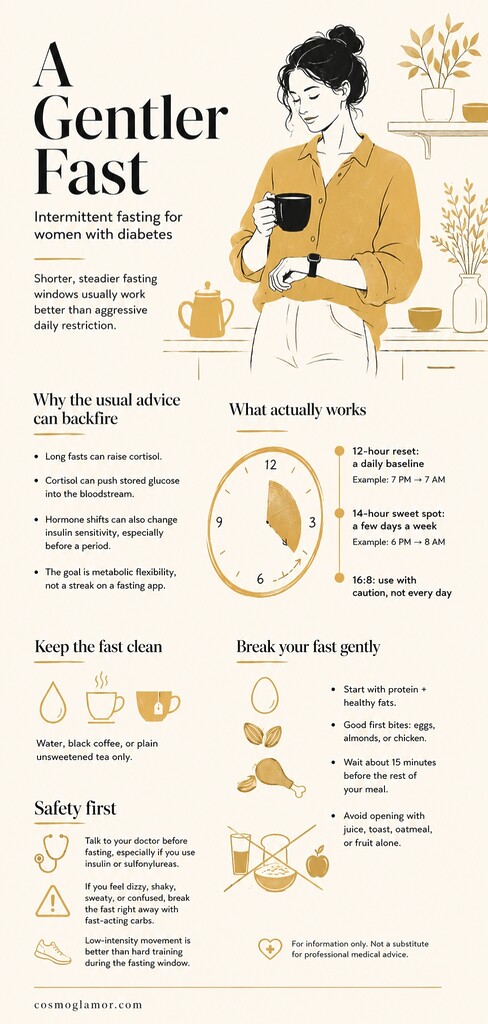
When we skip meals for too long, our bodies pump out cortisol. Cortisol signals the liver to dump stored glucose into the bloodstream to give us energy to survive the perceived famine. For someone without diabetes, insulin quickly handles that extra glucose. For those of us with type 2 diabetes, that glucose just sits in the bloodstream, driving our numbers up instead of down. This is why aggressive fasting can sometimes make diabetic blood sugar worse before it gets better.
Fasting with diabetes is not about starving your body into submission. It is about giving your pancreas a predictable, low-stress schedule so it can finally catch up.
We also have estrogen and progesterone to consider. These hormones fluctuate throughout the month, impacting how sensitive our cells are to insulin. When progesterone rises the week before your period, some women become more insulin resistant. That is the exact time to drop back to a simple 12-hour baseline fast rather than forcing your body through a stressful 16-hour window. The goal is metabolic flexibility, not a streak on a fasting app.
Schedules That Actually Work for Us
Forget the 16-hour rule. When you combine intermittent fasting and diabetes, shorter and gentler is almost always better. The clinical focus should be on overnight rest rather than daytime starvation.
The Clean Fast Rule
Before choosing a schedule, you have to know what keeps you in a fasted state. During your fasting window, stick exclusively to water, black coffee, or plain unsweetened tea. Avoid zero-calorie artificial sweeteners, diet sodas, or even a splash of heavy cream if you are trying to keep the window truly clean. Sweeteners do not reliably trigger a meaningful insulin response in everyone, but they can muddy your numbers and your hunger cues, which defeats the purpose of a clean fast.
The 12-Hour Reset
If you have never fasted before, start right here. You simply stop eating after dinner and do not eat again until breakfast 12 hours later. If you finish dinner at 7:00 PM, you eat breakfast at 7:00 AM.
Treat the 12-hour fast as your non-negotiable baseline. It is long enough to let your insulin levels drop overnight, allowing your body to clear out circulating glucose without triggering a cortisol stress response. Most women find they can sustain this schedule every single day, even when they are stressed or traveling.
The 14-Hour Sweet Spot
Once 12 hours feels entirely normal, you can stretch it to 14 hours a few days a week. This usually means eating an earlier dinner or pushing breakfast back by an hour or two. A 14-hour window gives your digestive system a deeper rest while staying gentler than the aggressive fasts that tend to backfire for me.
I hover in this 14-hour range most days. It keeps my morning blood sugar steady around 95 mg/dL without making me feel ravenous by lunchtime.
The 16:8 Protocol (Use with Caution)
This is the famous 16 hours of fasting with an 8-hour eating window. While intermittent fasting for type 2 diabetes often highlights this method, I urge caution for women. If you choose to try it, do not do it every day. Use it occasionally rather than daily until you know how your body responds. Pay close attention to your energy levels and your blood sugar readings.
How to Break Your Fast (The Most Important Meal)
What you eat when you open your window matters more than how many hours you spent closed. A fasted body is primed to absorb whatever you give it like a dry sponge. If you break a fast with a heavy carbohydrate meal, your blood sugar will spike far higher than it would have on a normal day.
Always open your eating window with a small portion of protein and healthy fats. A handful of almonds, two hard-boiled eggs, or a slice of leftover chicken are perfect starters. Protein can stimulate insulin without raising plasma glucose, and a small protein starter may blunt the glucose rise from any carbohydrates you eat afterward. Wait roughly 15 minutes after that small protein starter before moving on to the rest of your meal.
Avoid breaking a fast with fruit, juice, toast, or oatmeal on an empty stomach. The resulting glucose spike will leave you chasing your numbers for the rest of the afternoon.
A Necessary Note on Safety and Medication
If you are managing diabetes, changing your food timing is just as powerful as changing a prescription. A serious safety reminder belongs here: always consult your physician before starting any new fasting routine.
This is especially critical if you take insulin or sulfonylureas (medications that force the pancreas to release insulin). These drugs do not know you are skipping breakfast. They will keep lowering your blood sugar whether you have eaten or not, which can quickly lead to dangerous hypoglycemia. Your doctor will likely need to adjust your dosages before you begin.
Listen to your body. If you feel dizzy, shaky, profusely sweaty, or confused, break the fast immediately with a fast-acting carbohydrate like half a cup of juice or three or four glucose tablets. Fasting is a tool for healing, not a punishment to endure.
Frequently Asked Questions
Why is my blood sugar higher in the morning when I haven't eaten?
This is called the dawn phenomenon. In the early morning hours, your body releases hormones like cortisol and growth hormone to wake you up. These signal your liver to release stored glucose. Because you have insulin resistance, your body struggles to move that morning glucose into your cells, leaving it stranded in your bloodstream. A shorter overnight fast or a higher-protein evening meal sometimes helps quiet this response.
Can I still work out while fasting?
Yes, but stick to low-intensity movements like walking, light yoga, or gentle stretching. Heavy lifting or high-intensity cardio while fasted can spike cortisol and drive your blood sugar up. Save your heavier workouts for your eating window when you have fuel available.
Managing diabetes often feels like carrying a heavy, complicated math problem around in your head all day. Fasting should make that math easier, not harder. If a schedule leaves you feeling stressed, shaky, or obsessed with the clock, let it go and try a gentler window. Your body knows what it needs. You just have to give it the space to tell you.
Sources
- Physiology, Cortisol – StatPearls, 2025.
- Relationship Between Insulin Sensitivity and Menstrual Cycle Phase – Journal of Clinical Endocrinology & Metabolism, 2021.
- Glycemic Impact of Non-Nutritive Sweeteners in Health and Type 2 Diabetes – Nutrition Reviews, 2026.
- Time-Restricted Feeding Improves Blood Glucose and Insulin Sensitivity – Nutrition & Metabolism, 2021.
- Effect of Time-Restricted Eating on Weight Loss in Adults With Type 2 Diabetes – JAMA Network Open, 2023.
- Whey Protein Premeal Lowers Postprandial Glucose Concentrations – The American Journal of Clinical Nutrition, 2023.
- Low Blood Glucose (Hypoglycemia) – NIDDK, 2021.
- Treatment of Low Blood Sugar – CDC, 2024.
- Dawn Phenomenon – StatPearls, 2023.
- Dietary Advice For Individuals with Diabetes – Endotext, 2024.