





A high fasting blood sugar reading usually triggers two things: panic, and the sudden urge to throw out everything in your pantry. When my own A1C came back at 7.8%, I almost fell into the restriction trap. Instead, I treated my metabolic health like a data project, bringing that number down to 6.1% and lowering my blood pressure to 120/80 mmHg in 18 months without living on plain lettuce.
You don't have to overhaul your entire existence to change your metabolic trajectory. Small, strategic shifts in how and when you eat, move, and rest often make a heavier impact than crash diets that you abandon after three weeks.

A quick note before we get into it: I’m an independent researcher sharing the routines that worked for me, but I’m not a clinician. Always consult your physician before making major changes to your diet or starting a new exercise program.
Jump to the 7 lifestyle changes
1. Change the Order You Eat Your Food

You can eat the exact same meal and get a completely different blood sugar response simply by rearranging the order of your bites. If you sit down to a plate of roasted chicken, broccoli, and a dinner roll, reaching for the roll first sends glucose straight into an empty digestive tract, causing a rapid spike.
Start with the broccoli instead. Eating vegetables first adds fiber and volume at the front of the meal, helping slow the glucose rise from the starches and sugars that follow. Follow the vegetables with your protein and fats, saving the carbohydrates for last. You still get to eat the bread, but your body doesn't have to pump out a massive wave of insulin to handle it.
2. Treat Muscle Like a Glucose Sink
Cardio gets all the credit for heart health, but resistance training is the unsung hero of type 2 diabetes prevention. When you build skeletal muscle, you are physically expanding the storage space your body has to pack away sugar from your bloodstream.
“Muscle isn't just for strength; it's the largest physical sink for the glucose floating in your bloodstream.”
You don't need a heavy barbell routine to make this work. Bodyweight squats while waiting for your coffee to brew, wall push-ups, or keeping a pair of five-pound dumbbells near your desk all count. Contracting your muscles can pull more glucose directly out of your blood through pathways that don't rely entirely on insulin to unlock the cellular doors. Start with 10 minutes of bodyweight movements three times a week—aiming for two or three sets of 10 to 15 repetitions per exercise—listening to your joints and modifying your range of motion as needed.
3. Walk for 10 Minutes After Your Largest Meal

Sitting on the couch immediately after a heavy dinner leaves the glucose from your meal circulating with nowhere to go. Standing up and moving forces your body to use that fuel immediately.
Grabbing Barnaby's leash for a quick lap around the neighborhood right after dinner became my most consistent blood sugar tool. A brisk 10-minute walk within a half-hour of eating blunts the post-meal glucose spike significantly. If you can't get outside, doing chores around the house—loading the dishwasher, wiping down counters, folding laundry—works surprisingly well to keep your muscles active during that critical post-meal window.
4. Protect Your Sleep to Protect Your Insulin
A terrible night of sleep doesn't just make you tired; it temporarily alters your metabolism. Research indicates that just a few nights of restricted sleep can significantly decrease insulin sensitivity. When you are exhausted, your body pumps out cortisol to keep you functioning, and cortisol inherently raises your blood sugar.
Treat sleep as a metabolic necessity, not a luxury. Set a firm cutoff time for screens and heavy eating at least two hours before bed. If you struggle with racing thoughts, keep the room cool—around 65°F—and rely on a physical book rather than a phone to wind down.
5. Front-Load Your Carbohydrates

Your body processes carbohydrates differently at 8:00 AM than it does at 8:00 PM. Our cells are naturally more insulin-sensitive earlier in the day, meaning they are better equipped to absorb and utilize energy from food in the morning and afternoon.
If you love potatoes, rice, or fruit, try to eat them before 3:00 PM. Keep your evening meal focused on lean proteins, healthy fats, and low-starch vegetables. By shifting your heavier eating to the hours when your body is most active, you align your diet with your natural circadian rhythm.
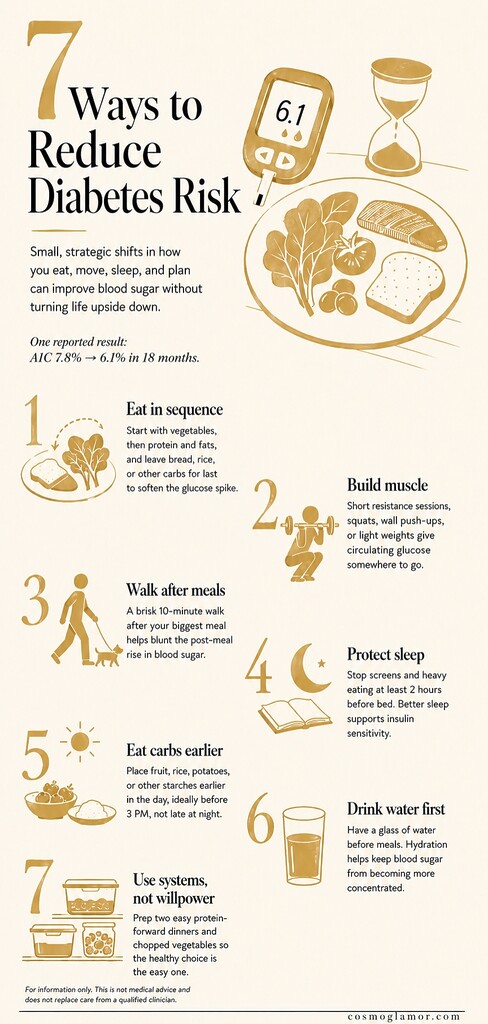
6. Pre-Hydrate Before You Eat
Dehydration subtly drives up blood sugar concentration. When your fluid volume drops, the glucose in your bloodstream becomes more concentrated, similar to how a cup of tea tastes sweeter if half the water evaporates.
Make a habit of drinking a glass of water before you sit down to a meal, as long as your doctor hasn't told you to restrict fluids. Proper hydration supports normal kidney function and, when blood sugar is elevated, helps dilute extra sugar in your blood, giving your body an assist in maintaining baseline levels. Keep a refillable water bottle on your desk or counter so the visual cue is always right in front of you.
7. Trade Willpower for Systems
Relying on sheer willpower to make the right food choices at 5:30 PM on a frantic Tuesday is a losing game. Decision fatigue is real, and it almost always leads to takeout or easy, highly processed pantry snacks.
Spend 20 minutes on Sunday picking just two protein-heavy dinner templates for the week. Wash and chop your vegetables ahead of time and store them in clear containers so they are the easiest thing to grab in the fridge. When you remove the friction of having to decide what to cook, sticking to a metabolic-friendly routine becomes automatic rather than a daily struggle.
Frequently Asked Questions
Do I have to give up all sugar and fruit to prevent prediabetes from progressing?
No. Completely eliminating whole foods like fruit is rarely sustainable. Whole fruits contain fiber, which moderates the sugar impact. Focus on pairing your fruit with a protein or fat—like an apple with a handful of almonds or berries in plain Greek yogurt—to steady the blood sugar response.
How quickly can lifestyle changes lower my blood sugar?
Changes like a post-meal walk or adjusting the order you eat your food can blunt a blood sugar spike that very same day. For lasting changes to your fasting glucose or A1C, it generally takes about three months of consistent habits, because your red blood cells turn over roughly every three months.
Are artificial sweeteners a safe replacement for sugar?
While artificial sweeteners usually won't spike your blood sugar in the moment, long-term evidence is mixed, and some research links heavy use with differences in glucose control over time. They are a helpful transition tool if you are trying to step down from sugary sodas, but the long-term goal is to reset your palate to crave less intense sweetness overall.
Preventing diabetes isn't about eating perfectly; it's about consistently sending your body the right metabolic signals. Pick one habit from this list, test it for a week, and let the data prove to you that you are in control of your health.
Sources
- Eating vegetables first and post-meal glucose – Nutrients, 2023.
- Contraction-mediated glucose uptake in skeletal muscle – International Journal of Molecular Sciences, 2024.
- Advice to walk after meals – Diabetologia, 2016.
- Effect of sleep restriction on insulin sensitivity – Obesity, 2023.
- Circadian nutrition and obesity – Journal of Health, Population and Nutrition, 2025.
- Hyperglycemia in diabetes – Mayo Clinic, 2025.
- Artificial sweeteners and glucose homeostasis – Frontiers in Nutrition, 2021.
- A1C test for diabetes and prediabetes – CDC, 2024.