


When my doctor handed me a Type 2 diabetes diagnosis and a 7.8% A1C, I walked out of the clinic assuming my life with pasta and potatoes was over. I spent the first few weeks living on grilled chicken and spinach, terrified of every label in my pantry. But chronic restriction is an exhausting way to live. I eventually refused to accept that I had to banish an entire macronutrient just to stay healthy.
I spent the next 18 months digging into nutritional science to understand how different foods actually behave in the body. That research helped me drop 50 pounds and bring my A1C down to a steady 6.1%. The biggest lesson I learned was that you do not have to quit eating carbohydrates. You just have to learn how to choose diabetes friendly carbs that work with your metabolism instead of against it.
Note: I am a researcher sharing the dietary changes that improved my metabolic health. Always consult your physician before making significant changes to your diet, especially if you take medication to lower blood sugar.
Jump to the everyday carb guide
The Rule That Changed How I Look at Food
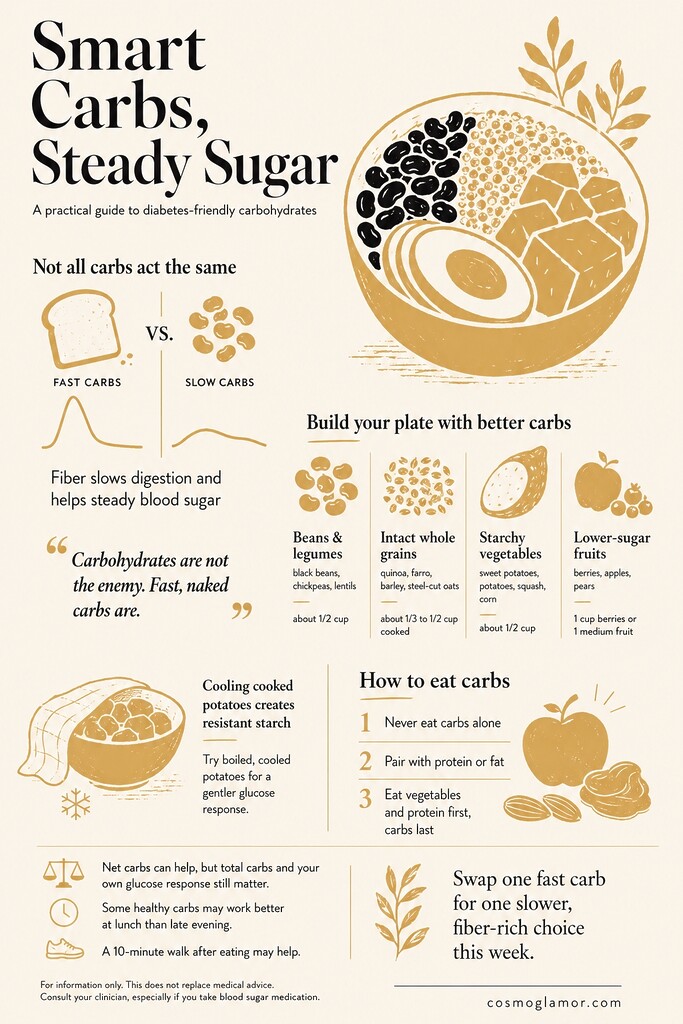
We often talk about carbohydrates as if they are all exactly the same. A slice of white bread and a cup of lentils both contain carbs, but your body handles them completely differently. The secret to managing your numbers lies in understanding the speed of digestion.
Fast carbs break down immediately. They flood your bloodstream with glucose, forcing your pancreas to scramble and pump out insulin to handle the surge. Slow carbs take their time. They trickle glucose into your system gradually, giving your body a chance to process the energy without panic.
The main factor that slows a carbohydrate down is fiber. When you prioritize foods with a high fiber content, you automatically choose low glycemic carbs. Fiber physically resists digestion in your stomach and intestines, trapping the starches so they enter your bloodstream at a steady, manageable pace.
Carbohydrates are not the enemy of a diabetic diet. Naked, fast-digesting carbohydrates are.
The Best Carbs for Diabetics (My Kitchen Staples)
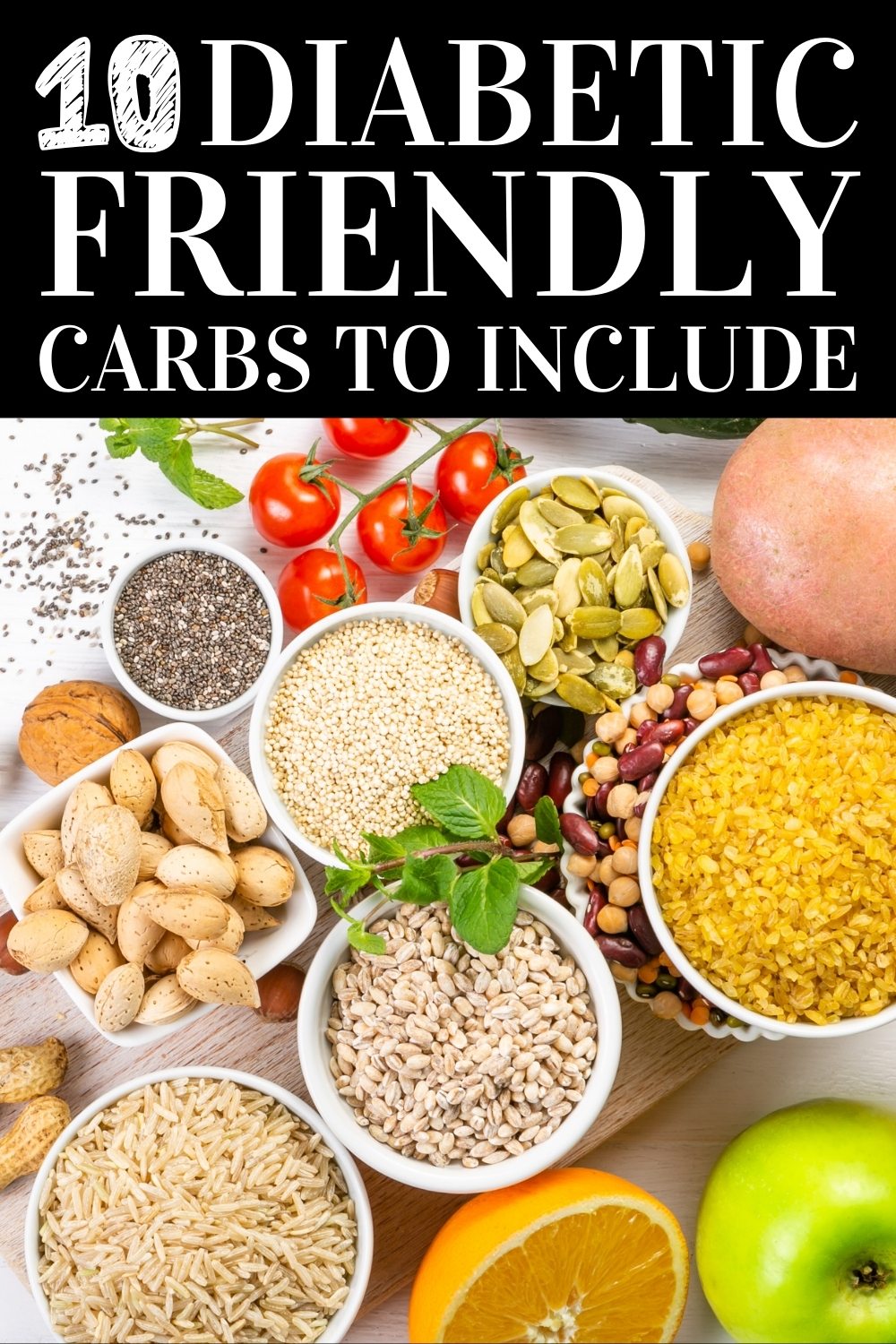
You do not need to hunt down expensive specialty products to eat well. The most reliable, healthy carbs for diabetes are usually sitting right in the produce aisle or the canned goods section. Here are the staples I keep stocked at all times.
Beans and Legumes
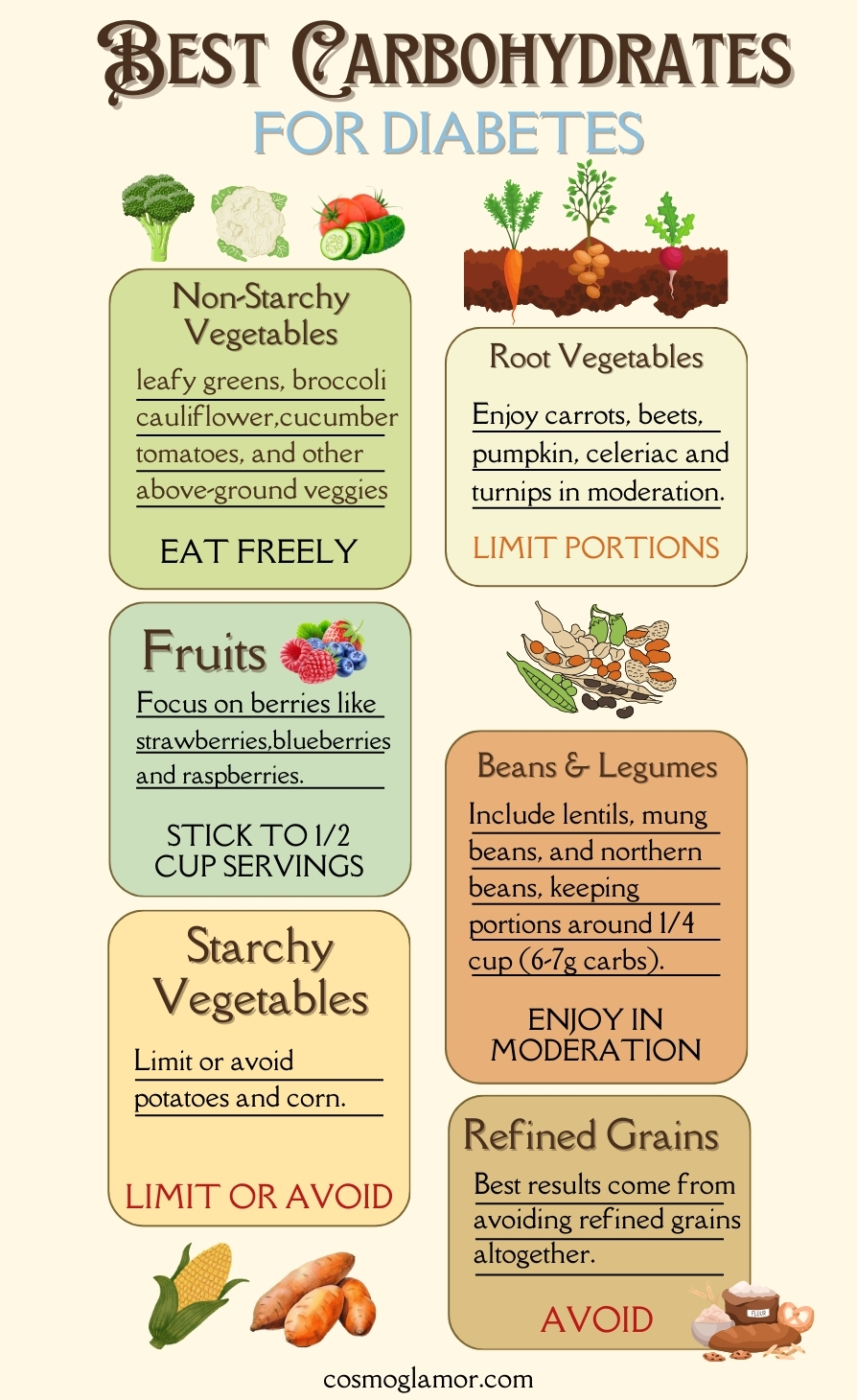
If I had to pick one carbohydrate category to eat for the rest of my life, it would be beans. Black beans, chickpeas, lentils, and pinto beans are nutritional powerhouses. They offer a rare combination of complex starches and high plant protein.
A half-cup of cooked black beans provides about 7 grams of fiber, which is roughly a quarter of what you need in a whole day. The specific type of soluble fiber found in legumes turns into a thick gel in your digestive tract, delaying stomach emptying and keeping your blood sugar stable for hours after a meal. I stick to about a half-cup serving per meal to keep my carbohydrate load balanced. If you use canned beans to save time, dump them in a mesh strainer and rinse them under cold water for 30 seconds to wash away the excess sodium.
Intact Whole Grains
Notice the word intact. Many boxed cereals claim to be made with whole grains, but those grains have been pulverized into fine flour. Your body digests flour almost as fast as pure sugar. You want grains that still look like grains.
My favorites include quinoa, farro, barley, and steel-cut oats. Quinoa cooks in about 15 minutes and contains all nine essential amino acids. When I want oatmeal, I skip the instant packets entirely. Steel-cut oats take a little longer to simmer on the stove, but their dense, unbroken structure forces your digestive enzymes to work harder, resulting in a much gentler blood sugar response. When plating, a practical starting portion for complex grains is usually about 1/3 to 1/2 cup cooked, or roughly the amount that fits into your cupped hand.
Starchy Vegetables

There is a persistent myth that people with diabetes can never look at a potato again. You can absolutely eat potatoes, squash, and corn if you manage the portion size and the preparation method.
Sweet potatoes are slightly lower on the glycemic index than white potatoes, especially when they are boiled rather than baked. If you do cook white potatoes, try boiling them, letting them cool completely in the fridge overnight, and eating them cold in a salad or gently reheated. Cooling cooked potatoes creates resistant starch, a fiber-like starch that your body cannot easily break down, which can blunt the early glucose response to the meal. Keep the portion to about a half-cup, or a potato roughly the size of a standard computer mouse, to keep the carb load manageable.
Lower-Sugar Fruits
Fruit carries natural fructose, which can make it intimidating. But fruit also delivers antioxidants, water, and fiber. The trick is sticking to varieties that offer the highest nutritional payoff for the lowest sugar impact.
Berries are the ultimate diabetic fruit. Raspberries and blackberries are incredibly high in fiber while remaining low in total carbohydrates. Apples and pears are also excellent choices as long as you eat them with the skin on, since the skin holds the majority of the fiber. A blood-sugar-friendly portion is usually about one cup of fresh berries, or one medium apple or pear.
How You Eat Carbs Matters Just as Much
Even the healthiest complex carbohydrate can cause trouble if you eat a massive bowl of it on an empty stomach. Managing blood sugar is largely about context. I use a few simple rules every time I sit down to eat.
Never eat a carbohydrate completely alone. I call this the “no naked carbs” rule. If I want an apple, I pair it with a handful of almonds or a spoonful of peanut butter. The dietary fat and protein in the nuts slow down the absorption of the fruit's natural sugars, stretching the energy release out over a longer period.
Order of operations matters too. Research shows that eating your vegetables and proteins first, and saving your carbohydrates for the end of the meal, can reduce your post-meal glucose spike. I test this with my own continuous glucose monitor all the time. Eating a side salad before touching my roasted sweet potatoes keeps my numbers much flatter than if I start the meal with the potatoes.
Frequent Questions About Diabetic Carb Choices
Should I count total carbs or net carbs?
Net carbs are calculated by taking the total carbohydrates and subtracting the fiber. Since fiber usually has less impact than starch or sugar, looking at net carbs can be useful, but it is not a perfect picture of how a food will affect your body. I use net carbs as a helpful guide, but I still check total carbs and my own glucose response.
What if even “healthy” carbs still spike my blood sugar?
This is a frustrating reality for many of us. If a half-cup of brown rice pushes your numbers too high, look at the time of day you are eating it. Many people notice different responses at different times of day, and late evening meals can be especially tricky, so lunchtime may be an easier window for a starchy side dish. You can also take a 10-minute walk immediately after the meal to help blunt the post-meal glucose rise.
Are artificial sweeteners a safe alternative to carbs?
They won't directly spike your blood sugar, but relying on them heavily can keep your palate locked into craving intense sweetness. I use stevia or monk fruit occasionally in my coffee, but I rely mostly on cinnamon, vanilla extract, and small amounts of real berries to flavor my food naturally.
Figuring out your personal carbohydrate tolerance takes patience and a little bit of record-keeping. Start by swapping one fast carb for a slow, fiber-rich alternative this week, and see how your energy feels two hours later.
Sources
- Soluble Dietary Fibers and Glycemic Response – Foods, 2022.
- Chilled Potatoes and Postprandial Glucose – Nutrients, 2019.
- Carbohydrate-Last Meal Pattern – BMJ Open Diabetes Research & Care, 2017.
- Get to Know Carbs – American Diabetes Association, accessed 2026.
- Late Eating and Glucose Tolerance – Nutrition & Diabetes, 2024.
- Ten-Minute Walk After Glucose Intake – Scientific Reports, 2025.
- Save for Later4.4K




14 Responses
Thank you for sharing your success and research. It’s encouraging
Thank you so much for your encouraging words! I’m glad you found the information helpful. If you have any questions or need further assistance, feel free to reach out.
Best wishes!
I’ve always been told to avoid bread altogether if you have diabetes. This article mentions whole-wheat bread, but I’m still a bit hesitant. Is it really okay to eat bread,
Hi Lisa, It’s a common misconception that all bread is off-limits with diabetes. While it’s true that white bread is highly processed and can cause blood sugar spikes, whole-wheat bread, especially those with added seeds and nuts, can be a part of a healthy diabetes diet in moderation. The key is portion control and choosing the right type. Look for 100% whole-wheat bread with at least 3 grams of fiber per slice. As for how much, it depends on your individual carb goals, which you should discuss with your doctor or a registered dietitian. They can help you determine the appropriate serving size for you. A good starting point might be one or two slices per meal, depending on what else you’re eating with it.
I love fruit, but I’m worried about the sugar content. Are there any fruits that are completely off-limits, or are some better than others?
Hi Tom, Great question! Fruit is packed with vitamins, minerals, and fiber, so it’s definitely something you can enjoy with diabetes. While all fruits contain natural sugars, some have a lower glycemic index than others, meaning they have a gentler impact on blood sugar levels. Berries, apples, pears, and citrus fruits tend to be lower on the GI scale. Tropical fruits like mangoes and pineapples tend to be higher, so it’s best to enjoy them in smaller portions. It is not about avoiding any fruit completely, but being mindful of portion sizes and choosing lower GI options more often. Also, pairing fruit with a source of protein or healthy fat, like nuts or yogurt, can help slow down sugar absorption.
This is a really helpful article! I was recently diagnosed with type 2 diabetes and I’m feeling a bit overwhelmed by all the dietary changes. The explanation of the glycemic index is especially useful. My question is about fruit. I love fruit, but I’m worried about the natural sugars. Are there any fruits that are better than others for people with diabetes? And how much is too much?
Hi Melissa, thanks for your comment and I’m glad you found the article helpful. It’s completely understandable to feel overwhelmed after a new diagnosis, but you’re taking the right steps by educating yourself! You’re right to be mindful of fruit’s natural sugars, but it doesn’t mean you have to avoid it altogether. Fruit provides essential vitamins, minerals, and fiber.
As the article mentions, focusing on lower GI fruits is key. Berries (like strawberries, blueberries, and raspberries) are excellent choices because they’re relatively low in sugar and high in fiber. Apples, pears, citrus fruits like oranges and grapefruits, and cherries are also good options. Portion control is important too. Instead of eating a large bowl of fruit, aim for a smaller serving, like a cup of berries or a medium-sized apple. Pairing fruit with a source of protein or healthy fat, like a handful of nuts or some Greek yogurt, can also help slow down the absorption of sugar and prevent blood sugar spikes. It’s always a good idea to discuss your specific dietary needs with a registered dietitian or diabetes educator, as they can provide personalized guidance based on your individual situation.
This article does a great job of explaining the importance of choosing the right carbs. I’m a big fan of whole grains, but I’m a little confused about whole wheat bread. The article mentions it can have a higher GI. Does that mean I should avoid it completely? What are some good alternatives?
Hi Amanda, thanks for your question! I’m glad you’re focusing on whole grains – they’re a great choice for overall health. You’re right to point out the nuance with whole wheat bread. While it’s generally better than white bread, some commercially produced whole wheat breads can have a higher GI due to processing and added sugars.
It doesn’t necessarily mean you have to avoid it entirely, but it’s important to be selective. Look for whole wheat bread that lists “whole wheat flour” as the first ingredient and has a high fiber content (at least 3 grams per serving). Breads with added seeds and nuts can also help lower the GI. Better yet, consider other whole grain options like 100% whole grain or sprouted grain breads, or switch to other whole grains altogether, such as quinoa, brown rice, oats or barley. These tend to have a lower GI and provide a more sustained release of energy. Experimenting with different grains can also add variety to your diet and provide a wider range of nutrients.
This article is helpful, but it makes it sound a bit too easy, doesn’t it? ‘Just choose low GI foods!’ As if those labels are always accurate, or even available! And what about us busy folks who don’t have time to be measuring every morsel of food? I once tried to use a food scale at a dinner party, and let’s just say, it didn’t go over well. Is there a more practical, real-world approach to this carb-counting business?
Hi Martha, you’re absolutely right – it’s not always as simple as the labels suggest! GI values can vary depending on ripeness, cooking method, and even the specific variety of a food. And let’s be honest, food scales aren’t exactly party-friendly! While the article provides a good foundation, real-world application is key. For those busy days, focusing on whole, unprocessed foods (like those non-starchy veggies and legumes we talked about) is a great starting point. Instead of obsessing over exact measurements, try using your hand as a guide: a palm-sized portion of protein, a fist-sized portion of carbs, and fill the rest with non-starchy veggies. It’s not perfect, but it’s a practical way to manage portions without the need for constant measuring. And if you are going to be eating out, many restaurants have nutrition information available. You can also try to make educated guesses. If you are unsure, it is best to err on the side of caution and choose a lower-carb option. There are also some great apps that can help you track your food intake and make healthier choices. It’s all about finding a balance that works for your lifestyle, even a busy one like yours!
So, no more bread? No more pasta? What kind of life is that? I’ve lived a long and happy life, and let me tell you, a little bit of joy (and a good cookie) goes a long way. Are you saying I have to give up all my favorite treats just because I have diabetes? Is there any room for a little indulgence, or are we doomed to a life of শুধু শাকসবজি (that’s Bengali for ‘only vegetables’, darling)?
Hi Betty, I love your spirit! And absolutely not! A life without any treats is no life at all. Managing diabetes doesn’t mean complete deprivation. It’s about finding a balance and making smart choices most of the time. You can still enjoy your favorite foods, including bread and pasta, in moderation. The key is to choose whole-grain versions whenever possible, be mindful of portion sizes, and perhaps enjoy them less frequently. And a good cookie? Absolutely! Look for recipes that use almond flour or coconut flour and natural sweeteners like stevia or erythritol. Or, just enjoy a small portion of your favorite cookie and savor every bite. It’s about finding a sustainable approach that allows you to enjoy life’s pleasures while managing your blood sugar. Life is too short to say no to all the treats!