


Sitting at a restaurant table while everyone else orders a towering plate of pasta can feel incredibly isolating. When I was first diagnosed with Type 2 diabetes and staring down a 7.8% A1C, I honestly thought my days of enjoying a casual Friday night dinner were over. I was convinced every restaurant kitchen was a minefield of hidden sugars and refined starches. But dining out with diabetes doesn't require staying home or chewing on a dry house salad while your friends eat real food. You just need a different way to read the menu.

A quick note before we look at the strategies: I am sharing the practical routines that helped me manage my blood sugar, but I am not a doctor. Always consult your physician before making significant changes to your diet or health plan.
The Pre-Game Strategy
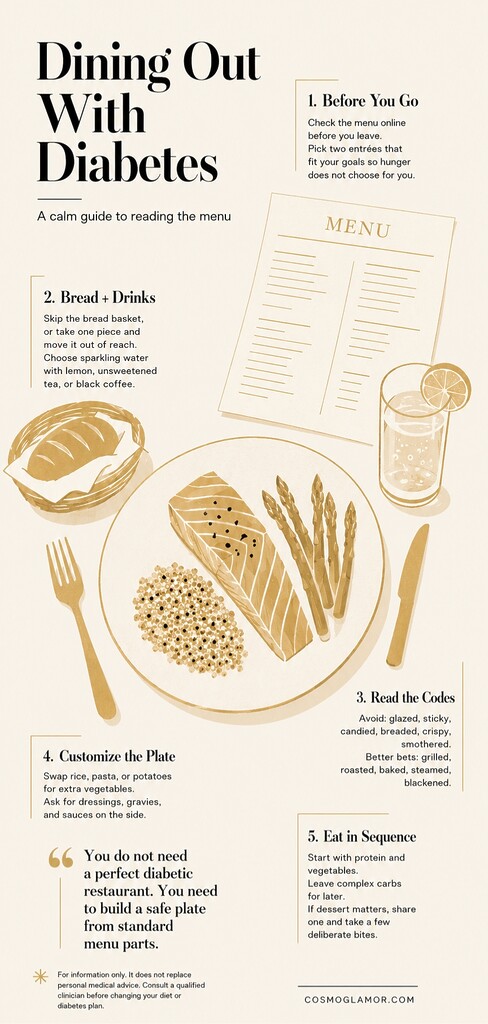
Waiting until you are seated with a basket of warm bread in front of you is the worst time to make a nutritional decision. Look up the menu online before you leave the house. Decision fatigue heavily influences our choices when we are hungry, making the comfort food section look much more appealing than it would on a full stomach. Picking your meal from your couch removes the pressure and lets you find the safe options objectively.
Identify two potential entrees that fit your goals. Having a backup is helpful in case the kitchen is out of a specific fish or vegetable that night. You walk through the restaurant doors knowing exactly what you will order.
The Bread Basket and Beverage Trap
That complimentary basket of warm sourdough or tortilla chips is a brutal test of willpower, mostly because you are starving when you sit down. The easiest fix is to politely ask the server to skip bringing it altogether. If your family wants it, take one piece for yourself, then physically move the basket to the other end of the table. Out of arm’s reach usually means out of mind.
Drinks require that exact same caution. Restaurant lemonades, sweet teas, and mixed cocktails are essentially liquid sugar that can hit your bloodstream before the appetizer even arrives. Stick to unsweetened iced tea, black coffee, or sparkling water with a generous squeeze of lemon. Liquid carbohydrates digest rapidly, making them the most likely culprit for an unexpected spike.
How to Translate Restaurant Speak
Chefs use specific adjectives to make dishes sound appetizing. Many of those words are secret codes for sugar, flour, and deep-frying. Learning to spot these flags is the easiest way to identify diabetic friendly restaurant meals at a glance.
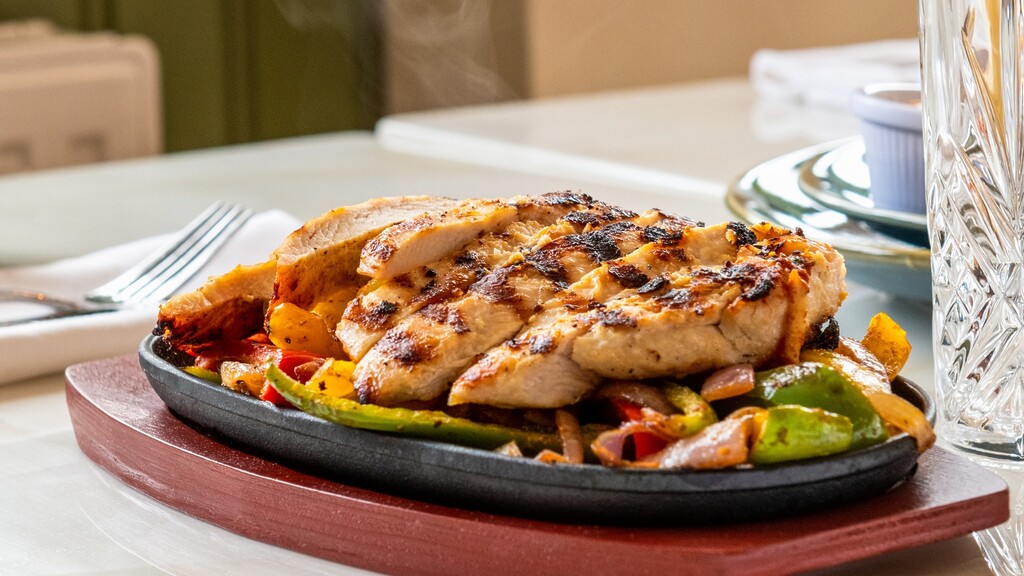
Avoid anything described as glazed, sticky, candied, breaded, crispy, or smothered. A balsamic glaze sounds light but is typically a heavy reduction of brown sugar and vinegar. Instead, scan for words like roasted, grilled, baked, steamed, or blackened. These cooking methods rely on heat and spices rather than batters and heavy syrups.
Salads require their own translation. A salad topped with dried cranberries, candied pecans, and a sweet vinaigrette often contains more carbohydrates than a cheeseburger. Ask for olive oil and vinegar on the side, or request a cream-based dressing like ranch or blue cheese. Fat does not usually spike blood sugar on its own, but the added sugar in many commercial vinaigrettes certainly can.
The Art of the Custom Order
People worry they will sound high-maintenance if they ask for modifications. Restaurants modify dishes hundreds of times a night. They truly do not mind swapping a side dish.
The standard American restaurant plate is built on cheap carbohydrates like rice, pasta, or potatoes. Politely ask the server to swap the starch for a double portion of vegetables. If the steak comes with mashed potatoes and green beans, just ask for double green beans. If you are ordering a burger, ask for it lettuce-wrapped or simply eat it with a fork and knife and push the bun to the side.
The goal isn't to find the perfect diabetic restaurant. It's to learn how to build a safe plate out of standard menu components.
Sauces are another hidden trap. Order all dressings, gravies, and sauces on the side. Restaurant kitchens use generous amounts of butter and sugar to make their signature sauces taste incredible, and putting it on the side gives you total control over how much makes it to your fork. Dip the tines of your fork into the sauce before taking a bite of the food to get the flavor without the sugar spike.
Managing the Meal Sequence
What you eat matters, but the order in which you eat it plays a massive role in how your body processes the meal. Always eat your protein and vegetables before touching any complex carbohydrates. Consuming protein and fibrous vegetables first can help blunt the glucose rise from any carbs you eat afterward.
If you decide to enjoy a small portion of a sweet potato or a dinner roll, save it for the end of the meal. By that point, you will naturally eat less of it because you are already full from the protein.
Frequently Asked Questions
What if the restaurant has literally zero healthy options?
This happens, especially at pizza parlors or sub shops. Look for the protein anchor. At a pizza place, order a large side salad with chicken and have one small slice of pizza alongside it. At a sub shop, ask them to put the sandwich ingredients in a bowl. You can always extract the protein and fat from a carb-heavy menu if you look closely.
How do I handle family-style dining without being rude?
When dishes are passed around the table, take generous scoops of the vegetable and meat dishes to fill the bulk of your plate. Take only a tiny, polite spoonful of the heavy pasta or rice dishes. People only notice if your plate is empty; they rarely analyze the macro-nutrients of what you scooped.
Is it okay to order dessert?
If your numbers are well-managed and you planned for it, a few bites of dessert won't ruin your progress. The safest strategy is to order one rich dessert for the table and have two deliberate bites. You get the social experience and the taste without the metabolic crash that follows a massive slice of cake.
Eating out is supposed to be a break from cooking and a chance to connect with people you care about. Once you learn to spot the hidden traps and ask for what you actually need, the menu stops being a threat. You get to sit back, order the steak, and actually enjoy the evening.
Sources
- Sugar-sweetened beverages and chronic disease – Nature Reviews Endocrinology, 2022.
- Effects of carbs, protein, and fats on glucose – Joslin Diabetes Center, 2021.
- Carbohydrate-last meal pattern and glucose – BMJ Open Diabetes Research & Care, 2017.