

You just finished a plate of pasta, or maybe a generous slice of birthday cake. It happens, and you do not need to panic or skip your next meal to make up for it. Figuring out how to manage your blood sugar after eating carbs is less about restriction and more about knowing which biological levers to pull.
Jump to the 3 post-meal tricks
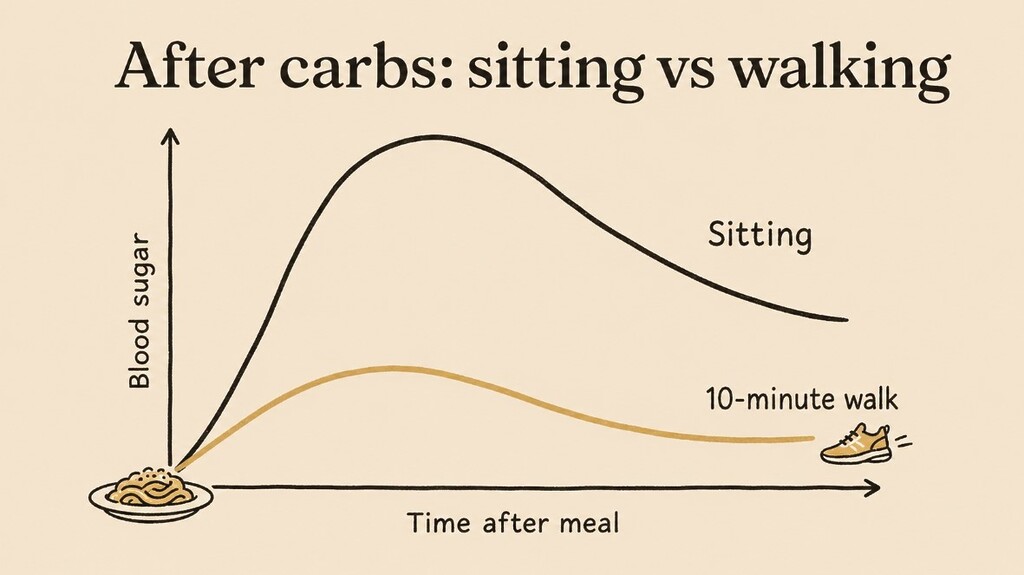
When I was working to bring my A1C down from 7.8% to 6.1%, I stopped looking at food as a moral test. I started treating my daily routine like a data project. Wearing a continuous glucose monitor showed me exactly what happened when I ate a heavy meal and then sat on the couch for the rest of the evening. The resulting curve was steep. But I also saw how quickly I could flatten that curve just by changing what I did in the hour after I put my fork down.
If you are trying to avoid a massive blood sugar spike after eating, you have a brief window where a few simple habits make a massive difference. You do not need a punishing workout routine. You just need to give your body a little bit of mechanical help.
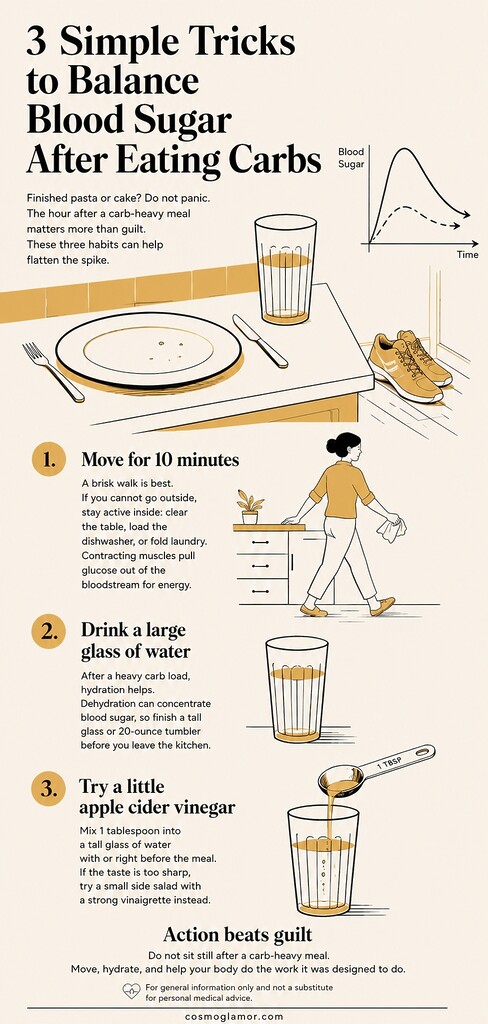
1. Move your body for 10 minutes
The absolute best thing you can do after a starchy meal is use your muscles. Taking a brisk 10-minute walk works incredibly well because active, contracting muscles pull glucose straight out of your bloodstream for energy, using pathways that do not depend entirely on insulin.
You do not need to put on gym clothes or break a sweat to get this benefit. If walking around the neighborhood is not an option because it is dark or raining, just stay active inside. Clearing the table, vigorously loading the dishwasher, or folding a basket of laundry keeps your muscles engaged enough to help clear the glucose from your system. I make it a strict rule to never sit down immediately after dinner.
2. Drink a large glass of water
Dehydration concentrates the sugar in your blood. When you eat a heavy carbohydrate load, your body needs adequate water to help process it. Drinking a tall glass of water supports normal kidney function and helps keep dehydration from making it worse.
I keep a 20-ounce tumbler on the counter while I eat. If I have something starchy, I make sure that tumbler is empty by the time I leave the kitchen. It is a tiny habit, but staying hydrated keeps dehydration from concentrating the glucose in your blood and keeps your digestion moving efficiently.
3. Have a little apple cider vinegar
Most people think of vinegar as a salad dressing ingredient, but it may be a useful tool for metabolic health. Stirring one tablespoon of apple cider vinegar into a tall glass of water and drinking it with or right before your meal may help blunt the spike. The acetic acid in the vinegar seems to slow starch digestion for some meals, meaning the carbohydrates may enter your bloodstream at a slower, steadier pace.

I will admit that drinking vinegar water takes some getting used to. Actually, it took me a solid month to stop making a face when I drank it. If you absolutely cannot stand the taste, you can get a similar biological benefit by eating a small side salad heavily dressed in a sharp vinaigrette right alongside your carbs.
Action always beats guilt
We all have meals that leave us feeling a little sluggish. The worst thing you can do is sit still and feel guilty about it. If you want to know how to lower blood sugar after eating, the answer is always action. Drink your water, go for a short walk, and let your body do the work it was designed to do. Tomorrow is just another day of data.
Sources
- Effect of insulin and contraction on glucose transport – Progress in Biophysics and Molecular Biology, 2004.
- Adult Dehydration – StatPearls, 2025.
- SCFAs and glycemic control – American Journal of Clinical Nutrition, 2022.
- Walking after meals and postprandial glycemia – Diabetologia, 2016.
- Wheat, vinegar, gastric emptying, and satiety – Nutrition Journal, 2008.