




A high blood sugar reading usually comes with a lot of panic and a very short pamphlet. You might feel like you have to clear out your kitchen, live on celery, and go to bed hungry. When my own A1C came back at 7.8%, I assumed my days of eating full, satisfying meals were over.
Over the next 18 months, I brought that number down to 6.1% by refusing restrictive diets and treating my metabolic health as a data project. I learned that finding natural ways to lower A1C is rarely about eating less. It is about eating smarter and giving your body the right inputs to process food efficiently.

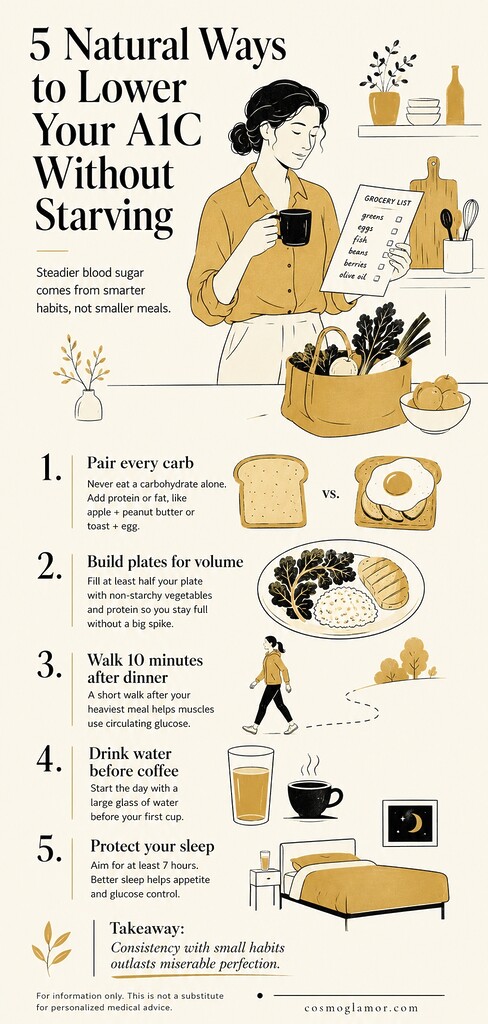
5 Daily Habits to Balance Your Blood Sugar
1. Never Eat a “Naked” Carbohydrate

I used to eat a plain apple as a healthy afternoon snack and feel shaky and ravenous an hour later. Eating carbohydrates by themselves causes a rapid rise in glucose followed by a steep crash, which triggers immediate hunger. Always pair your carbs with a fat or protein to help slow down digestion and blunt that sharp spike.
You do not need complicated math to do this. If you want crackers, add a slice of cheese. If you are having an apple, dip it in two tablespoons of peanut butter or grab a small handful of almonds. Fat and protein act like a physical buffer in your stomach, keeping your numbers stable and your appetite satisfied for hours.
2. Build Your Plates for Volume to Avoid Starving
The biggest lie about blood sugar management is that you have to eat bird-sized portions. If you leave the dinner table hungry, you will inevitably end up raiding the pantry at 9:00 PM. Fill at least half your plate with non-starchy vegetables and protein so you can eat a massive volume of food without the same glucose spike you would get from a high-carb plate.
A practical day that actually keeps me full looks like this. Breakfast is three scrambled eggs cooked in butter with two big handfuls of spinach. Lunch is a massive bowl of mixed greens topped with a whole roasted chicken breast, olive oil, and half an avocado. Dinner is a large filet of baked salmon, a mountain of roasted broccoli, and half of a baked sweet potato. You do not have to starve to see your lab results improve.
3. Take a 10-Minute Walk After Your Heaviest Meal
With three kids in the house, a perfect hour-long gym session is rarely going to happen for me. Fortunately, you do not need to run marathons to see changes in your lab work. Walking for ten minutes within thirty minutes of finishing dinner helps your muscles use more of the glucose currently circulating in your bloodstream, according to research on post-meal walks.
Because working muscles can pull sugar out of the blood through pathways that do not rely on insulin, a short walk is one of the most reliable mechanical ways to bring your numbers down. If it is raining outside, pacing around the living room while listening to a podcast works perfectly. Always consult your physician before starting any rigorous exercise routine, but a simple walk is a highly effective, safe baseline.
4. Drink 16 Ounces of Water Before Coffee
Your kidneys work overtime when your blood sugar is elevated. Extra sugar can pull fluids from your tissues as it leaves through your urine, which is why hydration matters. Drink a large glass of plain water upon waking before you pour your first cup of coffee.
This matters because caffeinated coffee can temporarily make blood sugar harder to manage for some people, especially first thing in the morning. I keep an insulated water bottle on my nightstand so I do not even have to think about it when I wake up groggy.
5. Protect Your Sleep to Control Hunger Hormones

You can eat beautifully all day, but a terrible night of sleep will still wreck your morning glucose reading and leave you ravenous. Sleep deprivation can raise stress hormones and reduce insulin sensitivity, which can push glucose higher. Worse, it can disrupt ghrelin and leptin, the hormones that help regulate hunger.
Instead of staying up late to meal prep perfectly, go to bed and aim for at least seven hours. Getting enough rest is quite literally a strategy to help prevent daytime cravings.
Frequently Asked Questions
How quickly will these lifestyle changes impact my lab results?
Your A1C reflects your average blood sugar over roughly the past three months, partly because your red blood cells regenerate on that timeline. You will not see this specific lab number drop in a single week. If you consistently apply these habits, you should expect to see measurable changes in your blood work at your next three-month follow-up appointment. Track your daily energy levels and your appetite in the meantime.
Can I still eat fruit without ruining my progress?
Yes, absolutely. The trick is choosing fruits that carry more fiber and pairing them correctly. Berries and crisp apples have a much gentler impact on your blood sugar than tropical fruits like pineapples or bananas. Eat the fruit whole rather than juicing it, and always eat it alongside a protein or fat as mentioned in the first habit.
Do these habits replace my prescribed medication?
No. These natural habits work alongside your medical treatment, not instead of it. If you take medications like Metformin, lifestyle changes help the medication work more effectively. Never stop or adjust your prescribed dosages without direct instruction from your doctor.
Consistency with small habits will outlast a month of miserable perfection every single time.
Tonight, when you finish your dinner, leave the dishes in the sink, set a timer on your phone for ten minutes, and go take a walk.
Note: I am a researcher and recipe developer sharing what has worked for me and what current studies indicate. This information should not replace advice from your medical provider. Always work with your doctor when managing a metabolic condition.
Sources
- Gut-based strategies to reduce postprandial glycemia – Frontiers in Endocrinology, 2021.
- Diabetes Nutrition and Wellness – American Diabetes Association, n.d.
- Positive impact of a 10-minute post-meal walk – Scientific Reports, 2025.
- Acute effects of caffeine on insulin sensitivity – Nutrition Journal, 2016.
- Sleep restriction and glucose homeostasis – Sleep, 2026.
- A1C Test for Diabetes and Prediabetes – CDC, 2024.
- Diabetes symptoms and excess urination – Mayo Clinic, 2023.
- Physiology of GLUT4 – NCBI Bookshelf, 2023.
- Sleep in Adults – CDC, 2024.
- Managing Diabetes – NIDDK, n.d.
- Sleep loss and cortisol elevation – Sleep, 1997.
- Sleep deprivation and hunger-related hormones – Obesities, 2025.
- Save for Later10.8K