


Sitting in the doctor's office hearing you have type 2 diabetes feels like a heavy door just slammed shut. I remember that exact moment clearly. But you are not broken, and this is not a life sentence. It is just a new set of data.
Jump to the diabetes diagnosis checklist
The Panic is Normal (But Temporary)
When my doctor handed me a printout showing an A1C of 7.8% and a blood pressure reading of 145/95 mmHg, my first thought was that my relationship with food was completely over. I imagined a future of plain boiled chicken and endless restriction. Instead of letting the panic win, I decided to treat my body like a research project.
Over the next 18 months, I dropped 50 pounds, brought my blood pressure down to 120/80 mmHg, and lowered my A1C to a very manageable 6.1%. I am sharing the systems that worked for me and the research that guided those choices. Please remember to consult your physician before starting any new exercise routine or making drastic changes to your diet, as everyone's metabolic needs are slightly different.
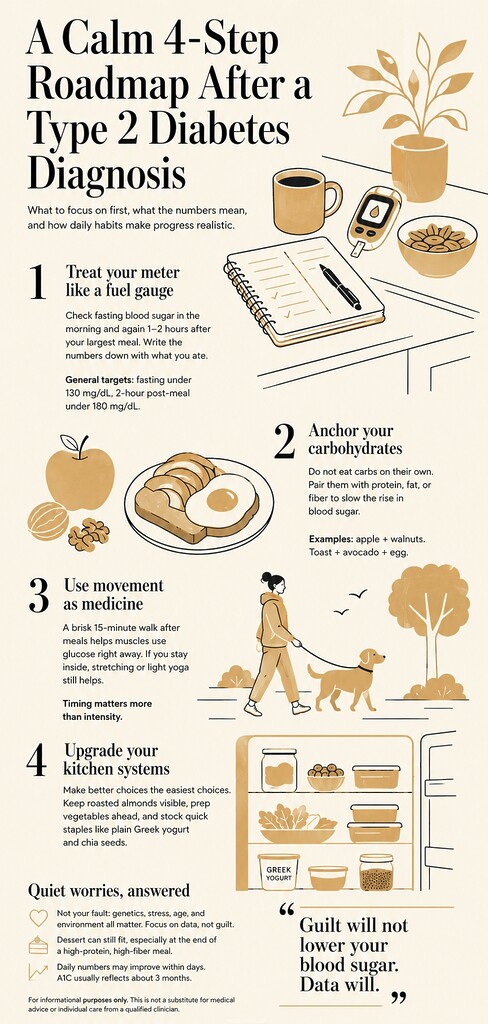
Step 1: Treat Your Meter Like a Fuel Gauge
Your most valuable tool for type 2 diabetes management is a standard, inexpensive blood glucose meter. Many newly diagnosed type 2 diabetes patients avoid testing because they view the numbers as a judgment of their character or a grade on a test. You have to strip the emotion out of the process.
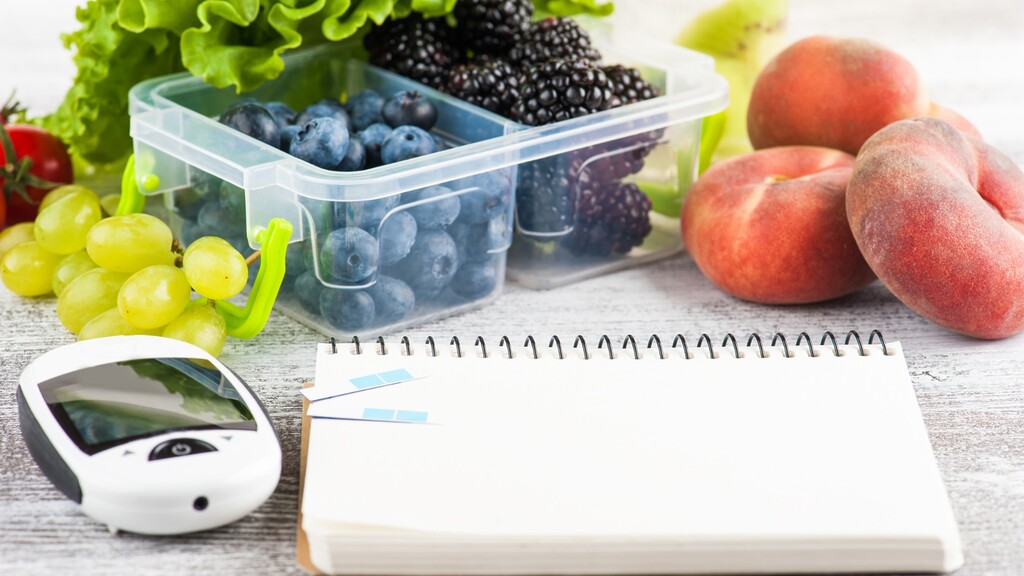
Think of your meter as a fuel gauge telling you exactly how your engine processes different types of food. If your care team wants you testing at home, check your numbers first thing in the morning and about one to two hours after your largest meal. Testing around that window gives you a useful post-meal snapshot, showing how your body handled the glucose from that specific meal.
You need a baseline to know what those numbers actually mean. While your doctor will give you personalized targets, standard medical guidelines generally suggest aiming for a fasting morning number under 130 mg/dL and a two-hour post-meal reading under 180 mg/dL. Testing two hours after a meal reveals your true metabolic response to specific foods. Write these numbers down in a small notebook along with what you ate. Within two weeks, you will see clear patterns emerge.
Step 2: Anchor Your Carbohydrates
Anyone searching for a type 2 diabetes guide for beginners usually assumes they have to throw away all their pasta, rice, and bread immediately. You do not have to live on a zero-carb diet to thrive. You just have to learn how to anchor the carbohydrates you do choose to eat.
Eating carbohydrates bare on an empty stomach causes a rapid, sharp spike in your blood sugar. Pairing those same carbohydrates with a solid source of protein, fat, or fiber can help slow digestion and blunt the rise in glucose. This forces the glucose to enter your bloodstream as a slow, steady trickle rather than a sudden flood.
If you want an apple, eat it with a handful of walnuts. If you want a slice of toast, cover it in mashed avocado and a fried egg. Never eat carbohydrates bare if you want to keep your blood sugar stable. If your meter shows a spike over 180 mg/dL after a meal, it may mean that specific plate had too many bare carbohydrates for your body to process easily. You simply shrink the carb portion and increase the protein next time.
Step 3: Use Movement as Medicine

You do not need to become a marathon runner or spend two hours in a gym to see massive type 2 diabetes lifestyle changes. The timing of your movement actually matters significantly more than the intensity.
Taking a brisk 15-minute walk right after dinner is one of the most effective habits you can build for your metabolic health. Active, moving muscles can pull glucose directly out of your bloodstream to use for immediate energy without needing insulin to unlock the cells. This can lower your post-meal blood sugar numbers within the next couple of hours.
A 15-minute walk after meals helps your muscles pull glucose out of your blood. If it is raining outside, do 15 minutes of light stretching or yoga in your living room. The goal is simply to tell your muscles to start using fuel.
Step 4: Upgrade Your Kitchen Systems
Willpower is a terrible strategy for long-term health. If you come home from work exhausted and hungry at 7 PM, you are going to eat whatever is easiest to grab. The trick to consistent blood sugar management is making the better choices the easiest choices in your house.
Do not wait until you are starving to figure out what fits your new lifestyle. Keep a bowl of roasted almonds on the kitchen counter instead of chips. Pre-chop celery, cucumbers, and bell peppers on Sunday afternoon and store them at eye level in the fridge in clear containers. Stock up on plain Greek yogurt and chia seeds. If the diabetes-friendly food requires zero prep time, you will actually eat it.
FAQ: The Quiet Worries You Are Afraid to Ask
Is this diagnosis my fault?
No. Genetics, age, chronic stress, and our modern food environment all play massive, intertwined roles in metabolic health. Beating yourself up over past choices will not lower your blood sugar today. Focus entirely on the data in front of you right now.
Guilt will not lower your blood sugar. Data will.
Can I ever eat dessert again?
Yes. You will simply learn to eat it strategically. Having a small dessert at the very end of a high-protein, high-fiber meal can help blunt the glucose spike that would happen if you ate that same dessert alone on an empty stomach.
How long does it take to see progress?
Your daily blood sugar numbers can start improving within days of changing your diet and adding post-meal walks. A1C changes take roughly three months to show up on your lab work, since that test measures your average glucose over a 90-day window.
Moving Forward
A new diagnosis feels heavy on day one. By day thirty, reading labels and taking an evening walk just becomes your normal routine. Treat this entire experience as a personal data project, give yourself grace on the days your numbers surprise you, and just keep moving forward.
Sources
- Diabetes Testing — American Diabetes Association, 2026.
- Culinary Strategies to Manage Glycemic Response in Type 2 Diabetes — Frontiers in Nutrition, 2022.
- Glucose Uptake by Skeletal Muscle — Nutrients, 2022.
- Impact of Post-Meal Exercise in Type 2 Diabetes — Diabetology & Metabolic Syndrome, 2017.
- Carbohydrate-Last Meal Pattern — BMJ Open Diabetes Research & Care, 2017.
- A1C Test for Diabetes and Prediabetes — Centers for Disease Control and Prevention, 2024.