




When my doctor told me my A1C was 7.8 percent, my first thought wasn't about medication. It was a sudden, sinking dread about my kitchen. I thought eating with diabetes meant a lifetime of dry chicken and plain steamed broccoli. It doesn't have to be that way.
Jump to the daily eating guidelines
Mastering the diabetes diet basics feels overwhelming at first. I remember standing in the grocery store reading nutrition labels until my eyes blurred. But treating my health like a data project changed everything. By focusing on how different foods interacted on my plate, I eventually lost 50 pounds, brought my A1C down to 6.1 percent, and stabilized my blood pressure at 120/80 mmHg.
You can absolutely build a practical diabetes nutrition guide for your own life. Always consult your physician before making major dietary changes, especially if you take medication to lower your blood sugar. But once you have medical clearance, you can start rethinking your meals using a few highly effective strategies.
The Big Shift: Stop Thinking About Subtraction
Most of us panic after a diagnosis and immediately start listing the foods we can never touch again. That mindset is exhausting and rarely lasts. The most sustainable way to manage your blood sugar is to focus on strategic addition rather than constant restriction.
When you eat a carbohydrate on its own, your digestive system breaks it down quickly and dumps the resulting glucose straight into your bloodstream. That creates a spike. But if you add a source of protein or healthy fat to that exact same carbohydrate, your body has to work harder to digest the meal. The fat and protein can change how quickly your body absorbs carbs, which releases the glucose into your blood at a slower, more manageable trickle.
The most effective change you can make isn't cutting out every single carbohydrate you love. It is learning how to package those carbohydrates with protein and fat so your body can actually handle them.
This means you rarely eat a “naked” carb. If you want an apple, you add a handful of almonds or a spoonful of peanut butter. If you are having a piece of whole-grain toast, you top it with avocado or a scrambled egg. You are still eating what you enjoy, but you are changing how your body processes it.
How to Build a Better Plate
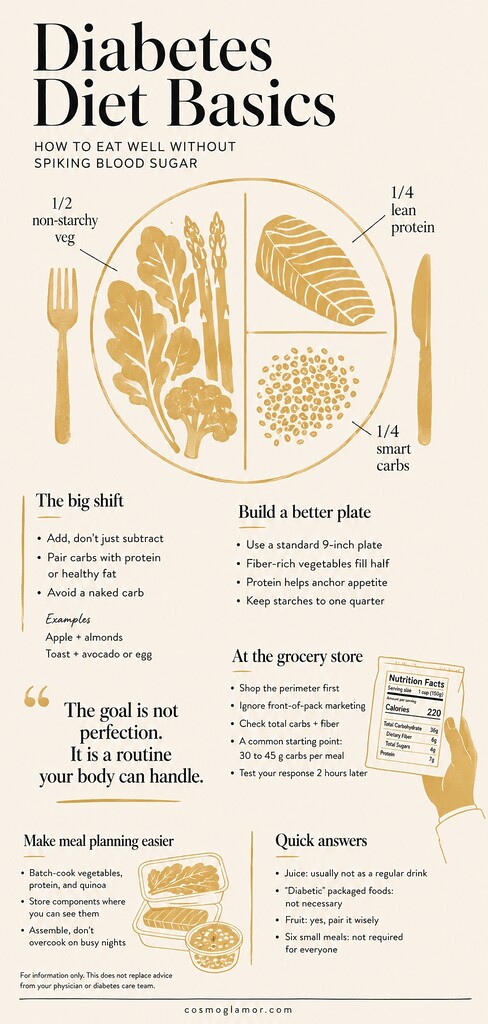
You do not need to weigh every ounce of food to see results. The simplest approach to eating with diabetes is to mentally divide your plate before you fill it. First, make sure you are starting with a standard 9-inch plate. If you use a massive 12-inch dinner plate, the visual ratios won't save you from a glucose spike simply because the total volume of food is too high.
Fill exactly half of your 9-inch plate with non-starchy vegetables. Think leafy greens, roasted Brussels sprouts, zucchini, cauliflower, or green beans. These vegetables are bulky and packed with fiber. Fiber resists digestion, meaning it passes through your system without raising your blood sugar while helping you feel fuller.
Dedicate one quarter of your plate to a lean protein. Grilled chicken, fish, tofu, turkey, or lean cuts of beef all work well. Protein anchors your appetite and provides the building blocks your muscles need.
The final quarter is for your complex carbohydrates or starchy vegetables. This is where your sweet potatoes, brown rice, beans, or quinoa belong. Keeping this section to a quarter of the plate naturally limits the glucose load of the meal without forcing you to eliminate starches entirely.
Navigating the Grocery Store

Knowing what to eat with diabetes starts long before you turn on the stove. Your environment dictates your choices. If you rely on willpower at 6:00 PM when you are tired and hungry, you will grab the easiest processed box in the pantry. A diabetes-friendly diet requires a bit of environmental design.
Shop the perimeter of the store first. This is where the fresh produce, meats, and dairy live. When you do venture into the middle aisles for staples, flip the packages over and ignore the marketing on the front. Look directly at the total carbohydrates and the dietary fiber. Use total carbohydrates as your starting point, then notice the dietary fiber because fiber tends to blunt the blood sugar impact.
While your clinical target comes directly from your doctor, a common starting point for some people is roughly 30 to 45 grams of total carbohydrates per meal. You use your glucose monitor two hours after eating to see how your body handles that specific amount, then adjust your next meal based on real data.
Start keeping reliable protein anchors in your fridge at all times. Hard-boiled eggs, plain Greek yogurt, and leftover roasted chicken make it incredibly easy to build a balanced snack in under two minutes.
Simplifying Your Meal Planning
Diabetes meal planning is usually the point where people burn out. Trying to cook five distinct, elaborate, low-carb recipes a week is a recipe for ordering takeout by Thursday. You need a system that survives busy evenings.
Instead of cooking entirely different meals every night, batch cook your foundational ingredients. Roast two large pans of vegetables on Sunday. Cook a large batch of shredded chicken or turkey meatballs. Make a pot of quinoa. Store them in clear glass containers so you actually see them when you open the fridge.
When Tuesday night arrives, you aren't actually cooking. You are simply assembling a plate from the components you already prepared. This modular approach removes the decision fatigue from dinnertime and ensures you always have the right ratios ready to go.
Quick FAQ for the Newly Diagnosed
When you are just learning the ropes, certain worries tend to keep you up at night. Here is the reality behind a few common fears.
Can I still drink juice if it is 100 percent natural?
Usually not as a regular drink. Liquid carbohydrates are the one major exception to the “strategic addition” rule. Because sugary drinks are easy to absorb, the natural sugars from fruit juice or sweet tea can raise your blood sugar quickly. Swapping sugary drinks for water, sparkling water, or unsweetened tea is one of the easiest subtractions you can make.
Do I have to buy expensive diabetic food?
No. In fact, many packaged items labeled “diabetic-friendly” are heavily processed and filled with sugar alcohols that can upset your stomach. The best foods for managing your blood sugar are single-ingredient whole foods found in any standard grocery store.
Can I ever eat fruit again?
Yes. Berries are fantastic options because the serving size can be generous while still fitting into a carb plan. Tropical fruits like pineapple and mango can still fit too; just watch the portion and use your glucose data to see how they land for you. If you want fruit, just remember the pairing rule. Eat it alongside a handful of walnuts or a slice of cheese to buffer the impact.
Do I need to eat six small meals a day?
Not necessarily. Some research suggests that fewer, structured meals can support weight and glycemic control for some people with type 2 diabetes, especially when the overall diet is balanced. Pay attention to your own energy levels and blood sugar readings to see whether snacking or structured meals work better for your specific metabolism.
Managing this condition is rarely about achieving absolute perfection. It is about building a daily routine that keeps you grounded, satisfied, and fully in charge of your own health.
Sources
- Carb Counting and Diabetes – American Diabetes Association, 2026.
- Tips for Eating Well – American Diabetes Association, 2026.
- Reading Food Labels – American Diabetes Association, 2026.
- Carbohydrate Counting – University Hospitals, 2026.
- Diabetes Management and Daily Routine – Mayo Clinic, 2024.
- Meal Frequency Strategies for Type 2 Diabetes – PLOS One, 2024.
- Carb Counting – CDC, 2024.
- What Are Sugar Alcohols? – American Diabetes Association Diabetes Food Hub, 2025.
- Fruit – American Diabetes Association, 2026.