

Hearing the word diabetes usually triggers an immediate panic about everything you can never eat again. But managing your blood sugar is not about eating zero carbs or living on plain lettuce. It is about learning how different foods behave in your body, and you can learn the ground rules in five minutes.
When my own A1C hit 7.8 percent a few years ago, I spent the first week staring blankly into my refrigerator. The clinical advice I received was medically sound but practically useless for a busy kitchen. I did not need a biochemistry lecture. I needed to know what to put on my plate for lunch.
A diabetic diet for beginners does not require buying special pre-packaged foods or cooking separate meals from the rest of your family. You just need to understand a few structural rules about how food hits your bloodstream.
Always consult your physician before starting any new diet routine, as your specific medication or health history might require custom adjustments. But for most people, the foundation looks like this.
The Rule of Clothing Your Carbs
The biggest mistake beginners make is trying to eliminate carbohydrates entirely. Carbs are the body's preferred energy source. The problem is not that you eat them, but how fast they digest.
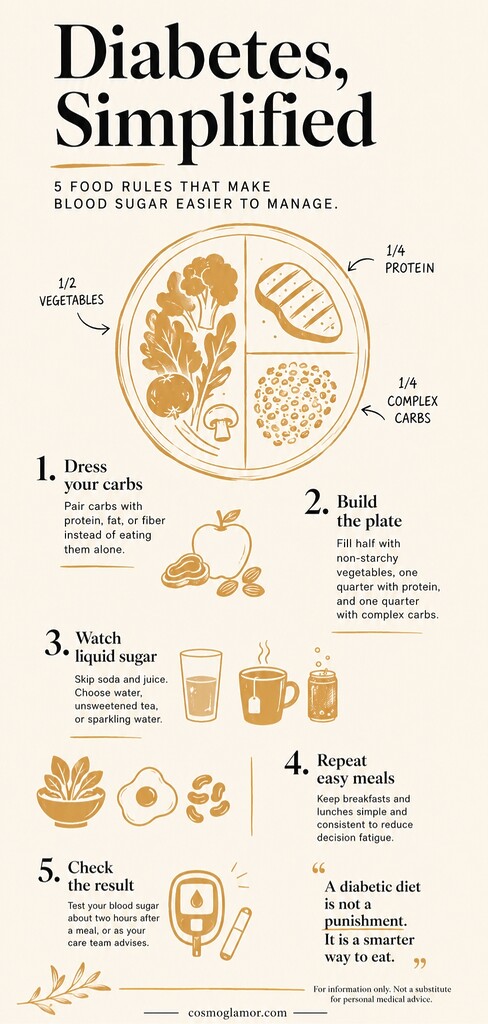
When you eat a naked carb like a plain bagel or a bowl of white rice, your digestive system can break it down into glucose relatively quickly. That can push your blood sugar up fast. To blunt that effect, pair carbohydrates with protein when you can, and include fat or fiber instead of eating carbs alone.
If you want an apple, eat it with a small handful of almonds or a spoonful of peanut butter. The fiber in plant foods can help reduce the glycemic response from carbohydrate-rich foods, while the nuts add protein and fat so the snack is not just fruit by itself. That gives you a steadier rise instead of a sudden wave.
How to Build a Plate
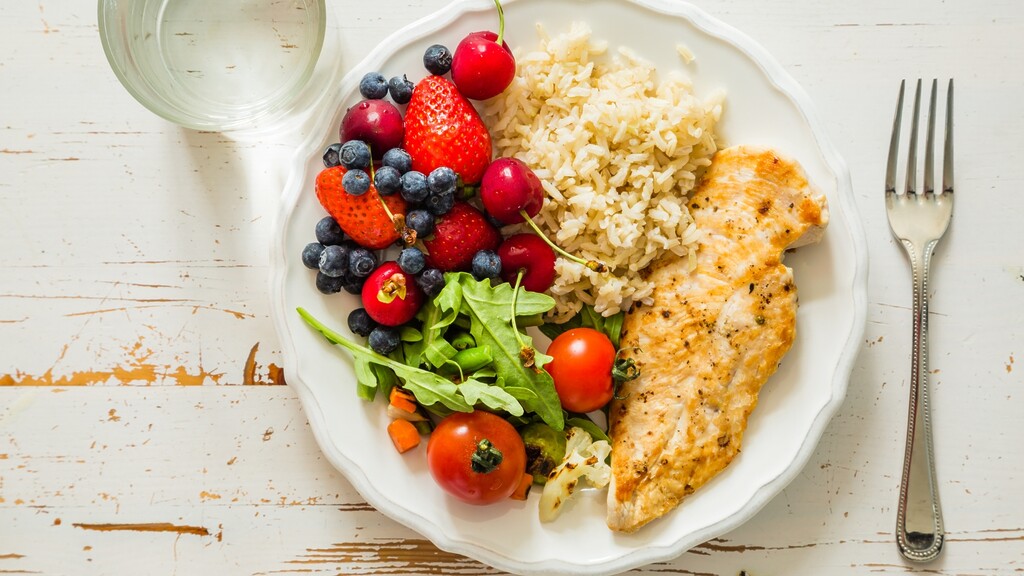
You do not have to weigh every ounce of food to master the diabetes diet basics. The easiest way to manage your portions is to use the plate method. This visual trick automatically controls your carbohydrate intake without requiring a calculator at the dinner table.
Draw an imaginary line down the middle of a standard nine-inch dinner plate. Fill that entire half with non-starchy vegetables. Think roasted broccoli, spinach, asparagus, or a mixed green salad. These vegetables are bulky and packed with fiber, so they fill your stomach while barely touching your blood sugar.
Divide the remaining empty half into two smaller quarters. Put your lean protein in one quarter. Chicken, fish, tofu, or eggs go here. Put your complex carbohydrate in the final quarter. This is where your brown rice, sweet potato, or beans belong.
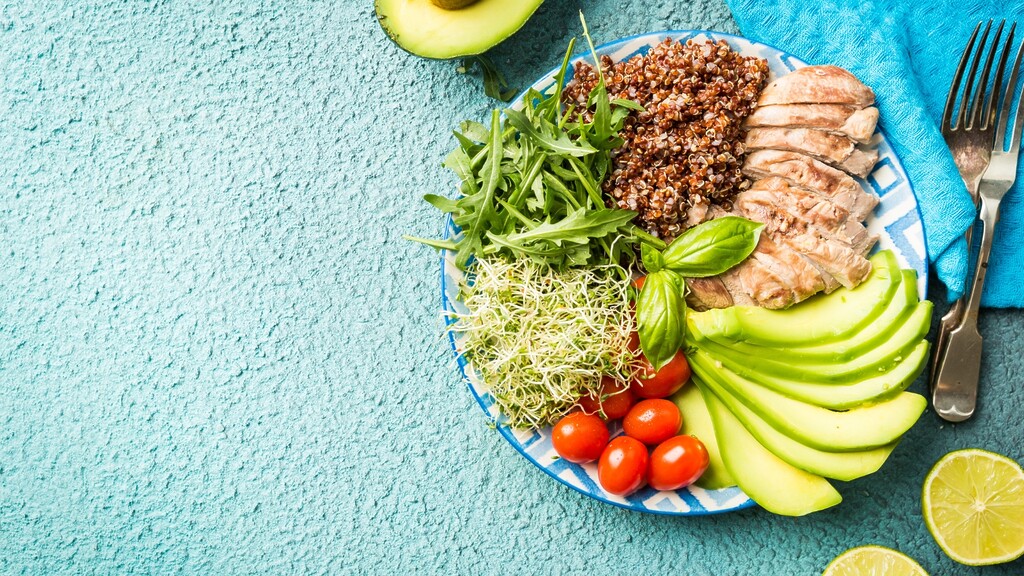
If you stick to this layout, the math handles itself. You will automatically eat a moderate amount of carbs anchored by a heavy dose of fiber and protein.
The Liquid Sugar Trap
Solid food is only half the equation. The fastest way to destabilize your blood sugar is to drink your calories. Liquid sugar can raise blood sugar quickly.
When you drink regular soda, sweetened iced tea, or even pure fruit juice, the sugar hits your bloodstream in minutes. There is no fiber to slow it down. If you only make one change today, swap all sugary drinks for water, unsweetened tea, or sparkling water.
Fruit juice often tricks beginners because it sounds healthy. But a glass of orange juice contains the sugar of several oranges with all the stabilizing fiber stripped away. Eat the whole orange instead.
Creating Your Everyday Meal Plan
Information means nothing until it becomes a grocery list. To build a diabetic meal plan that you will actually follow, keep your breakfasts and lunches repetitive. Decision fatigue is the enemy of a new habit.
Pick two safe, balanced breakfasts. A common option is two scrambled eggs cooked in butter with one slice of whole-wheat toast. Rotate between those two meals every morning. Do the same for lunch so you never have to guess. A reliable lunch template is two handfuls of mixed greens, a palm-sized piece of leftover chicken, and a half-cup of black beans for your complex carb. Dress it with olive oil and vinegar. Save your mental energy for cooking dinner.
The Two-Hour Data Check
You can follow the plate rules perfectly, but your body still has the final say. When I started, I treated my meals like an experiment. What worked for a textbook might not work for my metabolism.
The only way to know if a specific carbohydrate amount works for you is to check your blood sugar about two hours after your first bite, or at the time your care team recommends. If your number spikes higher than your target range, you know that specific meal needs more protein, more fat, or a smaller portion of carbs next time you eat it. You are just gathering data so you can make a better choice tomorrow.
A diabetic diet is not a punishment you have to endure. It is just a highly efficient way of eating that your body actually prefers.
Frequently Asked Questions
Can I ever eat dessert again?
Yes. The goal is management, not perfection. If you want a piece of cake at a birthday party, eat a smaller portion of carbs during your main meal. Eat the dessert right after your dinner rather than by itself hours later. The protein and fiber from your meal will help blunt the sugar spike from the dessert.
What if my blood sugar is high in the morning even if I ate well?
This is common and often called the dawn phenomenon. Your body can release extra glucose early in the morning as part of this pattern. Sometimes evening activity or the protein-to-carbohydrate balance of your evening meal can affect your overnight numbers. Discuss persistent morning highs with your doctor.
Do I have to buy expensive sugar-free products?
No. Many products marketed specifically to diabetics are heavily processed and expensive. Whole, naturally low-carb foods like eggs, frozen vegetables, canned tuna, and beans are budget-friendly and much better for your metabolic health than a packaged keto cookie.
Taking control of your diet starts with your very next meal. You do not have to overhaul your entire pantry before sunset. Pick one balanced plate, drink a glass of water, and trust that your body will respond to the better choices you make today.
Sources
- Adding Protein to a Carbohydrate Meal – The Journal of Nutrition, 2024.
- Soluble Dietary Fibers and Glycemic Response – Foods, 2022.
- Glycemic Response to SSBs and ASBs – Nutrition Journal, 2025.