

You stand in front of the open pantry at 4:00 PM, hungry, tired, and staring at a wall of carbohydrates. If you have to spend ten minutes reading nutrition labels just to find a safe snack, your setup is broken. Relying on willpower at the end of a long day is a losing game.
Note: I approach this as a researcher sharing the environment changes that helped me bring my A1C from 7.8% down to 6.1%. Always consult your physician before making significant dietary changes.
A true diabetic pantry makeover is about designing a space where the easiest choice is also the right one. You don't need a complicated system. You just need a weekend afternoon, a few garbage bags, and three ruthless rules.
Rule 1: Evict the Hidden Liquid Spikes
We start with condiments and sauces because they are the fastest way to accidentally sabotage your day. Barbecue sauce, teriyaki glazes, sweet chili sauces, and standard ketchup are essentially flavored syrups. Liquid sugars are easy to overdo because the sweetness is hidden in a pour, not sitting there as an obvious dessert.
Pull every bottle and jar out of the pantry and check the sugar content. Do not trust the front of the label; “organic” or “natural” does not mean safe for blood sugar. Agave and honey are still added sugars, so don't treat them like a blood-sugar loophole.
Bag up any sauce with more than 3 grams of added sugar per serving and replace it with lower-sugar options or brands sweetened with stevia or allulose. If you can't find those, swap the sticky glazes for simple apple cider vinegar and dry spice rubs. Keep standard yellow mustard, Louisiana-style hot sauce, olive oil, and coconut aminos on the prime eye-level shelf; they are usually low in added sugar and easy to use for flavor.
Rule 2: Apply the 5-to-1 Fiber Ratio

Throwing away every carbohydrate in the house usually leads to a binge a week later. Instead of banning all grains, use a simple math filter to decide what gets to stay on your shelves.
Look at the nutrition label on your crackers, pasta, breads, and cereals. Divide the total carbohydrates by the dietary fiber. If the food does not contain at least one gram of fiber for every five grams of carbohydrate, it leaves the pantry. Fiber helps reduce the glycemic response to carbohydrate-rich foods, especially when the food keeps more of its natural structure.
Under this rule, standard white rice and traditional flour tortillas fail instantly. Quinoa, lentil pasta, and certain seeded crackers pass. This ratio removes the emotion from the purge. If the math fails, the food goes.
Rule 3: Create a Safe Zone (The Family Divide)
The hardest part of a dietary shift is managing the kitchen when you live with people who do not have diabetes. Your teenagers are still going to want their pretzels, and your spouse might still buy traditional granola bars. Trying to force a completely carb-free household usually causes unnecessary resentment.
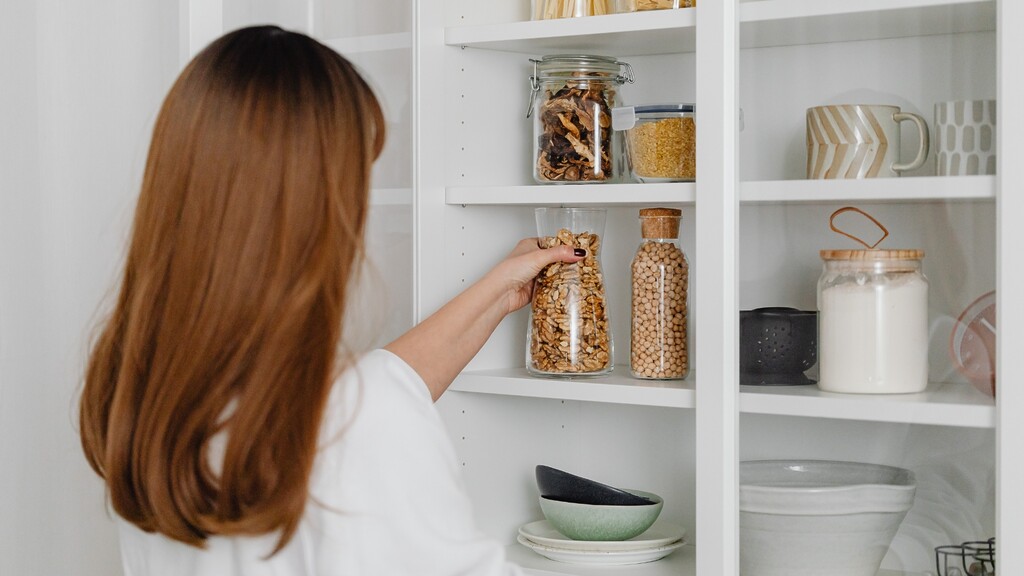
The solution is visual hierarchy. Take over the middle, eye-level shelves entirely for your diabetic pantry staples. If you only have standard kitchen cabinets instead of a walk-in pantry, claim the front row of the easiest-to-reach cabinet. Move all of the standard family snacks to the very bottom shelf or the highest, hard-to-reach spot.
Store the non-diabetic family snacks in opaque, solid-colored bins with lids.
Willpower is a finite resource, but a well-designed environment works for you even when you're tired.
If you can't see the bright, shiny wrappers of the potato chips when you open the door, your brain is far less likely to crave them. Out of sight genuinely means out of mind.
Building Your Diabetic Grocery List
Once you have cleared the traps, you are left with empty space. Restocking doesn't mean buying expensive specialty keto products. Focus on single-ingredient foods with a long shelf life.
You want to heavily stock healthy fats and proteins. Almonds, walnuts, and macadamia nuts are dense, crunchy, and filling. Canned wild salmon, tuna, and sardines provide immediate, zero-carb protein for a rushed lunch. Chia seeds and ground flaxseed should be kept in airtight containers to stir into Greek yogurt or use as instant thickeners for soups.
For your carbohydrates, lean on dry lentils, black beans, and chickpeas. While they contain carbs, they are packaged with so much natural fiber and protein that the blood sugar impact is entirely different than eating a sleeve of saltines.
Common Pantry Purge Questions
Do I have to throw away good food?
The guilt of throwing away perfectly good food keeps many people stuck in a cycle of eating things that harm them. You don't have to put it in the trash. Box up unopened bags of rice, pasta, and sugary snacks and drive them to a local food bank today. If a box is open and fails the fiber ratio, throw it away. Eating food that actively damages your metabolic health to avoid “wasting” it means you are treating your body like a garbage can.
What do I do with my baking supplies?
Standard all-purpose flour and granulated sugar need to go. Replace the white flour with superfine blanched almond flour and coconut flour. Swap the granulated sugar for a 1-to-1 monk fruit or erythritol sweetener blend. Erythritol has a very low glycemic impact, and monk fruit is typically used in tiny amounts, but check the label for fillers like dextrose or maltodextrin. Keep your baking powder, baking soda, pure vanilla extract, and unsweetened cocoa powder; those are all fine to keep.
The first few days with your new setup will feel strange, maybe even a little bare. But the first time you walk into the kitchen exhausted and blindly grab a snack without having to do a mental math equation, you'll realize exactly what you bought yourself: peace of mind.
Sources
- Impact of allulose on blood glucose in type 2 diabetes – Metabolism Open, 2024.
- The Effects of Soluble Dietary Fibers on Glycemic Response – Foods, 2022.
- Altering the availability or proximity of food products – Cochrane Database of Systematic Reviews, 2019.
- Relationship between lentil serving and postprandial glucose response – Nutrients, 2022.
- Effects of Oral Administration of Erythritol on Patients with Diabetes – Regulatory Toxicology and Pharmacology, 1996.