
When my A1C came back at 7.8 percent a few years ago, my first thought was about my morning coffee. Drinking it black felt like a punishment, but stirring in regular sugar felt like a risk I could no longer take. Finding the right sugar substitutes for diabetics turned into a full kitchen chemistry project. I quickly learned that the best sweetener for diabetics is not a single magical bag you can use for everything. What works perfectly in a hot cup of tea will often turn a batch of cookies into a crumbly, bitter mess. After 18 months of testing ingredients, logging my numbers, and watching my A1C drop to 6.1 percent, I stopped looking for one perfect replacement. I built a toolkit instead.
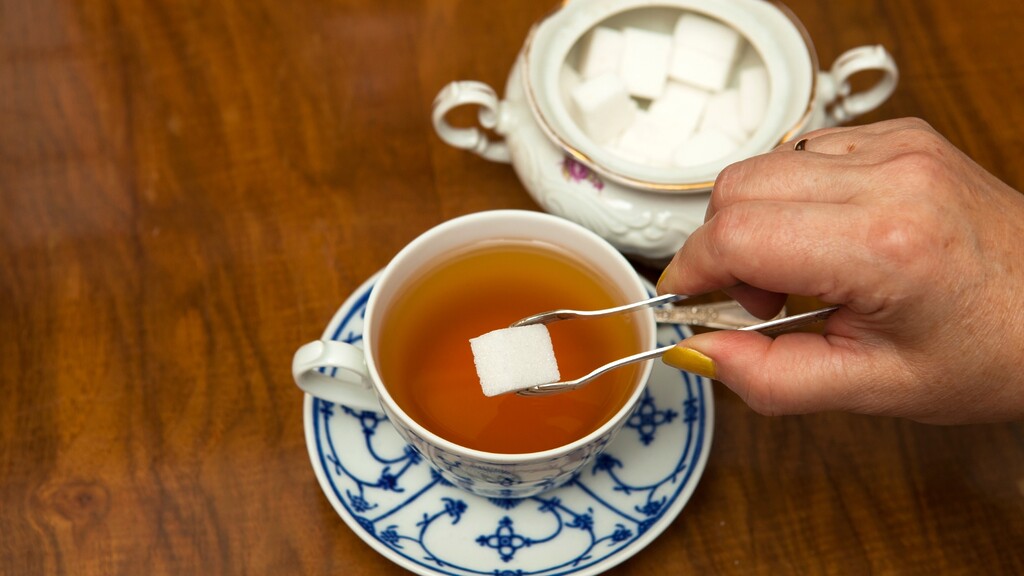
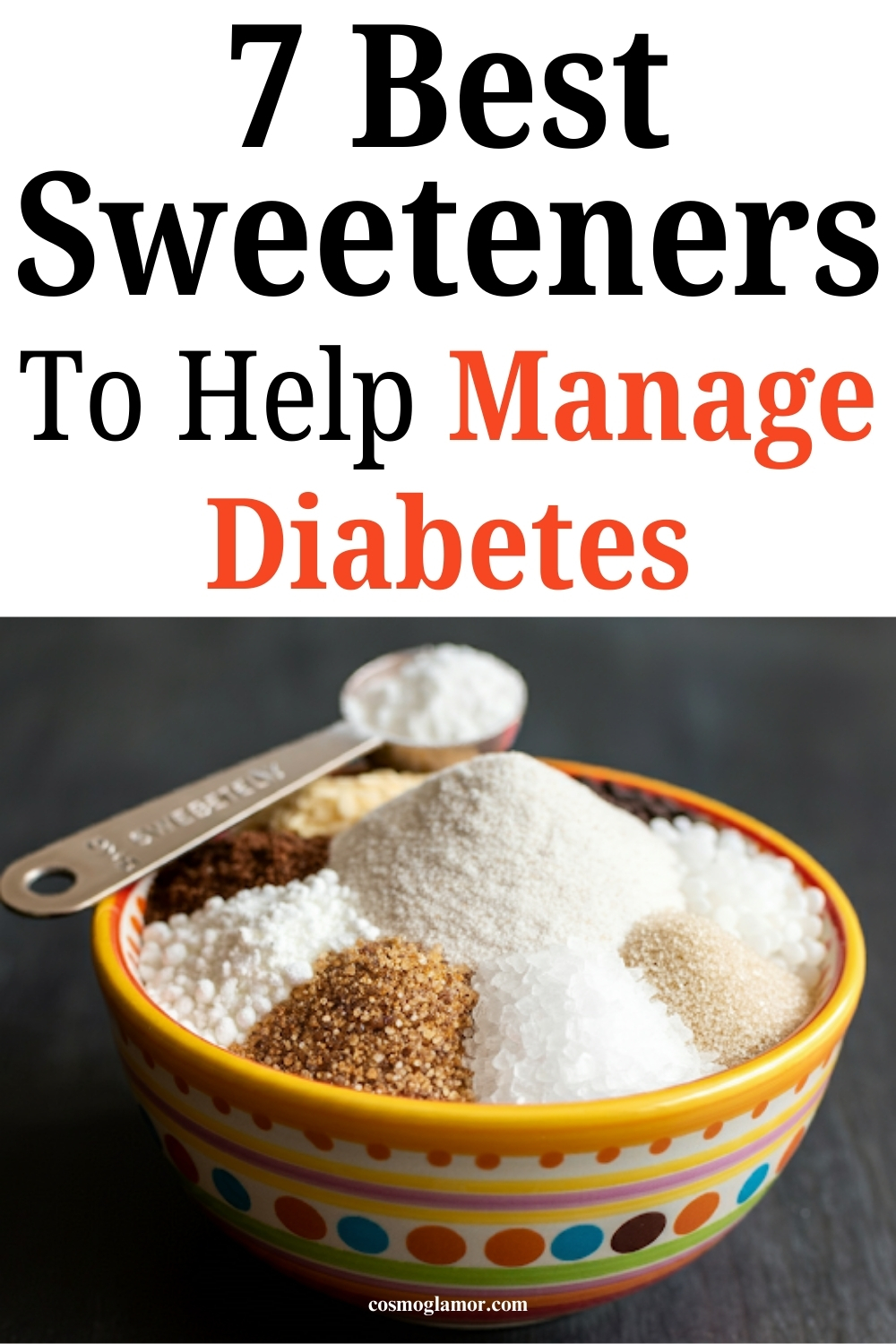
This list covers the seven natural sugar substitutes for diabetics that perform best in a real kitchen, based on their taste, how they behave under heat, and their minimal impact on blood glucose.
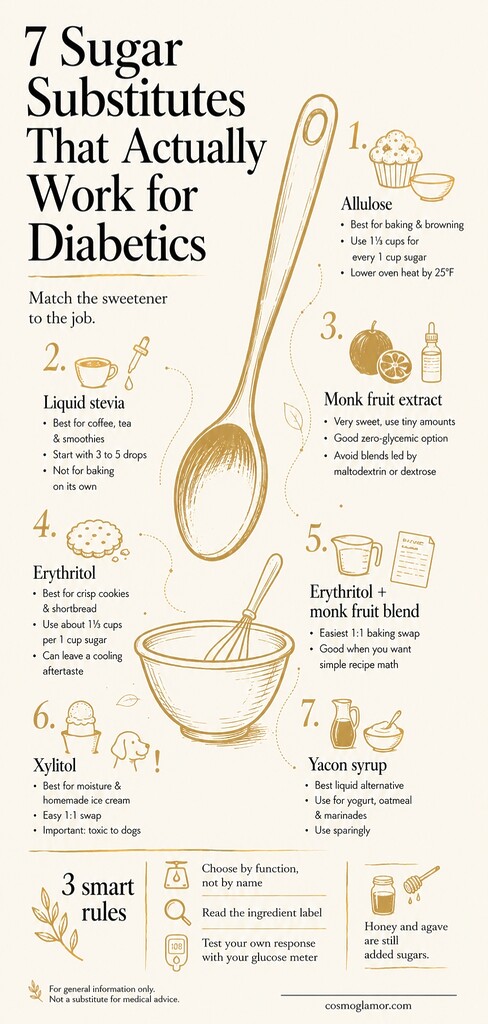
1. Allulose for Baking and Browning
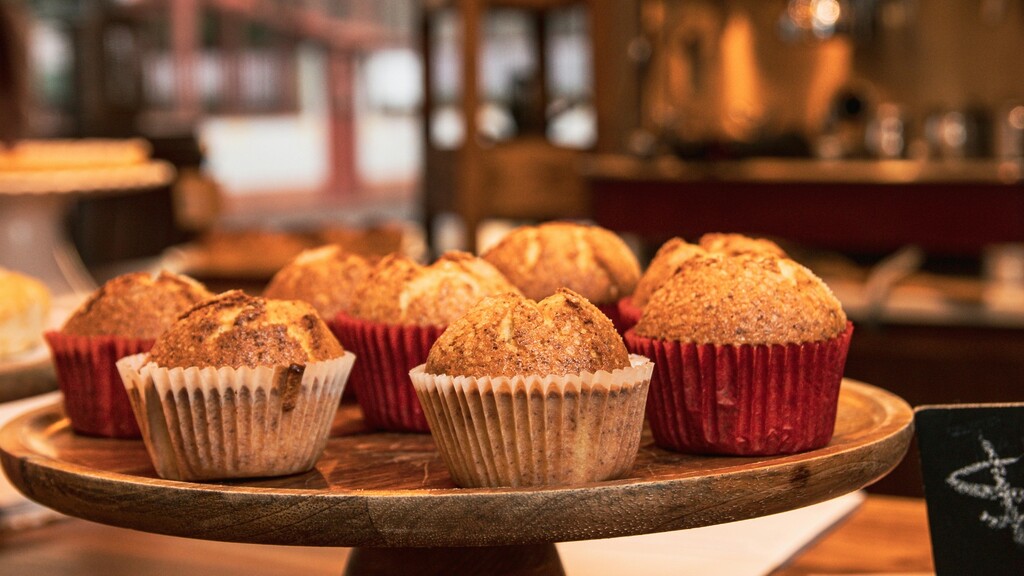
If you want to bake a cake that actually tastes and feels like a cake, allulose is your strongest option. It is a rare sugar found naturally in small quantities in foods like figs and raisins. It tastes about 70 percent as sweet as table sugar and has no lingering chemical aftertaste.
Its biggest advantage in the kitchen is that it browns and caramelizes under heat. Most diabetic friendly sweeteners stay stubbornly pale in the oven, leaving baked goods looking raw. Allulose melts and behaves so much like the real thing that you can even use it to make caramel sauce. Your body absorbs allulose but barely metabolizes it, meaning much of it is excreted without triggering a blood sugar spike.
Because it is slightly less sweet than sugar, you will need to add about 1 and 1/3 cups of allulose for every cup of regular sugar a recipe calls for. It also browns significantly faster than regular sugar, so you should drop your oven temperature by about 25°F and check your timer early to prevent your baked goods from burning.
2. Liquid Stevia for Hot and Cold Beverages
Powdered stevia often comes with a bitter, licorice-like aftertaste that can ruin a good cup of coffee. Liquid stevia drops bypass a lot of that bitterness because they are highly concentrated and usually pure, without the bulky fillers added to powdered versions.
Liquid stevia is entirely calorie-free and ranks at zero on the glycemic index. Use liquid drops specifically for drinks, smoothies, and unbaked desserts like yogurt or homemade salad dressings. It provides zero bulk. If you try to bake a cake using only liquid stevia, you will end up with a flat, dense puddle because you have removed the physical structure that granulated sugar provides.
Start with three to five drops for a standard mug of coffee or tea. You can always add more, but it is impossible to fix a drink once you over-sweeten it.
3. Monk Fruit Extract for Intense, Zero-Glycemic Sweetness
Monk fruit is a small green melon native to Southeast Asia. The extract derived from it can be roughly 100 to 400 times sweeter than regular sugar, depending on its concentration. Like stevia, pure monk fruit extract contains zero calories and does not affect blood glucose levels.
It has a slightly fruity, rounded flavor profile that many people prefer over stevia. Because it is so intensely sweet, pure monk fruit extract is incredibly difficult to measure for everyday cooking. Roughly 1/2 teaspoon of pure monk fruit powder provides the sweetness of a full cup of regular sugar. When buying pure monk fruit, look for tiny shaker bottles or liquid drops, and avoid any packages that list maltodextrin or dextrose as the first ingredient. Those are highly processed additives that can spike your blood sugar just as fast as traditional sugar.
4. Erythritol for Crispy Textures
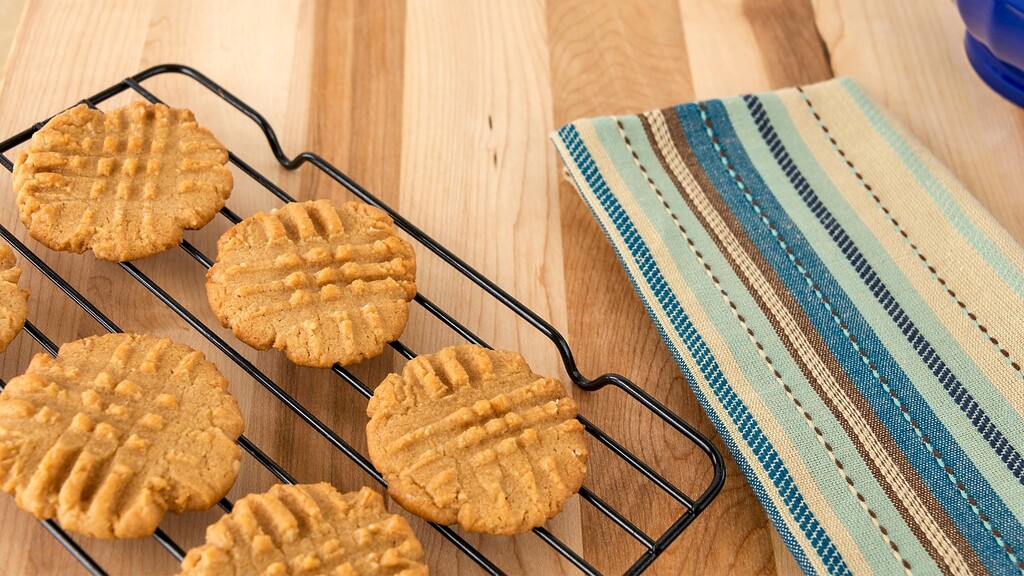
Erythritol is a sugar alcohol that naturally occurs in some fruits. It has almost zero calories and a glycemic index of zero. It is widely available, relatively inexpensive, and forms the base of many commercial low glycemic sugar substitutes.
In the kitchen, erythritol is excellent for creating crispy textures. If you are making shortbread, biscotti, or thin cookies, erythritol will help them snap. Because it sits at about 70 percent of the sweetness of table sugar, you will need roughly 1 and 1/3 cups of erythritol to replace one cup of sugar in your recipes. It does have a distinct cooling sensation on the tongue, similar to the feeling of chewing mint gum. Some people do not mind this at all, while others find it distracting in warm desserts like chocolate chip cookies.
A quick note on digestion. While erythritol is generally well-tolerated compared to other sugar alcohols, consuming large amounts in a single sitting can cause digestive upset. Start with small portions if you are trying it for the first time.
5. Erythritol and Monk Fruit Blends for 1:1 Swaps
If you want to bake a family recipe without doing complex math, a 1:1 baking blend is your best bet. Companies frequently combine erythritol with monk fruit extract to create a product that measures exactly like table sugar.
This combination solves a few problems at once. The erythritol provides the physical bulk needed to give cakes and muffins their volume. The monk fruit ramps up the sweetness to match regular sugar, which helps mask the cooling aftertaste of the pure erythritol. You can take an old family recipe that calls for one cup of sugar and simply pour in one cup of this blend.
6. Xylitol for Moisture and Ice Cream
Xylitol is another sugar alcohol. It is roughly as sweet as table sugar, measuring out as an easy 1:1 swap in your kitchen, but it contains about 40 percent fewer calories. It has a very low glycemic index of 7, meaning it causes a slow, steady rise in blood sugar rather than a sharp spike.
Unlike erythritol, xylitol retains moisture beautifully. It is the best choice for homemade diabetic-friendly ice cream because it lowers the freezing point of liquids, keeping the ice cream soft and scoopable instead of freezing into a solid block of ice.
I must include a strict safety warning here. Xylitol is highly toxic to dogs. Even a small amount dropped on the kitchen floor could be fatal to a dog. If you have a dog in the house, I strongly recommend keeping xylitol completely out of your pantry and choosing one of the other options on this list instead.
7. Yacon Syrup for a Liquid Honey Alternative
Finding a diabetic-friendly replacement for liquid sweeteners like honey or maple syrup is notoriously difficult. Yacon syrup is extracted from the yacon plant, which is native to the Andes mountains. It has a dark, rich flavor similar to molasses or dark honey.
It works so well for metabolic health because it is packed with fructooligosaccharides. This is a type of soluble fiber that tastes sweet but resists digestion in the upper gastrointestinal tract. Because part of it resists digestion, it may have a gentler impact on blood glucose than many liquid sweeteners. Use it sparingly to drizzle over oatmeal, stir into marinades, or sweeten a bowl of plain Greek yogurt.
The goal isn't to perfectly clone sugar. The goal is to find a sweetness that lets you enjoy your food without anxiety.
A Quick Note on Safety and Testing
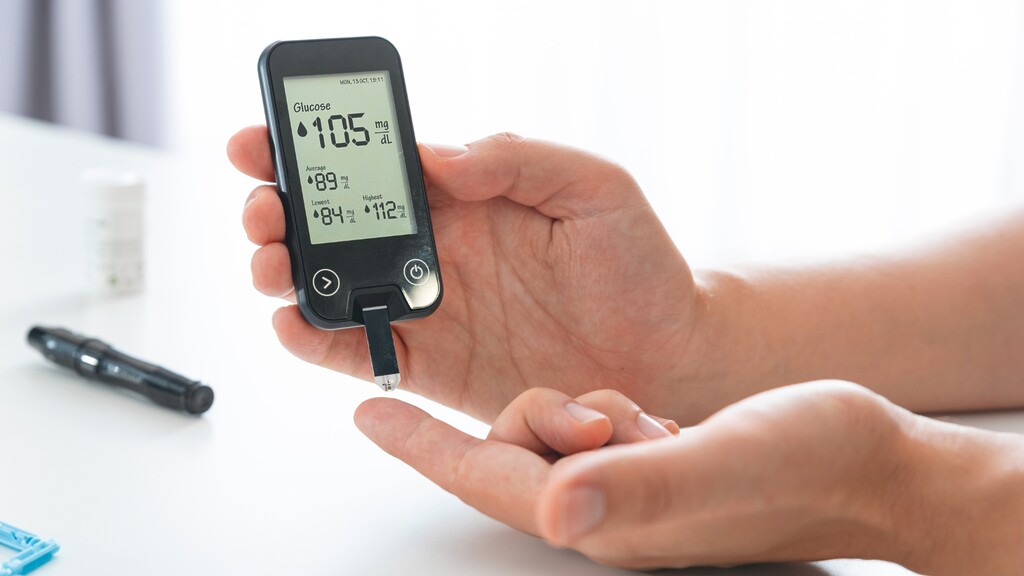
I share what clinical research and my own daily blood sugar logs have taught me over the last two years. However, everyone's metabolic response is slightly different. What keeps my glucose completely stable might cause a mild rise for someone else. Always consult your physician or a registered dietitian before making significant changes to your diet, and rely on your own glucose meter to see how your body handles these ingredients.
Common Questions About Diabetic Sweeteners
Are natural sweeteners like honey or agave safe for diabetics?
No. This is one of the most common and dangerous nutritional myths. While honey, maple syrup, and agave nectar are natural and less processed, they are still packed with simple carbohydrates. Agave is particularly high in fructose. Your body still treats these natural syrups as added sugars, and they can raise blood glucose depending on the portion. They are not diabetic-friendly free foods.
Is it safe to use artificial sweeteners like aspartame or sucralose?
The FDA considers approved artificial sweeteners safe for the general public under their conditions of use. They will not spike your blood sugar. I prefer the natural options listed above simply because they tend to perform better in cooking and baking, and they align better with a whole-foods approach to eating.
Why do some sugar-free products still spike my blood sugar?
Always read the ingredient label, not just the front of the box. Many commercial sugar-free products remove the sugar but replace it with refined starches, tapioca starch, or maltodextrin to improve the texture. These refined carbohydrates can digest quickly and hit your bloodstream as glucose. The sweetener itself might be safe, but the vehicle carrying it is causing the spike.
Managing your numbers does not mean you have to surrender every comfort in your kitchen. It just takes a little testing to find out which bag belongs in your coffee and which one belongs in your mixing bowl.
Sources
- Declaration of Allulose and Calories from Allulose — U.S. Food and Drug Administration, 2020.
- GRAS Notice 629: Luo Han Guo Fruit Extract — U.S. Food and Drug Administration, 2015.
- Gastrointestinal Tolerance of Erythritol and Xylitol — European Journal of Clinical Nutrition, 2007.
- Xylitol: What to Know — Harvard Health Publishing, 2024.
- Paws Off! Xylitol is Toxic to Dogs — U.S. Food and Drug Administration, 2025.
- Yacon Syrup Reduces Postprandial Glycemic Response — Food Research International, 2019.
- 5 Ideas to Reduce Sugar in Your Diet — American Diabetes Association, n.d.
- High-Intensity Sweeteners — U.S. Food and Drug Administration, 2014.
- Physiology, Carbohydrates — StatPearls, 2023.