

When you have diabetes, changing your food feels like a high-stakes math test. I spent years trying to eat just a little less of everything, which only left me hungry and my blood sugar erratic. Switching to the keto diet for diabetes finally gave me metabolic stability. Treating my health like a data project over 18 months helped me drop 50 pounds without starving. This guide walks through exactly how a very low carb approach shifts your body from storing fat to burning it safely, complete with the exact meals that make it work.
Jump to the daily keto recipes
Why Carbohydrate Restriction Changes the Equation
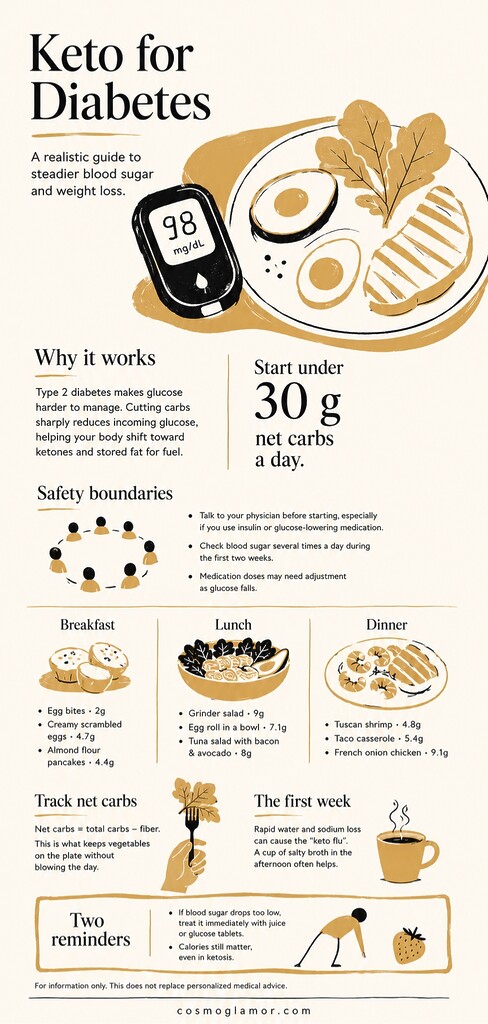
Type 2 diabetes fundamentally means your body struggles to process insulin and clear glucose from your blood. Carbohydrates break down into glucose. By drastically lowering your carbohydrate intake, you remove the constant wave of glucose entering your system. Keep your daily net carbs under 30 grams when starting out, if your doctor agrees. This low threshold can help push your liver toward ketone production for energy instead of relying mostly on glucose.
This is keto diabetes weight loss in action. Without high levels of circulating insulin, your body can finally access its own stored fat for fuel. You stop fighting your metabolism and start working alongside it.
The Safety Boundaries You Cannot Skip
Always consult your physician before starting any new diet, especially if you take insulin or medications that lower blood glucose.
If you take medication, going keto changes your physical requirements rapidly. Less glucose coming in from food means your current medication dose might suddenly be too high, creating a risk for hypoglycemia. Check your levels frequently during the first couple of weeks, exactly as your doctor recommends. You need real-time data so your doctor can adjust your prescriptions as your glucose naturally falls.
Translating the Strategy into Real Meals
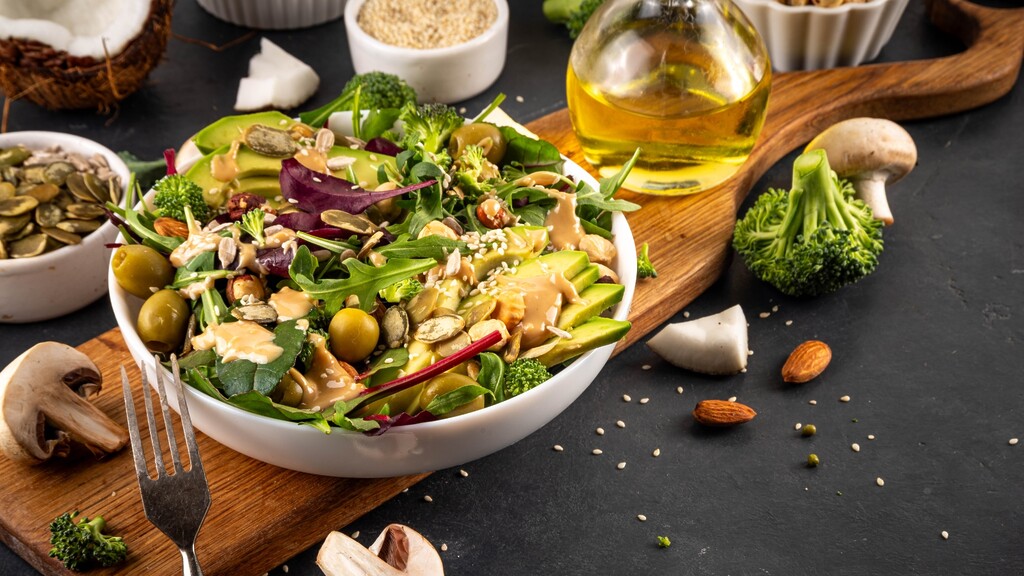
A diet only works if the food actually tastes good and keeps you full. You do not have to live on plain chicken breast and celery. Keto for type 2 diabetes relies on rich, satisfying fats and adequate protein to prevent the hunger that usually derails weight loss. Here is how to structure your day using recipes built to help keep your numbers steadier.
Fast & Filling Breakfasts
Morning hunger can ruin a whole day of careful planning. You need high protein and healthy fats right out of the gate.
- Velvety Egg Bites (1 hour | 2g Net Carbs) – Achieve that coffee-shop texture at home using a simple water bath. These are custardy, satisfying, and perfect for meal-prepping your week.
- Creamy Keto Scrambled Eggs (10 mins | 4.7g Net Carbs) – Blending cottage cheese into the eggs first creates a smooth, protein-rich base for the fluffiest scramble you'll ever make.
- Fluffy Almond Flour Pancakes (45 mins | 4.4g Net Carbs) – When you want a slow weekend morning without the blood sugar spike, these tender pancakes hit the mark. Serve with sugar-free syrup.
Packable, High-Energy Lunches
A lunch salad is useless if you are starving by three in the afternoon. These midday meals are heavy on flavor and fat to keep your energy steady.
- The Ultimate Grinder Salad (25 mins | 9g Net Carbs) – A bread-free version of the viral deli sub. A creamy vinaigrette over crisp lettuce, savory meats, and cheeses.
- 20-Minute Egg Roll in a Bowl (20 mins | 7.1g Net Carbs) – This one-pan meal captures the umami-rich essence of an egg roll using juicy ground pork and crisp cabbage, skipping the fryer entirely.
- Cottage Cheese Tuna Salad (27 mins | 8g Net Carbs) – Ditching the mayo for cottage cheese adds massive protein, while crispy bacon and avocado bring the healthy fats.
Comforting Weeknight Dinners
Dinner should feel like a reward, not a restriction. These recipes deliver classic comfort food textures without the carbohydrate burden.
- Creamy Keto Tuscan Shrimp (28 mins | 4.8g Net Carbs) – A one-pan, restaurant-quality skillet that perfectly aligns with your macro targets while delivering luxurious flavor.
- Keto Taco Casserole (35 mins | 5.4g Net Carbs) – Saucy, beefy, and blanketed with cheddar. It's weeknight-fast and incredibly satisfying.
- French Onion Chicken (55 mins | 9.1g Net Carbs) – Get the deep, savory essence of French onion soup by simmering chicken in a rich broth and topping it with bubbly Swiss and provolone.
Tracking Total vs. Net Carbs
Fiber is technically a carbohydrate, but it usually affects your blood glucose differently than starch and sugar. Subtracting fiber from your total carbohydrates gives you your net carbs, though this number is not always perfectly precise. Use net carbs as your keto planning tool, and keep checking your own blood glucose response so green vegetables stay on the plate without surprises.
Tracking net carbs instead of total carbs is what allows you to eat a massive bowl of roasted broccoli without failing your diet for the day.
Managing the Initial Transition
Your body will flush out water and sodium rapidly during the first week of carb restriction. This sudden drop in electrolytes causes the fatigue and headaches people often call the keto flu. If your doctor has not told you to limit sodium, drink a cup of salty broth every afternoon during your first week. The extra sodium replaces what your kidneys are flushing out and may ease the brain fog, fatigue, or headache that can come with the transition.
Common Questions About Keto and Blood Sugar
What if my levels drop too low?
Treat hypoglycemia immediately with a fast-acting carbohydrate like fruit juice or glucose tablets. Do not try to tough it out just to stay in ketosis. Your immediate physical safety always overrides your diet goals.
Do calories still matter on this diet?
Yes. Ketosis changes your metabolism, but eating a massive surplus of fat will still prevent weight loss. You naturally tend to eat less on keto because fat and protein trigger satiety signals much faster than carbohydrates do, but total intake still counts.
Shifting to this way of eating takes patience and a willingness to measure your progress, but regaining predictable energy and taking control of your metabolism makes the learning curve entirely worth the effort.
Sources
- The Ketogenic Diet: Clinical Applications, Evidence-based Indications, and Implementation – NCBI Bookshelf, 2025.
- Adapting Medication for Type 2 Diabetes to a Low Carbohydrate Diet – Frontiers in Nutrition, 2021.
- Get to Know Carbs – American Diabetes Association, 2026.
- Symptoms during initiation of a ketogenic diet – Frontiers in Nutrition, 2025.
- Treatment of Low Blood Sugar (Hypoglycemia) – CDC, 2024.
- Online Very Low-Carbohydrate Ketogenic Diet Trial – Journal of Medical Internet Research, 2017.
- Save for Later1.6K




14 Responses
This is a really comprehensive guide! I’ve been considering keto for my type 2 diabetes, but I’m worried about the ‘keto flu.’ I’ve heard it can be pretty rough. How long does it typically last, and are there any tips for making it more bearable? Also, is it safe to exercise during this initial phase?
Hi Madison, thanks for your comment! It’s great that you’re considering keto. The ‘keto flu’ is a common concern, but it’s usually temporary and manageable. Most people experience symptoms for a few days to a week as their bodies adapt to using fat for fuel.
Here are some tips to make it more bearable:
Hydrate: Drink plenty of water to combat dehydration, a common cause of keto flu symptoms.
Electrolytes: Replenish electrolytes like sodium, potassium, and magnesium. You can do this through food (like adding a pinch of salt to your meals, eating avocados, and leafy greens) or with electrolyte supplements.
Rest: Allow your body to rest and recover.
Increase fat intake: Make sure you’re eating enough healthy fats to provide your body with energy.
As for exercise, it’s generally safe to continue exercising during the initial phase of keto, but it’s a good idea to listen to your body. You might experience reduced energy levels at first, so consider starting with light to moderate-intensity activities. As your body adapts, you can gradually increase the intensity. Always stay hydrated and make sure you are getting enough electrolytes.
It is always best to consult your doctor before starting a new exercise regimen or if you have any concerns.
I’m intrigued by the idea of keto, but I’m a vegetarian. Is it possible to follow a ketogenic diet without eating meat or fish? What are some good sources of protein and fat for vegetarian keto?
Hi Abigail, that’s a great question! It’s definitely possible to follow a vegetarian ketogenic diet, although it requires careful planning.
Here are some good sources of protein and fat for vegetarian keto:
Protein:
Eggs
Cheese (cheddar, mozzarella, feta, etc.)
Full-fat Greek yogurt
Tofu and tempeh (in moderation due to carb content)
Nuts and seeds (almonds, walnuts, chia seeds, etc.)
Nutritional yeast (for a cheesy flavor)
Fat:
Avocados
Olive oil
Coconut oil
Nuts and seeds
Full-fat dairy products (if you consume dairy)
You’ll need to be mindful of your carb intake, as many vegetarian protein sources also contain carbohydrates. It’s important to track your macros and focus on low-carb vegetables like leafy greens, broccoli, and cauliflower.
There are also many great vegetarian keto recipes available online and in cookbooks. With a little planning and creativity, you can absolutely make vegetarian keto work for you!
Alright, I’m intrigued, but also a little freaked out! I’ve been living the low-fat life for so long, the idea of eating MORE fat makes my brain do a somersault. Is this really safe for someone with type 2 diabetes? It almost feels like I’d be pouring gasoline on the fire, so to speak. And what about cholesterol? My doctor’s always warning me about that. Also, cloud bread? Is that even real? It sounds like something a unicorn would eat. I need more convincing before I ditch my whole-grain toast!
Hi Brenda! Great questions, and I totally get the initial hesitation. It’s counterintuitive after years of low-fat dogma, isn’t it? But here’s the thing about keto and diabetes: by drastically cutting carbs, you’re actually reducing the amount of glucose your body has to process, which is the root of the issue with diabetes. Many people, like me, find it helps stabilize blood sugar levels and can even reduce the need for medication (but always work with your doctor on that!). As for cholesterol, while keto is high-fat, it emphasizes healthy fats like avocados, olive oil, and fatty fish. These can actually improve your cholesterol profile. It’s the processed carbs and sugars that are the real culprits for heart health issues. It should be noted that there are some studies which show that a high intake of saturated fat can cause heart problems. This is why you should limit your intake of saturated fats. Regarding cloud bread… it IS real, and surprisingly tasty! It’s a great low-carb alternative to regular bread. Give it a try – you might be surprised. Remember, I’m sharing my experience, and it’s always best to consult with your doctor or a registered dietitian to see if keto is right for you.
Okay, I’m ready to jump on the keto bandwagon! But… I’m a terrible cook. Seriously, I once set water on fire. (Don’t ask.) Those 120 recipes sound amazing, but are they actually doable for someone who’s kitchen-challenged? And what about eating out? Is it even possible to be keto at a restaurant, or will I be stuck ordering plain lettuce and a side of disappointment? Help a girl out!
Tiffany, I hear you! Kitchen disasters are a real thing (and I’ve had my share, believe me!). The good news is that many keto recipes are surprisingly simple. The ones in this guide are designed to be beginner-friendly, with clear instructions and readily available ingredients. You’ll find plenty of easy one-pan meals, slow cooker recipes, and even no-bake options. We’re talking minimal effort, maximum flavor! As for eating out, it’s totally doable! Most restaurants have keto-friendly options if you know what to look for. Think grilled meats, salads (hold the croutons!), and bunless burgers. Don’t be afraid to ask for substitutions – most places are happy to accommodate. For example, you can ask for a lettuce wrap instead of a bun, or extra veggies instead of fries. You might even discover some new favorite dishes! With a little planning, you can definitely make keto work for your lifestyle – even if you’re a self-proclaimed kitchen disaster survivor!
Wow, this is a lot of information, but it’s really got me thinking about trying keto for my type 2 diabetes. I’m just a little worried about giving up carbs completely. Bread is my weakness! Are there any “cheat days” allowed on keto, or is that a total no-no? Also, is it really possible to make a decent pizza with cauliflower? I’m skeptical but willing to be surprised! 😉
Hi Sarah, thanks for your comment! I understand your concerns about giving up carbs. It can be tough, especially in the beginning! While traditional “cheat days” aren’t recommended on keto because they can kick you out of ketosis, some people find success with a cyclical keto approach, where they strategically incorporate higher-carb days. However, if your goal is diabetes management, it is best to consult your doctor first before doing so. It’s best to stick to the low-carb plan consistently. As for cauliflower pizza, believe me, it’s surprisingly good! It takes a little practice to get the crust right, but it’s definitely a worthy substitute when you’re craving pizza. There are tons of recipes online, experiment and find your favorite!
I’ve heard so much about keto and diabetes, but I’m still a little confused about how it actually works to improve blood sugar. Can you explain that part a bit more? Also, I’m a vegetarian, so is it possible to do keto without eating meat? It seems like a lot of the recipes involve meat or fish.
Hi Emily, those are great questions! Basically, when you eat carbs, your body breaks them down into glucose, which raises your blood sugar. Insulin is then released to help your cells absorb that glucose. But with diabetes, your body either doesn’t produce enough insulin or doesn’t use it effectively, leading to high blood sugar. Keto drastically reduces your carb intake, so there’s less glucose entering your bloodstream, which helps stabilize blood sugar levels. As for doing keto as a vegetarian, it’s definitely possible, though it requires a bit more planning. You’ll need to focus on plant-based fats like avocados, nuts, seeds, and oils, along with plenty of low-carb veggies. Eggs and full-fat dairy products (if you consume them) are also great protein sources. There are many resources online for vegetarian keto recipes, and many of the recipes provided in this guide can be adapted to be vegetarian-friendly. I hope that clears things up!
I’m pre-diabetic and would also love to lose about 30lbs. My one concern is I have an inner ear disorder that requires me to limit sodium and take a diuretic. If I don’t replenish the sodium will it cause problems with the diet?
Becky, thanks for bringing up such a crucial point! It’s really smart to be thinking about the interaction between your inner ear condition, diuretic use, and sodium intake on a keto diet. I totally understand your concern. While keto can be helpful for weight loss and blood sugar, the standard advice might not be the best fit for you. Things like the “keto flu” can be tricky because it often involves electrolyte imbalances, and you’re already managing those carefully with your diuretic. You’ll likely need a personalized approach to things like sodium – not just “low sodium,” but a specific target range that works with your medication and inner ear health. Also, it might be worth exploring whether a modified keto approach (perhaps with slightly higher carbs) or even a different eating plan altogether (like the Mediterranean diet, which can also be great for health) would be a better, safer option. Because your diuretic affects how your body processes sodium, potassium, and magnesium, and these are all interconnected with your inner ear, getting the balance right is key. To figure out the best and safest plan, tailored just for you, it’s really important to chat with your doctor or a registered dietitian.