

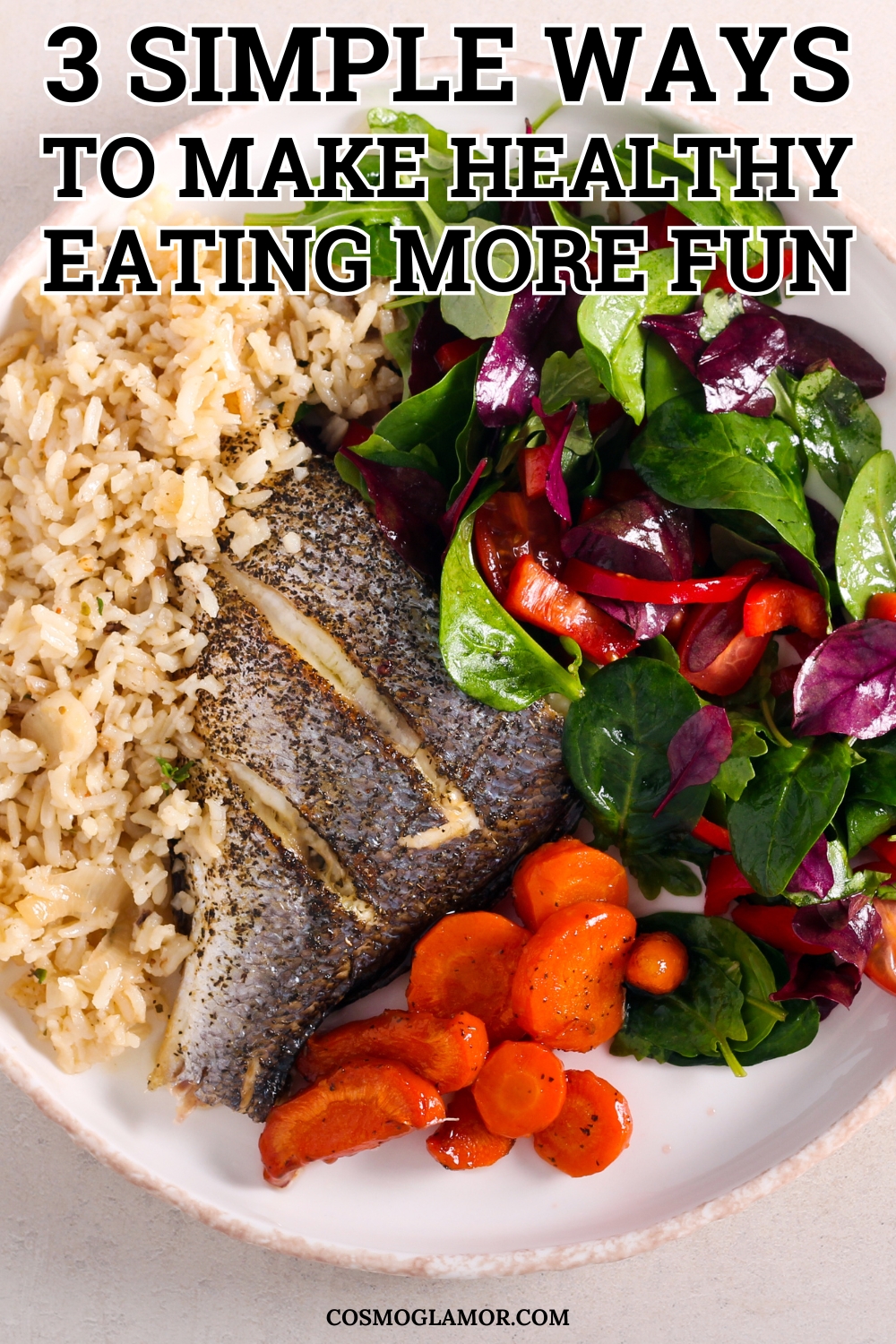
Most of us grew up believing that if a meal tastes too good, it probably isn't good for you. We learned to associate wellness with plain chicken breasts and steamed vegetables, a mindset that practically guarantees you will quit.
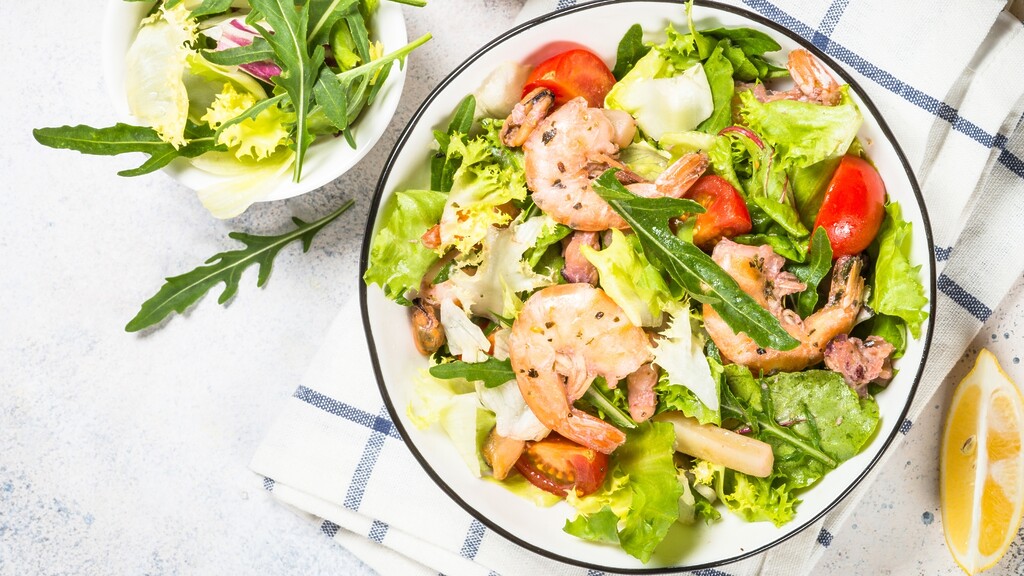
Willpower is a finite resource. If you have to force yourself through every lunch, you will eventually run out of steam and order takeout. Consistency does not come from discipline alone. It comes from building a daily menu you genuinely want to eat.
You do not need a private chef to make healthy eating motivation last. You just need to change how you assemble your plate.
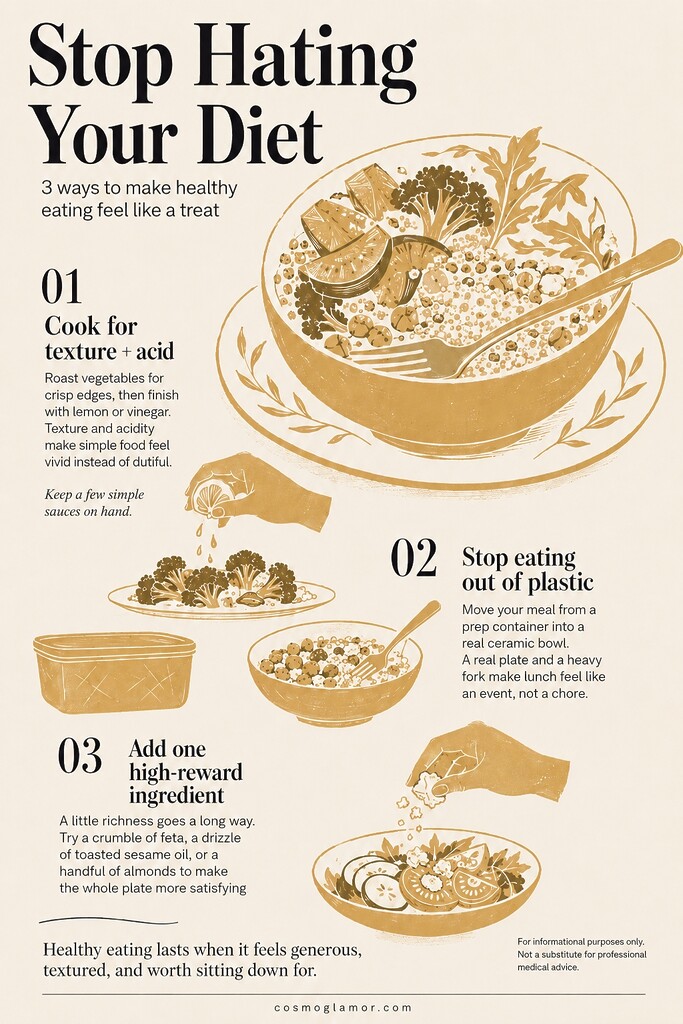
Secret 1: Cook for Texture and Acid, Not Just Macros
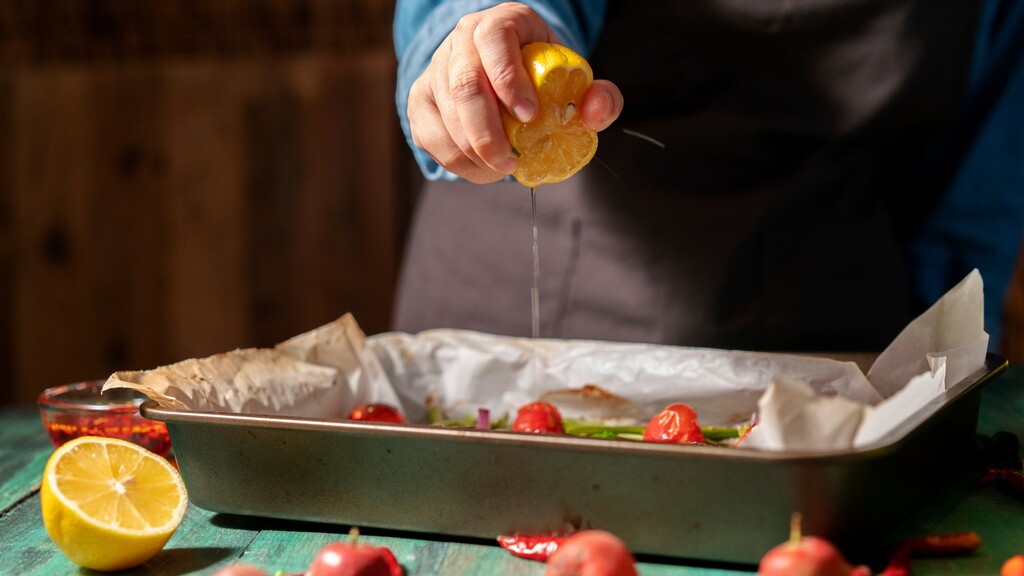
A plate of boiled broccoli is an obligation. Toss that exact same broccoli in olive oil, roast it until the edges crisp, and hit it with fresh lemon juice right out of the oven. Suddenly, you have a side dish you actually look forward to.
We get so focused on hitting protein numbers or keeping carbohydrates low that we forget human beings require sensory satisfaction. Texture and acidity are the easiest ways to upgrade a basic ingredient. Adding a squeeze of citrus or a splash of vinegar to a dish triggers your salivary glands, which makes the food taste much more vibrant and complex without requiring extra sodium.
Do not be afraid of sauces. A heavy reliance on dry ingredients is the fastest way to make healthy eating feel like a punishment. Keep a few simple, high-impact condiments ready to go.
Secret 2: Stop Eating Out of Plastic
You can meal-prep perfectly balanced lunches for the entire week. If you eat them hunched over a keyboard straight from a scratched plastic container, your brain logs the experience as a chore.
Visual cues can shape how much we expect to enjoy food before we even take a bite. Plating your food signals a transition from working to resting. It tells you that this meal is an event worth your attention.
Take thirty seconds to dump that prepped meal into a real ceramic bowl. Use a heavy fork. Wipe the rim of the plate. It sounds incredibly superficial, but treating your Tuesday desk lunch with the same respect you would give a restaurant meal changes your psychological relationship with the food.
Secret 3: Anchor Your Plate with One High-Reward Ingredient
Restriction is exhausting. When I overhauled my own meals a few years ago to bring my A1C down from 7.8 to a steady 6.1, my first instinct was to cut out absolutely everything I loved. That phase lasted about three miserable days.
I realized that easy healthy eating tips fail when they focus entirely on subtraction. Instead of looking at what you have to remove, look at what you can add to make the meal feel indulgent.
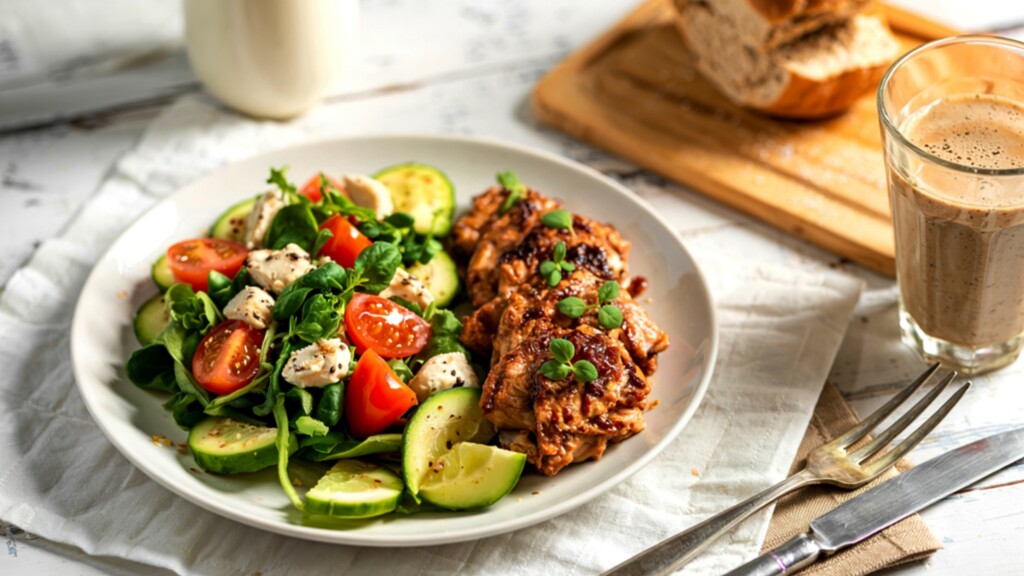
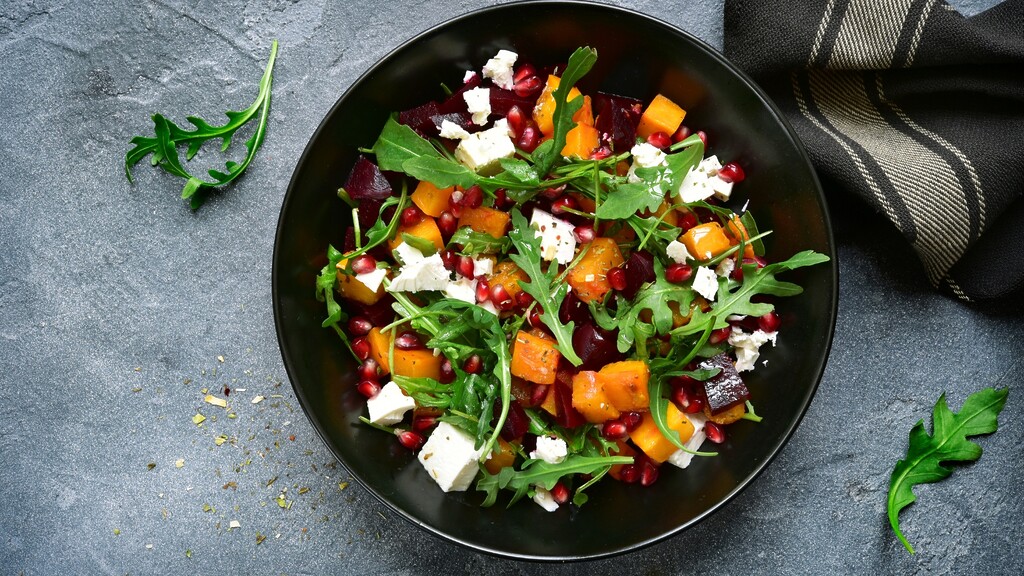
Every plate needs one element that feels slightly decadent. A crumble of sharp feta cheese over your salad. A drizzle of toasted sesame oil on your stir-fry. A handful of Marcona almonds alongside your afternoon fruit.
Dietary fat helps shape how aroma compounds are released as you chew, meaning a very small amount of a rich ingredient makes the entire bowl taste significantly better. You do not need to smother your food in cheese to enjoy it, but a tablespoon of the real thing will keep you satisfied for hours.
You have to eat multiple times a day for the rest of your life. White-knuckling your way through a bland menu is a terrible strategy for long-term health. Give yourself permission to make your food taste incredible, and watch how much easier it becomes to stay on track.
Sources
- Interaction of Saliva and Taste — Journal of Dental Research, 1990.
- Neatness Counts — Appetite, 2011.
- Dynamic Aroma Release and Perception — Molecules, 2023.