


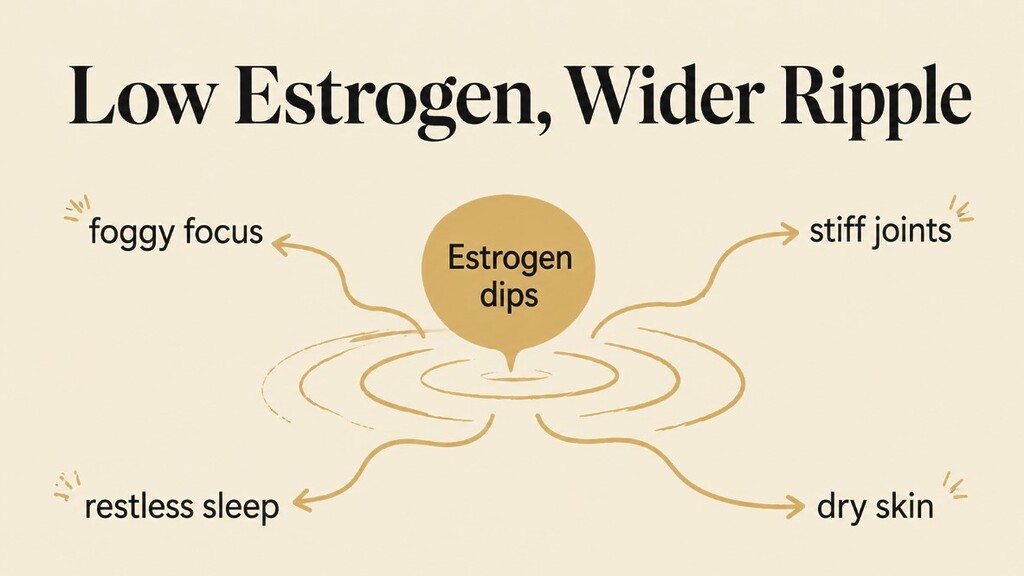
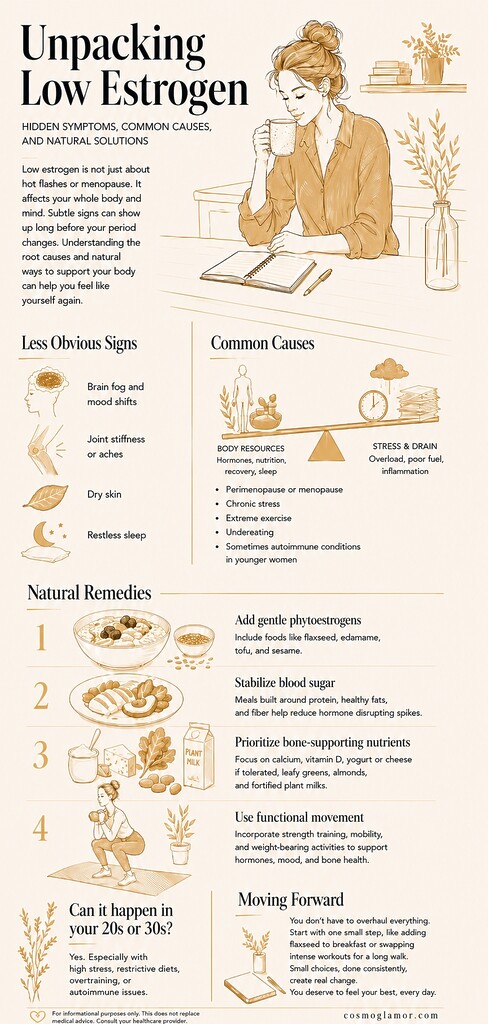
When we hear about estrogen drops, most of us picture hot flashes and menopause. But this hormone is actually a full-body operating system. When it dips, you might notice joint stiffness, brain fog, or disrupted sleep long before your periods change.

The Less Obvious Signs of Low Estrogen
We have all heard the standard list of low estrogen symptoms in women. Hot flashes and night sweats usually take the spotlight. But because estrogen receptors are scattered all over your body, a drop in production rarely stays confined to just one system.
You might start noticing changes in how your brain processes information. Estrogen helps regulate serotonin and dopamine, so when it fluctuates, it is completely normal to experience sudden mood shifts or a feeling of mental fog that makes it hard to focus on a simple email.
Physical changes often fly under the radar too. Estrogen helps keep your joints lubricated and your tissues elastic. One of the earliest signs of low estrogen I stumbled across in my own research was unexplained joint aches, especially in the mornings. You might also notice your skin feeling unusually dry or your sleep becoming restless, even if you are going to bed on time.
Common Low Estrogen Causes
You might be thinking you are too young to worry about hormone drops. It is a common misconception that this only happens after 50. While perimenopause and menopause are the most common low estrogen causes, they are absolutely not the only ones.
Chronic stress is a massive factor. When your body is under chronic stress, the brain can dial down the reproductive hormone signals that support estrogen production. Your body prioritizes survival over reproduction. Extreme exercise routines and undereating can trigger a similar survival response, lowering estrogen production to conserve energy.
Natural Remedies for Low Estrogen
If you suspect your levels are off, asking your doctor for a hormone panel is always a smart first step. But whether you are navigating early perimenopause or just trying to recover from a high-stress year, there are several ways to support your body's hormone production in your own kitchen.
Add Gentle Phytoestrogens
When I started looking into hormone support, I kept seeing the word phytoestrogens. These are plant-based compounds with a structure that resembles estrogen. Because they are much weaker than the hormones your body produces, they can bind to estrogen receptors and act in gentle, tissue-specific ways.
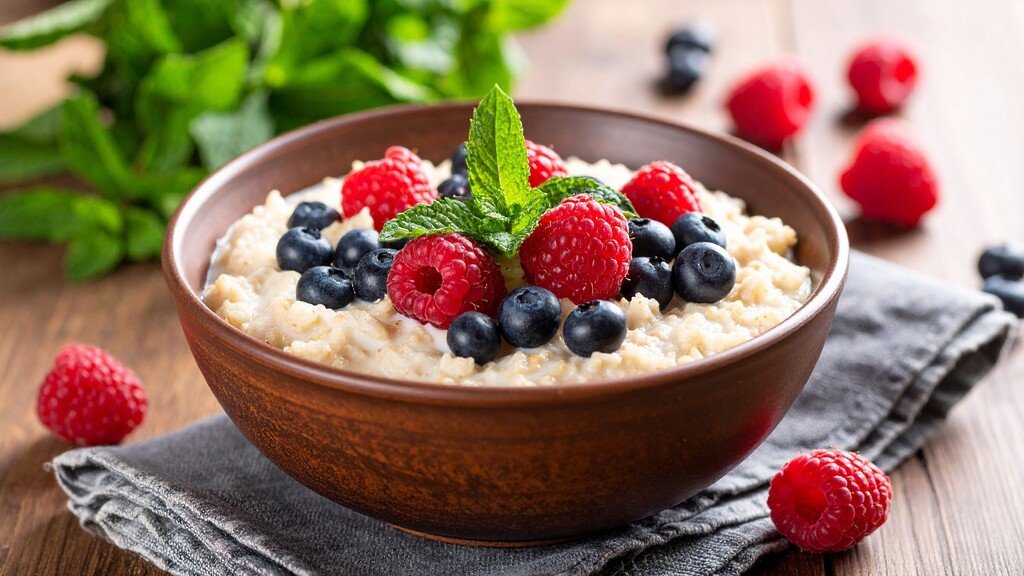
I keep a jar of ground flaxseed right on my counter so I remember to toss two tablespoons into my morning oatmeal or a smoothie. Edamame, tofu, and sesame seeds are also excellent additions. You do not need to overhaul your entire diet, just look for small ways to weave these into meals you already enjoy.
Stabilize Your Blood Sugar
This is a connection that completely changed how I look at my own health. When I was working to bring my A1C down from 7.8% to a healthy range, I learned that chronic blood sugar spikes create a cascade of inflammation that disrupts all your other hormones.
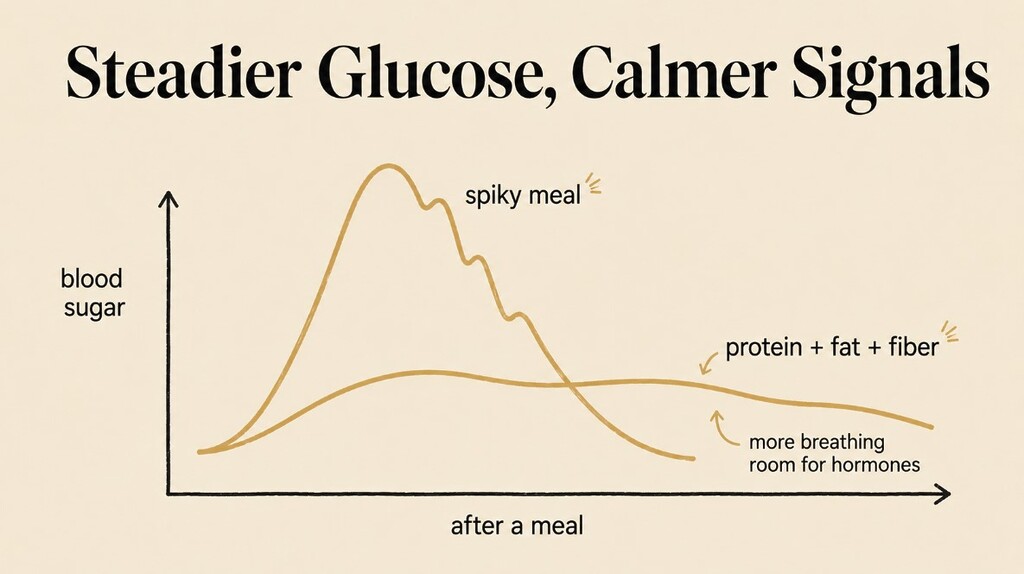
When insulin is frequently elevated, especially with insulin resistance, it can encourage the ovaries to make more androgens, which may throw your hormone balance off. Focusing on meals built around protein, healthy fats, and fiber keeps your glucose stable, which gives your entire endocrine system a much-needed break.
Prioritize Bone-Supporting Nutrients
Because estrogen plays a huge role in protecting your bone density, a drop in this hormone means your bones need a little extra structural support. Calcium and Vitamin D become non-negotiable here. If you tolerate dairy, high-quality yogurt and cheese are great. If you do not, you have plenty of other options.
Leafy greens like collards and kale, almonds, and fortified plant milks can help fill the gap. I also highly recommend asking your clinician whether a Vitamin D supplement makes sense if you live in a colder climate, as winter sun can fall short.
Incorporate Functional Movement
Exercise is tricky when your hormones are shifting. You want to move enough to maintain muscle mass and bone density, but you do not want to push so hard that you spike your cortisol and further suppress your estrogen. High-intensity interval training every single day can sometimes do more harm than good when your system is already stressed.
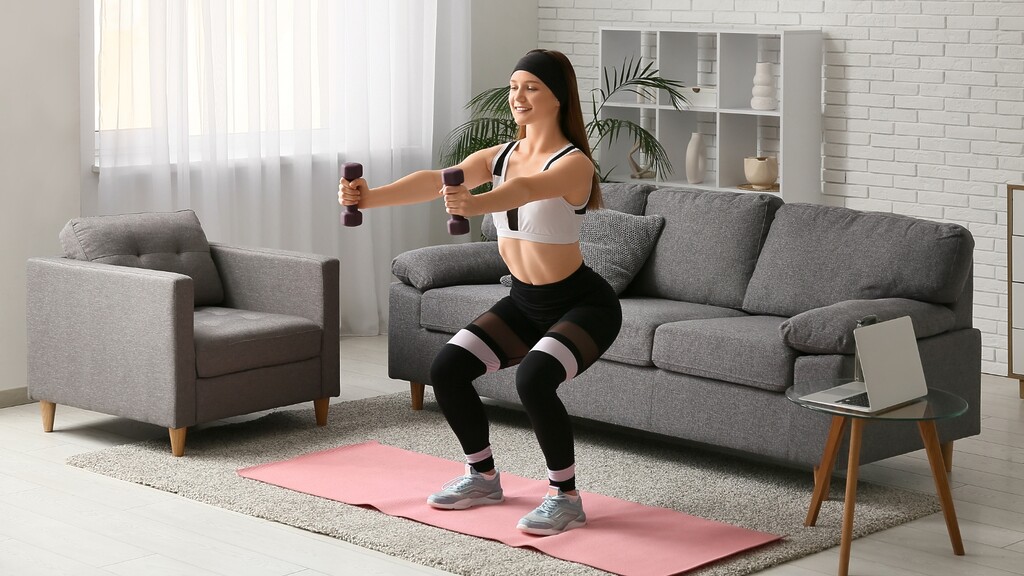
What worked for me was shifting toward functional strength training and mobility work. Lifting moderate weights a few times a week supports bone density without throwing your nervous system into a panic. Always listen to your body and adjust your weights or rest days based on your energy levels.
Frequently Asked Questions
Can low estrogen happen in your 20s or 30s?
Yes. While it is most strongly associated with menopause, younger women can experience drops due to extreme stress, restrictive diets, overtraining, or autoimmune conditions. If your body senses it does not have the resources or safety to support a pregnancy, it will often dial down reproductive hormones to conserve energy.
Moving Forward
Hormone shifts can feel incredibly isolating, especially when the symptoms are vague enough to brush off as just having a bad week. But your body is usually just asking for a slightly different kind of support. You do not have to fix everything by tomorrow morning. Pick one small thing, maybe adding flaxseed to your breakfast or swapping a high-intensity workout for a long walk, and see how your body responds.
Sources
- Estrogen receptors and menopausal mental health – Brain Sciences, 2025.
- Dietary and lifestyle management of functional hypothalamic amenorrhea – Nutrients, 2024.
- Phytoestrogens, dietary intake, and bioavailability – Nutrients, 2019.
- Insulin resistance in PCOS phenotypes – Scientific Reports, 2025.
- Vitamin D – Mayo Clinic, 2025.
- Exercise training and bone mineral density in postmenopausal women – Osteoporosis International, 2023.
- Primary ovarian insufficiency – Mayo Clinic, 2023.