
Walking the supermarket aisles after a Type 2 diabetes diagnosis can feel like a trap. Every package seems to hide something that will send your glucose levels soaring. But building a safe, satisfying pantry is actually quite simple once you know what to substitute for your old staples. You can fill your kitchen with foods that keep your blood sugar steady, no complex math required. As always, check with your physician before overhauling your diet, especially if you take medications that lower blood sugar.
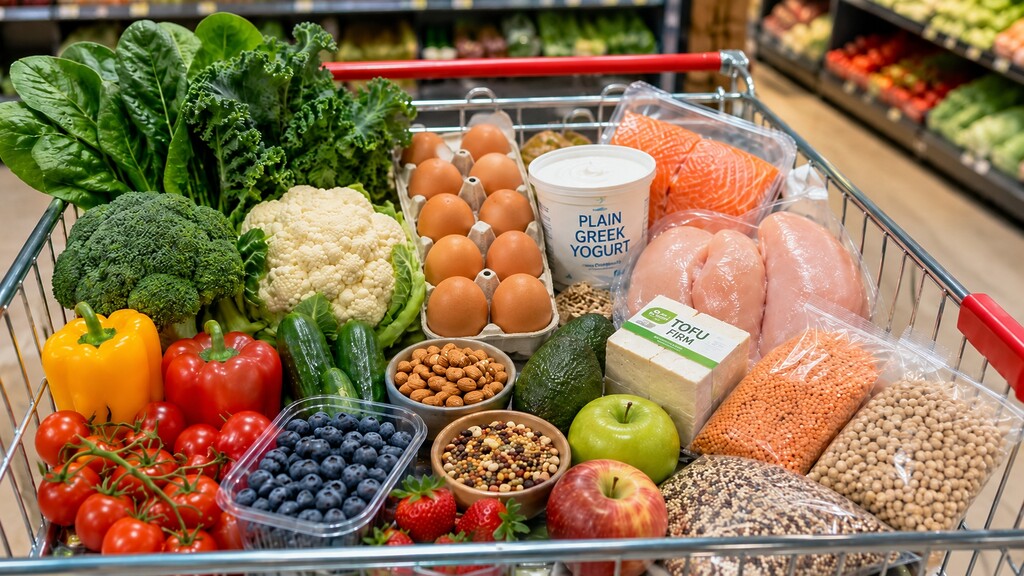
Jump to the zero-spike grocery list
Managing blood sugar is not about eating less. It is about trading the foods that fight your metabolism for the ones that work with it.
The Volume Foods: Greens and Crunch
When you want to fill up a plate, these vegetables are your baseline. They provide the physical bulk of a meal without a heavy metabolic cost.
1. Spinach and Arugula
Trade iceberg lettuce for dark greens to build the base of almost any meal. They bring volume, micronutrients, and fiber, which can help slow digestion and keep glucose from hitting your bloodstream all at once. Toss two big handfuls onto your plate before adding your main protein.
Portion: 2 cups raw • Net Carbs: ~1g • Note: Cook them down in oil to easily fit more onto your plate.
2. Broccoli and Cauliflower
Ditch heavy starchy sides like potatoes for cruciferous vegetables. They offer incredible bulk and crunch. Roasting them at 400°F for about 20 minutes with olive oil transforms them from a boring steamed side dish into something with crispy, caramelized edges you actually want to eat.
Portion: 1 cup chopped • Net Carbs: ~3g • Note: Do not skimp on the olive oil during roasting.
3. Zucchini
Reach for spiralized zucchini instead of regular wheat pasta. Zucchini absorbs any flavor you throw at it and carries a very low glycemic load. Slice it into thick rounds and grill it for roughly four to five minutes a side, or use it under heavy meat sauces.
Portion: 1 medium • Net Carbs: ~4g • Note: Salt and press the noodles in a towel first to remove excess water.
4. Cucumbers
Replace flour crackers with thick cucumber slices when you need a vehicle for dips. Their high water content makes them incredibly filling, and they digest with virtually no impact on your glucose.
Portion: 1/2 large cucumber • Net Carbs: ~2g • Note: Leave the skin on for an extra boost of fiber.
5. Celery
Swap potato chips for celery when you are craving mechanical crunch. It provides that satisfying snap we often miss when cutting out processed snacks. Always pair it with a fat source to make it a complete, stabilizing snack.
Portion: 2 medium stalks • Net Carbs: ~1g • Note: A common mistake is eating celery naked; the fiber needs fat like almond butter to actually keep you full.
The Anchors: Fats and Proteins
These foods turn a handful of vegetables into a meal that sustains you for hours. They are the structural pillars of a diabetic-friendly kitchen.
6. Whole Eggs
Trade sugary breakfast cereals for eggs. You might worry about the cholesterol, but current research indicates dietary cholesterol does not drive blood cholesterol for most people as strongly as we once thought. Eat the yolk. The fat keeps you full and prevents the rapid absorption of other foods.
Portion: 2 large eggs • Net Carbs: <1g • Note: Hard-boil a batch on Sunday for instant weekly snacks.
7. Avocados
Skip the mayonnaise and mash avocado on your sandwiches instead. Half an avocado gives you about seven grams of fiber and a heavy dose of monounsaturated fat. This specific combination stabilizes your energy levels all afternoon.
Portion: 1/2 medium • Net Carbs: ~2g • Note: Store a cut avocado face-down in a sealed container with a piece of cut onion to stop it from browning.
8. Walnuts and Pecans
Ditch the pretzels for dry-roasted nuts. It is true that nuts are high in calories, which often scares people off. But those calories come bundled with fat that provides steady energy, preventing the blood sugar crashes that trigger actual overeating.
Portion: 1/4 cup • Net Carbs: ~2g • Note: Measure them out into a small bowl rather than eating straight from the bag.
9. Chia Seeds
Replace flavored instant oatmeal packets with overnight chia pudding. Two tablespoons hold nearly ten grams of fiber. Just mix the seeds with about half a cup of unsweetened almond milk and let it sit in the fridge overnight.
Portion: 2 tbsp • Net Carbs: ~2g • Note: A common mistake is eating them dry; they need at least 20 minutes in liquid to gel and avoid digestive discomfort.
10. Canned Wild Salmon
Trade processed deli meat for canned salmon. This is the ultimate emergency protein. Mash it with a fork and a spoonful of Dijon mustard for an instant meal. The omega-3 fatty acids may support heart health and lower inflammatory biomarkers.
Portion: 1 can (5 oz) • Net Carbs: 0g • Note: Look for bone-in varieties for an easy calcium boost.
11. Plain Whole-Milk Greek Yogurt
Leave the sweetened, fat-free yogurts on the shelf and grab the plain, whole-milk version. We have been conditioned to fear dietary fat, but that natural dairy fat can help slow digestion alongside the milk sugars.
Portion: 3/4 cup • Net Carbs: ~5g • Note: Use it as a direct substitute for sour cream.
12. Pumpkin Seeds
Swap bread-based croutons for pumpkin seeds. Toss a handful onto a salad for an instant magnesium boost and a deep, savory crunch.
Portion: 1/4 cup • Net Carbs: ~3g • Note: Buy them raw or dry-roasted without added seed oils.
The Flavor Makers: Big Taste, No Spikes
A diabetic-friendly diet fails when it gets boring. These ingredients add sharp, bright flavors without adding unwanted carbohydrates.
13. Olives
Ditch the salty potato chips for Kalamata olives. If you are watching your blood pressure, the sodium might make you hesitate. Simply rinse canned olives under cold water to strip away the excess brine while keeping the healthy fats intact.
Portion: 6 to 7 large olives • Net Carbs: ~1g • Note: Store them submerged in their liquid in the fridge so they do not dry out and lose flavor.
14. Dill Pickles
Trade sweet pickle relish for true dill pickles. Many commercial brands sneak in high-fructose corn syrup to balance the vinegar. Always read the jar to confirm there is zero added sugar.
Portion: 2 spears • Net Carbs: ~1g • Note: A common mistake is buying bread and butter pickles by accident; always check that the label specifically says dill or sour.
15. Extra Virgin Olive Oil
Reach for extra virgin olive oil instead of refined vegetable oils. Pour it generously over salads and cooked vegetables. Fat delays gastric emptying, meaning the carbohydrates in your meal may digest more slowly.
Portion: 1 tbsp • Net Carbs: 0g • Note: Keep your bottle in a dark cupboard away from the stove to prevent the fats from oxidizing.
16. Apple Cider Vinegar
Skip sugary bottled vinaigrettes and mix a homemade apple cider vinegar dressing. A tablespoon adds the right acidic bite, and some studies suggest apple cider vinegar may modestly improve fasting blood sugar when it is used consistently with meals.
Portion: 1 tbsp • Net Carbs: 0g • Note: Never drink it undiluted.
17. Dijon Mustard
Replace ketchup or sweet barbecue sauce with Dijon mustard. It carries intense flavor for essentially zero calories or carbs. Use it as a base for marinades or a sharp dip for meats.
Portion: 1 tbsp • Net Carbs: 0g • Note: Check the label carefully to avoid honey-Dijon traps.
18. Fresh Garlic
Trade garlic powder for fresh cloves. Smash a few cloves into your cooking oil over medium heat for a minute or two before adding your vegetables to build a deep, aromatic base.
Portion: 2 cloves • Net Carbs: ~2g • Note: Let crushed garlic sit for ten minutes before cooking to activate its beneficial compounds.
19. Blackberries and Raspberries
Ditch high-sugar fruits like bananas or grapes for these two berries. Their fiber content is so incredibly high that the net carbohydrate load stays entirely manageable.
Portion: 1/2 cup • Net Carbs: ~3g • Note: Enjoy these right after a meal rather than on an empty stomach to minimize any minor glucose shift.
20. Bone Broth
Reach for warm bone broth instead of late-night sweet tea. Sipping a mug provides a hit of protein and sodium that often stops evening snack cravings in their tracks.
Portion: 1 cup • Net Carbs: ~1g • Note: Check the nutrition panel to ensure it has at least 9 grams of protein per serving.
Turning the List into Real Meals
Having a list is helpful, but knowing how to combine these items is what actually changes your routine. If you are overwhelmed, start by buying just a few items and assembling these stable combinations.
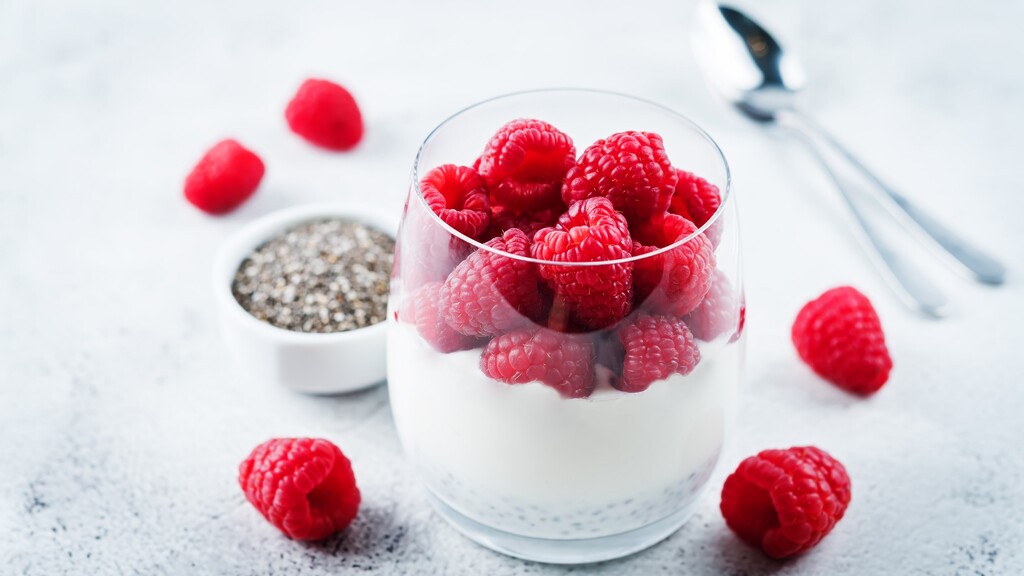
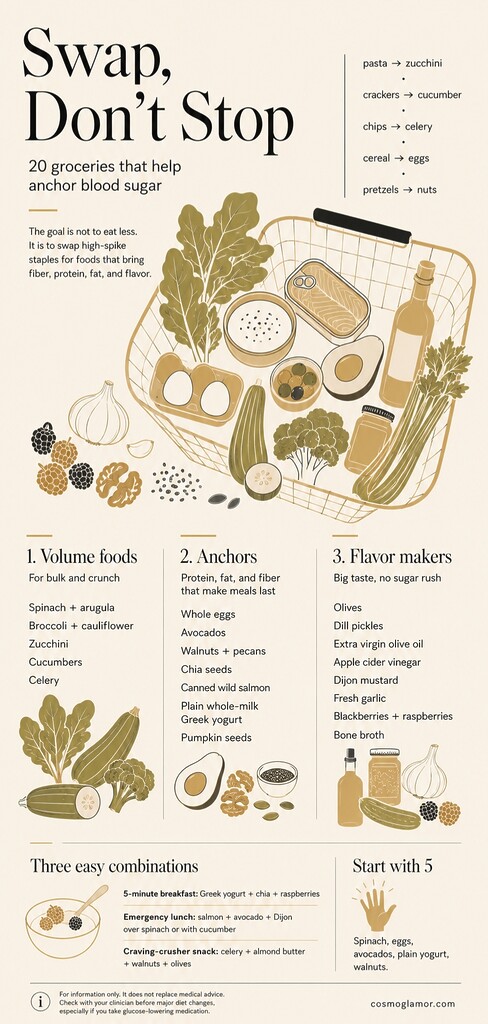
The 5-Minute Breakfast: Combine 3/4 cup of whole-milk Greek yogurt, two tablespoons of chia seeds, and a half-cup of raspberries. You get immediate protein, massive fiber, and a sweet crunch.
The Emergency Lunch: Mash one can of wild salmon with half an avocado and a spoonful of Dijon mustard. Serve it over two giant handfuls of spinach or scoop it up with cucumber slices.
The Craving-Crusher Snack: Two stalks of celery filled with almond butter, alongside a handful of dry-roasted walnuts and six Kalamata olives. This perfectly hits the salty, crunchy, and creamy notes all at once.
If you only buy five things on your next trip, make it: spinach, eggs, avocados, plain whole-milk yogurt, and walnuts. You can build dozens of safe meals just from that foundation.
Frequently Asked Questions
Can I still eat fruit?
Yes, but the type and portion of fruit matter immensely. Dried fruit, grapes, and tropical fruits can have a bigger impact on blood glucose when the portion gets large. Stick to berries, like blackberries and raspberries, which carry enough dietary fiber to slow down the sugar absorption.
What do I use instead of bread or rice?
For rice, grated and quickly sautéed cauliflower is the best structural replacement. For bread, look for wraps made entirely of egg or cheese, or simply use large, sturdy lettuce leaves to wrap your sandwich fillings.
Will eating all these nuts and fats make me gain weight?
It is easy to look at the calories in olive oil and avocados and panic. However, healthy fats are not automatically more filling than carbohydrates, so these foods work best when you use them with protein, fiber, and sensible portions. When you are genuinely full, you naturally eat less throughout the day. Just stick to the recommended portion sizes.
What if I am watching my blood pressure too?
Many low-carb snacks like olives and pickles are high in sodium. You can easily manage this by thoroughly rinsing canned goods under cold water. Balancing these foods with potassium-rich greens like spinach may also help your body handle sodium, unless your doctor has told you to limit potassium.
Are there hidden sugars I should look out for?
The most common traps are marinades, cured meats, and anything labeled low-fat. When manufacturers remove the natural fat from a product, they often add sugar or starches to fix the texture and taste.
You do not have to spend the rest of your life eating less food or feeling deprived. By simply swapping out the ingredients that spike your sugar for the ones that anchor it, you gain back control over your kitchen and your health.
Sources
- Fiber and Diabetes – CDC, 2024.
- Dietary Cholesterol, Serum Lipids, and Heart Disease – Nutrients, 2018.
- Omega-3 Fatty Acids and Inflammatory Biomarkers – Scientific Reports, 2019.
- Gut-Based Strategies to Reduce Postprandial Glycaemia – Frontiers in Endocrinology, 2021.
- Apple Cider Vinegar and Glycemic Control in Type 2 Diabetes – Frontiers in Nutrition, 2025.
- Fruit, Vegetables and Diabetes – Diabetes UK.
- Assessing the Validity of Bulletproof Coffee’s Claims – Beverages, 2023.
- Potassium and High Blood Pressure – American Heart Association, 2025.
- Sugar Content in Low-Fat vs Regular Foods – Nutrition & Diabetes, 2016.
- Save for Later42.4K



12 Responses
I’m excited about all the vegetable suggestions, but I’m a terrible cook! I don’t have a lot of time to spend in the kitchen. Are there any easy ways to prepare these vegetables without complicated recipes?
Hi Jessica, I hear you! Cooking doesn’t have to be complicated. One of the easiest ways to enjoy vegetables is to roast them. Simply chop up your favorite veggies (broccoli, carrots, bell peppers, etc.), toss them with a little olive oil, salt, and pepper, and roast them in the oven at 400°F (200°C) until tender. You can also steam or microwave vegetables for a quick and healthy side dish. And, of course, enjoying raw vegetables with a healthy dip is always a great option!
I’m trying to eat healthier, but I have a sweet tooth. It’s hard to resist desserts. Are there any fruits that are better than others for satisfying a sweet craving without spiking my blood sugar?
Hi Ashley, I understand the struggle with sweet cravings! Berries are a great choice for satisfying your sweet tooth while being relatively low on the glycemic index. Blueberries, raspberries, and strawberries are all good options. You can also try a small piece of fruit with a handful of nuts or a dollop of Greek yogurt to help slow down sugar absorption and keep you feeling full longer. Remember that even with fruit, portion control is important.
This article is encouraging! It’s nice to see a focus on what you can eat rather than just what you should avoid. My concern, however, is the emphasis on ‘enjoying without restriction.’ While the article mentions portion control for fruits and whole grains, it seems to imply you can eat unlimited amounts of vegetables and lean protein. Is that really the case? Could overeating even these ‘good’ foods still impact blood sugar or weight management?
Hi Elizabeth, thanks for your thoughtful question! You’re absolutely right to question the phrase ‘without restriction.’ While vegetables and lean protein are incredibly beneficial and generally have a minimal impact on blood sugar compared to carbohydrates, the concept of ‘unlimited’ intake should always be approached with caution.
Even with healthy foods, overeating can lead to weight gain, which can indirectly affect blood sugar control. While non-starchy vegetables are very low in calories and carbohydrates, consuming excessive amounts could still contribute to overall calorie intake. Similarly, while lean protein is crucial, consuming very large quantities could potentially impact kidney function for some individuals, especially those with pre-existing kidney conditions.
The key takeaway is balance and moderation. Focus on incorporating plenty of vegetables and lean protein into your diet, but be mindful of your overall portion sizes. The plate method, mentioned in previous articles, provides a good visual guide for creating balanced meals. It’s always best to listen to your body’s hunger and fullness cues. Thank you for pointing out this important nuance!
This article mentions the glycemic index (GI) for fruits, which is helpful. I’m wondering if there’s a similar system for other food groups, like vegetables or grains? It would be great to have a clearer understanding of how different types of vegetables or grains impact blood sugar levels. Also, you mentioned pairing fruits with protein or healthy fats. Could you give some specific examples of good pairings?
Hi Jessica, thanks for your excellent questions! Yes, there is a similar system for other food groups called the Glycemic Load (GL). While the GI measures how quickly a food raises blood sugar, the GL takes into account the portion size of the food. This makes the GL a more practical tool for everyday meal planning. You can find online resources that list the GI and GL values for various foods, including vegetables and grains.
In general, non-starchy vegetables have a low GI and GL, meaning they have a minimal impact on blood sugar. Whole grains tend to have a lower GI and GL than refined grains.
As for pairing fruits with protein or healthy fats, here are a few examples:
Apple slices with almond butter: The fiber in the apple and the healthy fats and protein in the almond butter help slow down sugar absorption.
Berries with Greek yogurt: The protein in the Greek yogurt helps to balance the natural sugars in the berries.
Pear with cheese: A small piece of cheese provides protein and fat, which can help prevent a blood sugar spike after eating the pear.
Avocado with a small piece of fruit: The high healthy fat content of avocado helps to slow down the digestion and absorption of sugars from the fruit.
These pairings are a great way to enjoy the natural sweetness of fruit while keeping your blood sugar levels stable. Thanks for your insightful questions!
This all sounds great in theory, but ‘foods you can enjoy without restriction’? Come on, let’s be real. I have type 2 diabetes, and I feel like I’m constantly counting carbs and watching portions. It’s exhausting! Is this article seriously suggesting I can just eat as much broccoli and kale as I want? And what about fruit? I love fruit, but I’ve always been told it’s basically like candy because of the sugar. I’m confused and a little skeptical.
Hey Megan, thanks for keeping it real! I totally understand your skepticism. The title might sound a bit too good to be true, but the key is understanding the types of foods we’re talking about. Non-starchy veggies like broccoli and kale are packed with fiber and nutrients but are super low in carbs, so you can generally eat a good amount of them without sending your blood sugar on a roller coaster. Think of them as your freebies!
As for fruit, you’re right to be mindful. It does contain natural sugars, but it also has fiber, which helps slow down sugar absorption. The article highlights lower-GI fruits like berries, which have a gentler impact on blood sugar. It’s all about portion control and maybe pairing fruit with some protein or healthy fat to keep things balanced. It’s not about unlimited fruit, but it’s definitely not off-limits either. It is always best to test your blood sugar after eating certain foods to see how they affect you.
Think of it this way: It’s not about restriction, it’s about making informed choices. This article is meant to empower you with knowledge, not to suggest you can eat a whole watermelon in one sitting! Does that make a bit more sense?
Okay, I’m intrigued by the whole grains part. I’ve always been a little scared of carbs, even the ‘good’ ones. But I’m getting so tired of salads and grilled chicken. Are we really saying that things like quinoa and brown rice are okay for someone with diabetes? And what about bread? I miss bread! Also, ‘mindful eating’? Sounds a bit new-agey to me. How is that supposed to help my blood sugar? Sorry for all the questions, but I’m desperate for some practical advice that doesn’t involve living like a rabbit.
Hi Olivia, I love your questions! Carbs can be tricky, but whole grains are different from the refined stuff. They have fiber, which is like a superhero for blood sugar control – it slows down digestion and prevents those spikes. So yes, quinoa, brown rice, and even whole-wheat bread (in moderation and the right kind!) can definitely be part of a healthy diabetic diet. The key is to watch your portions and choose truly whole-grain options. Look for ‘whole wheat’ or ‘whole grain’ as the first ingredient on the label.
And about mindful eating – it might sound a bit ‘out there,’ but it’s actually super practical. It’s about paying attention to your body’s hunger and fullness cues, eating slowly, and really savoring your food. This can help you avoid overeating and make better food choices overall, which is a win for blood sugar management. Think of it as a way to tune into your body’s signals instead of eating mindlessly in front of the TV (we’ve all been there!). It’s not about being perfect, it is about making small changes.
You don’t have to live like a rabbit, Olivia! There’s a whole world of delicious, diabetes-friendly foods out there. It’s all about finding a balance that works for you and helps you enjoy your food while keeping your blood sugar happy. I hope this helps!