


The holiday season is essentially a six-week carbohydrate marathon. When I first managed to drop my A1C from 7.8% to 6.1%, my biggest fear was that Thanksgiving would completely undo my progress. When friends ask for my best diabetes holiday eating tips, I tell them the secret right away. You do not need a separate dietary menu. You just need a better sequence.
Jump to the survival playbook and recipes
The Plate Sequencing Strategy
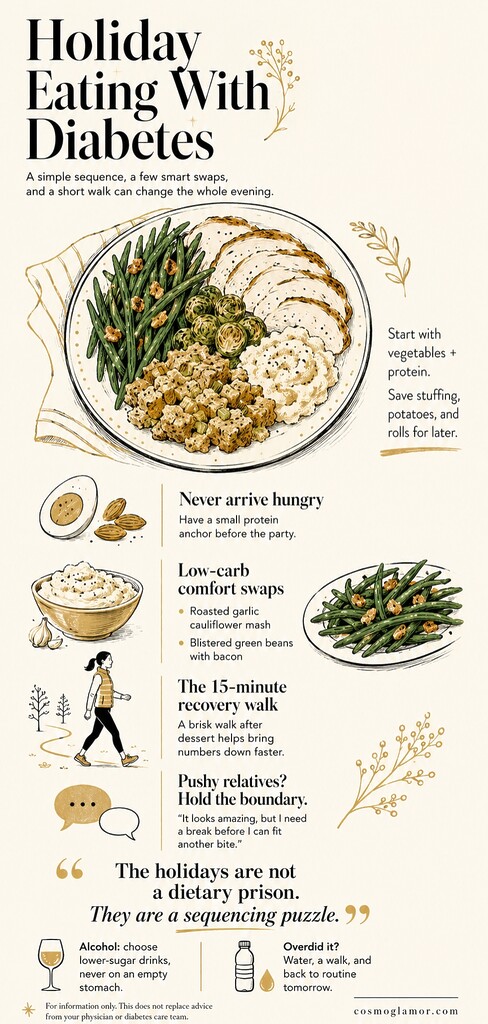
Most people tackle a holiday buffet by piling everything onto one plate and eating the soft dinner rolls first. That is a reliable way to send your glucose straight up. Start your meal with fibrous vegetables and protein before touching the starches. This simple ordering trick can flatten the blood sugar curve even if you eat the exact same amount of carbohydrates overall.
Fill half your plate with salad, roasted greens, or turkey. Eat those items first. By the time you reach for the stuffing or the potatoes, your digestive system is already processing the protein and fiber, buffering the impact of the heavier foods.
Never Arrive Hungry
Starving yourself all day to save calories for a big dinner is a terrible strategy for metabolic health. When you show up to a party ravenous, you will reach for the fastest energy available, which is always a carbohydrate. A small protein anchor keeps your baseline steady so you can make deliberate choices at the dinner table.
Eat a hard-boiled egg or a handful of almonds an hour before you leave the house. Having a little bit of protein in your system can take the edge off hunger, so the dessert table feels easier to resist.
Diabetic Holiday Recipes That Pass the Family Taste Test
If you bring a sad, steamed vegetable to a holiday potluck, you will feel deprived. The trick to diabetes holiday meal planning is making sides so rich and flavorful that nobody realizes they are low-carb. I focus on upgrading traditional holiday meals for diabetics by swapping the starchy bases while keeping the heavy, comforting fats intact.
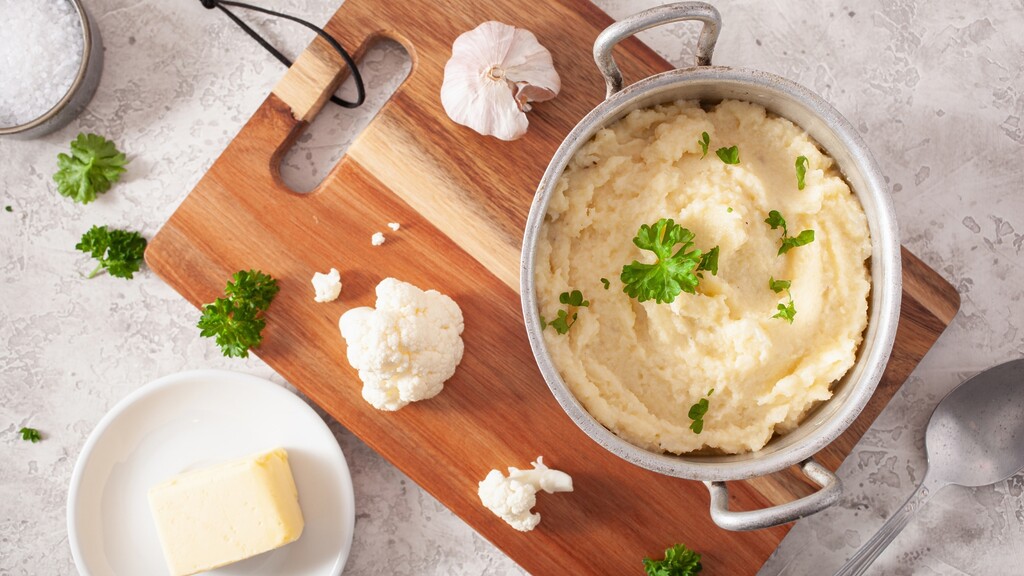
Roasted Garlic Cauliflower Mash
- 1 large head cauliflower, cut into small florets
- 3 whole garlic cloves, peeled
- 1 tablespoon butter
- 2 tablespoons heavy cream
Do not just boil cauliflower and mash it. The result is watery and disappointing. Roast the florets and garlic cloves at 400°F for about 25 to 30 minutes to pull out the moisture and concentrate the flavor. Blend the roasted florets and garlic with the heavy cream and butter for a texture that rivals actual potatoes. Heavy cream has fewer carbohydrates than whole milk and adds the fat needed for a silky, rich finish.
Blistered Green Beans with Bacon
- 1 pound fresh green beans, trimmed
- 1 tablespoon olive oil
- 4 slices bacon, cooked and crumbled
- 1/4 cup toasted slivered almonds
Skip the canned cream of mushroom soup casserole entirely. Toss the fresh green beans in the olive oil and roast them at 425°F for roughly 15 to 20 minutes until they blister and soften. Toss the hot beans with the crumbled bacon and toasted almonds just before serving. The fat from the bacon and nuts may help slow digestion, while the green beans keep the dish lighter on carbs than the usual creamy casserole.
The 15-Minute Recovery Walk
Sometimes you eat the pie. I certainly do. The difference between a lingering high blood sugar reading and a quick recovery usually comes down to movement.
The holidays are not a dietary prison, and they are not a free-for-all. They are just a sequencing puzzle.
Take a brisk 15-minute walk immediately after a heavy holiday meal. Using your muscles right after eating helps pull glucose out of your bloodstream to use as immediate fuel, partly through pathways that do not rely on insulin. Offer to take the host's dog around the block or simply walk around the neighborhood to look at the decorations. It changes the entire trajectory of your evening numbers.
Managing Pushy Relatives
Someone will inevitably push a second slice of cake or a massive serving of pasta onto your plate. You do not owe anyone a medical explanation of your metabolic health. A simple “It looks amazing, but I need a break before I can fit another bite” works almost every time. Deflect the pressure, change the subject, and hold your boundary.
Just a brief note from my kitchen to yours, this approach helped me drop my own blood pressure to 120/80 mmHg and stabilize my daily numbers, but I am a researcher of my own body, not a doctor. Always check with your physician before making significant changes to your management routine.

Quick Holiday Questions
Can I drink alcohol safely?
Dry wines and clear spirits mixed with soda water are usually lower-sugar choices. Avoid sugary mixers and never drink on an empty stomach. Alcohol can actually cause dangerous drops in blood sugar if you are taking certain diabetic medications, as your liver prioritizes clearing the alcohol over releasing glucose.
What if I completely overdo it?
Drink a large glass of water, go for a walk, and return to your normal routine the very next morning. One heavy meal will not ruin your progress. The only mistake you can make is letting one carb-heavy dinner turn into a week of abandoning your habits.
Set your plate, enjoy the company, and let the food be a part of the evening rather than the whole event.
Sources
- Carbohydrate-last meal pattern lowers postprandial glucose and insulin excursions in type 2 diabetes – BMJ Open Diabetes Research & Care, 2017.
- The effect of consuming different dietary protein sources at breakfast upon self-rated satiety – European Journal of Nutrition, 2025.
- Culinary strategies to manage glycemic response in people with type 2 diabetes – Frontiers in Nutrition, 2022.
- Effect of postprandial moderate-intensity walking for 15-min on glucose homeostasis in type 2 diabetes mellitus patients – Diabetology International, 2020.
- Alcohol and Diabetes – American Diabetes Association, 2026.
- Positive impact of a 10-min walk immediately after glucose intake on postprandial glucose levels – Scientific Reports, 2025.
- The Role of Exercise in Diabetes – Endotext, 2025.


16 Responses
This article is a lifesaver! The holidays are always a minefield for me and my diabetes. It’s like every party is a test of willpower, and I usually fail! I love the idea of bringing a healthy dish to share – that way, I know there’s something I can eat without feeling guilty. But here’s my question: how do you deal with those well-meaning relatives who push food on you? You know, the ones who say, “Oh, just one little cookie won’t hurt!” Any tips for politely declining without starting a family feud?
Betty, I totally understand! Those well-meaning relatives can be the toughest food pushers! A polite but firm “No, thank you, I’m watching my sugar, but it looks delicious!” usually works. You can also add, “I’m really enjoying the conversation/company” to shift the focus away from the food. If they persist, try a humorous, “My doctor told me I had to choose between the cookie and my foot, and I’m rather attached to my feet!” Hopefully, they’ll get the hint and back off. Remember, your health comes first, and you don’t need to apologize for taking care of yourself.
These recipes look amazing, especially that Sugar-Free Chocolate Avocado Pudding – I’m intrigued! But I’m not much of a cook. Are these recipes really as easy as they sound? And what about alcohol? Can I have a glass of wine with dinner, or is that off-limits? Also, do you have any suggestions for a good sugar substitute? I’ve tried some that taste, well, let’s just say not like sugar!
Susan, glad you’re excited about the recipes! Most of them are designed to be quick and easy, even for novice cooks. The Chocolate Avocado Pudding is surprisingly simple – just blend everything together! As for alcohol, it’s best to check with your doctor, but generally, a small glass of dry red or white wine with a meal is okay in moderation. Just be sure to account for the carbohydrates and calories, and never drink on an empty stomach. For sugar substitutes, it’s a bit of trial and error. Erythritol and stevia are popular choices that many people find have a more natural taste. Start with small amounts to see how you like them. There are also blends available that combine different sweeteners to improve the flavor profile. You might want to try a few different types to find one that suits your palate.
Bless your heart for trying, but are we really supposed to believe we can survive the holidays on “cucumber bites” and “cauliflower mash”? My grandma would roll over in her grave! Seriously though, I appreciate the effort, but how do you handle those family members who push food on you like it’s their job? Aunt Mildred’s pecan pie is legendary, and saying “no” feels like a sin. Also, is it really possible to make a “sugar-free apple crisp” that doesn’t taste like cardboard? I’m skeptical, to say the least. Is it really possible to use a sugar free sweetener without it tasting like chemicals?
Hi Bett, I hear you! Grandma’s cooking is hard to beat, and Aunt Mildred’s pie sounds divine! It’s all about balance. You don’t have to eat like a saint 24/7 during the holidays. Maybe have a small slice of that pecan pie and really savor it. As for pushy family members, a polite but firm “No, thank you, I’m watching my sugar, but it looks delicious!” usually works. You can also offer to bring a dish you know you can enjoy. And about that apple crisp – I promise, it’s not cardboard! There are some great sugar-free sweeteners out there these days, like stevia or erythritol, that don’t have that weird aftertaste. Experiment a little to find one you like, and use a recipe that combines the sweetener with warming spices like cinnamon and nutmeg to really enhance the flavor. You might be surprised! Also, using a crisp topping with oats and nuts adds a lot of texture and flavor, so you won’t even miss the sugar.
This is a helpful article, but I’m a bit overwhelmed by all the “sugar-free” dessert options. Are they really necessary? And what about alcohol? A holiday party isn’t complete without a little bubbly, right? Also, you mention “managing stress,” but let’s be real, the holidays ARE stressful! Any practical tips for actually de-stressing when your in-laws are driving you nuts and your kids are bouncing off the walls from all the excitement? How does managing stress help my diabetes, because I feel like I get stressed a lot, and I need to find ways to help lower my stress to help with my diabetes.
Hi Jennifer, You’re right, the holidays and total sugar avoidance don’t always mix! It’s okay to enjoy a traditional dessert in moderation. Just be mindful of your portion size and factor it into your overall carb intake for the day. As for alcohol, moderation is key. A glass of bubbly can be okay, but be sure to check with your doctor about how alcohol might affect your blood sugar and any medications you’re taking. And yes, stress is a HUGE factor during the holidays! When you’re stressed, your body releases hormones that can raise your blood sugar levels. So, finding ways to relax is crucial. Try taking a few deep breaths when you feel overwhelmed, going for a walk to clear your head, or even just locking yourself in the bathroom for 5 minutes of peace and quiet (we’ve all been there!). Even a short meditation session using an app can make a difference. And don’t underestimate the power of saying “no” to things that will add to your stress. Your well-being is important, especially during the holidays! When you manage your stress, your blood sugar will typically be easier to manage. I hope this helps!
Okay, I gotta say, this article is a lifesaver! The holidays are usually a minefield for me, what with Aunt Carol’s pecan pie calling my name and my grandma’s insistence that I need “just one more” cookie. But seriously, the “Planning Ahead” section really hit home. I never thought about setting realistic goals before. I always go in thinking I’ll be the picture of perfect health, then end up feeling guilty after indulging in a single slice of pumpkin pie. Does anyone else have that problem? Also, that bit about communicating with loved ones… how do you even start that conversation without sounding like a total Grinch? Help! 😅
Hey Nina! Thanks so much for your comment! It sounds like you and I are in the same boat when it comes to holiday temptations. Aunt Carol’s pecan pie sounds divine, by the way! 😂 Setting realistic goals is KEY. It’s all about balance, right? You can enjoy the holidays without feeling deprived or guilty. As for the communication part, I’ve found that being honest and upfront is the best approach. Maybe try saying something like, “Hey everyone, I’m trying to be mindful of my health this year, so I might not be indulging in everything, but I’m still excited to celebrate with you all!” Most people are surprisingly understanding. And if they’re not, more pie for us, right? 😉
All these recipes sound delicious, but I’m a terrible cook! 😂 Like, seriously, I can burn water. Any tips for someone who’s culinarily challenged but still wants to try these healthy options? Also, the “Navigating Holiday Gatherings” section is gold. The tip about surveying the spread before diving in is genius! I usually just pile everything on my plate and then regret it later. One question, though: how do you politely decline food without offending anyone? My family is big on “love through food,” if you know what I mean. 😬
Tiffany, you’re speaking my language! I used to be a disaster in the kitchen too, but trust me, these recipes are pretty forgiving. Start with something simple like the Spinach and Artichoke Dip or the Caprese Skewers. They’re practically foolproof! And don’t be afraid to ask for help or look up some easy cooking tutorials online. As for navigating those food-pushing relatives… 😂 I feel you! A polite but firm “No, thank you, I’m full, but it looks delicious!” usually does the trick. If they persist, you can add, “I’m trying to be mindful of my portions, but I’m really enjoying the company!” Worst-case scenario, you can always blame it on me. Just say some random person online told you to practice portion control. 😉 Good luck, and happy cooking!
Okay, this article is great and all, but let’s be real – the holidays are basically a sugar-coated minefield for diabetics! My aunt makes this pecan pie that’s basically pure butter and sugar, and telling her “no thank you” feels like a crime against Thanksgiving. Any tips for dealing with family pressure when it comes to “just one bite”? Asking for a friend (who is me). 😉
Natalia, I feel your pain! That pecan pie sounds dangerously delicious. Family pressure is a real thing, especially when it comes to food. Here’s a strategy: First, compliment your aunt on her amazing pie (because it probably IS amazing). Then, explain that you’re managing your diabetes and that even a small slice can impact your blood sugar. Offer to bring a healthy dessert option to share so you have something you can enjoy. Most importantly, remember that “no thank you” is a complete sentence. You’re in charge of your health, not your aunt’s pie-making agenda! And if all else fails, blame the doctor. “My doctor said I really need to watch my sugar…” Works like a charm! 😉
Love the recipe ideas! But what about drinks? Eggnog is my weakness, and the store-bought stuff is basically a milkshake in disguise. Any diabetes-friendly eggnog alternatives out there? I need my holiday cheer!
Paulina, eggnog is a holiday staple, I totally get it! Luckily, there are some great diabetes-friendly alternatives. You can make your own with almond milk, sugar-free sweetener, nutmeg, and a touch of cinnamon. There are also some decent sugar-free eggnog options available in stores now. Just be sure to check the nutrition label carefully, as some “diet” versions can still be high in carbs. And if you’re feeling adventurous, try a warm spiced cider with a cinnamon stick – it’s festive and delicious! Cheers to a happy and healthy holiday season! 🥂