


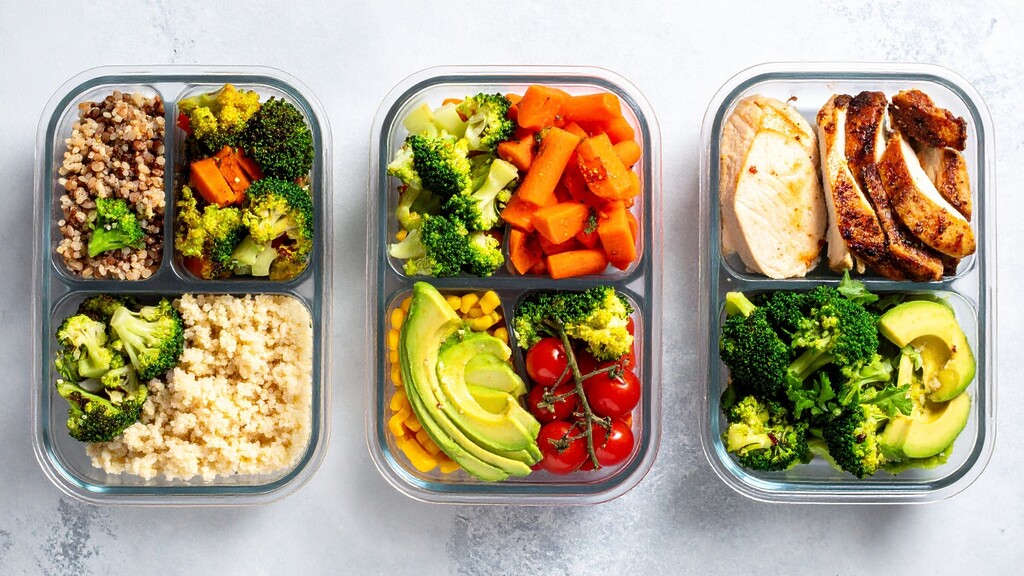
I used to spend three hours every Sunday boxing up identical chicken and broccoli, only to dread eating it by Wednesday. That burnout almost wrecked my consistency. Then I realized easy low carb meal prep is not about finishing meals. It is about eliminating weekday friction.
Jump to the 3 Sunday prep rules
Why Traditional Meal Prep Fails Us
Most of the advice out there tells you to cook five full portions of the exact same dinner. This looks highly organized on Instagram. In my kitchen with three kids, it is a recipe for flavor fatigue.
By day three, the vegetables are limp. The meat is dry. You start staring at the takeout menu because your brain wants variety. I learned this the hard way when I first overhauled my diet to manage my blood sugar. I brought my A1C down from 7.8% to 6.1% over eighteen months, but that only happened because I stopped forcing myself to eat soggy Wednesday leftovers and built a system I actually liked.
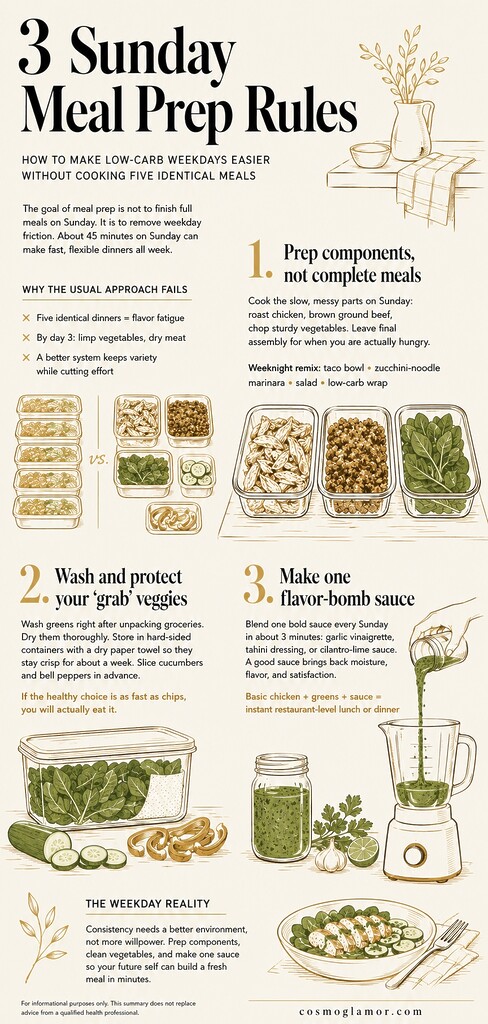
I try to keep Sundays strictly for resting. But an hour in the kitchen, actually, usually just 45 minutes, pays off so heavily on Tuesday night that it feels like a break. The trick is preparing the pieces that take the most time, leaving the assembly for the exact moment you are hungry.
1. Prep Components, Not Complete Meals
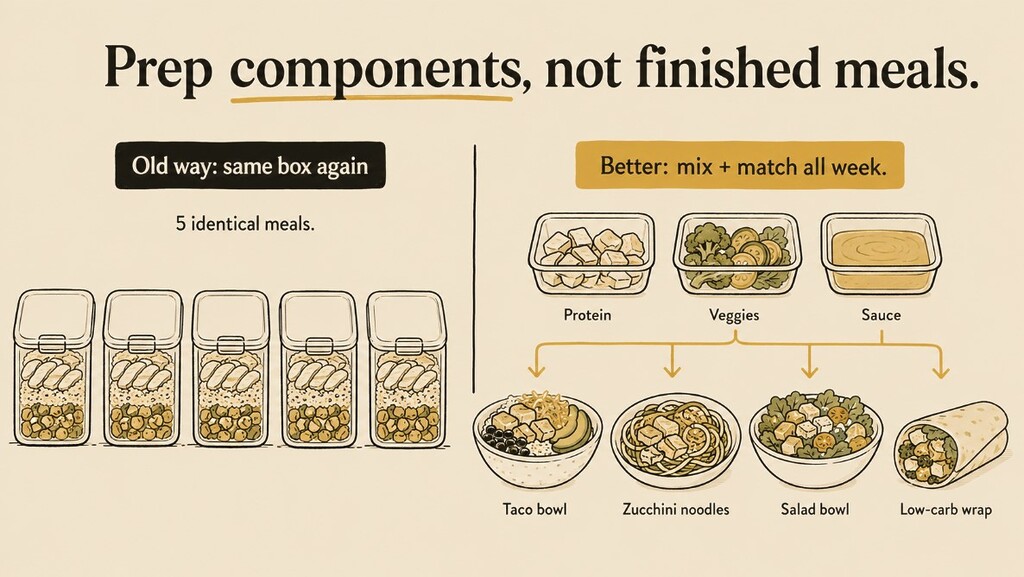
This single shift changed everything about my week. Do not make a finished casserole. Cook your base proteins and chop your heaviest vegetables.
If I roast a large batch of chicken thighs and brown two pounds of ground beef with basic salt and garlic on Sunday, my week is wide open. Raw meat requires careful handling, precise cooking times, and pan scrubbing. Knocking those steps out on Sunday removes the biggest hurdle between you and a healthy dinner after a long workday.
On Monday, that ground beef becomes taco bowls with avocado and salsa. On Tuesday, it goes into a quick marinara sauce over zucchini noodles. The chicken can be tossed into a salad on Wednesday and wrapped in a low-carb tortilla on Thursday. You get variety every single night, but the actual cooking takes five minutes.
2. Wash and Protect Your “Grab” Veggies
A low-carb lifestyle leans heavily on fresh produce. If you leave your lettuce, bell peppers, and cucumbers in their plastic grocery bags in the crisper drawer, they will rot before you find the energy to wash them on a Thursday evening.
Process your vegetables the minute you unpack your groceries. Wash the greens, dry them thoroughly, and put them in hard-sided containers. Store your washed greens with a dry paper towel folded inside the container. The paper absorbs the excess surface moisture that can promote spoilage or microbial growth, helping delicate leaves stay crisp for about a week.
Slice your bell peppers and cucumbers. When you open the fridge looking for a snack, you want the healthy choice to be exactly as fast to grab as a bag of chips. If the vegetables are ready, you will eat them. If they require a cutting board and a knife, you will probably skip them.
3. Make One “Flavor Bomb” Sauce
The biggest complaint people have about eating fewer carbohydrates is that the food feels boring. Carbohydrates naturally carry moisture and satisfying textures. When you reduce them, you have to replace that satisfaction with robust flavor and healthy fats.
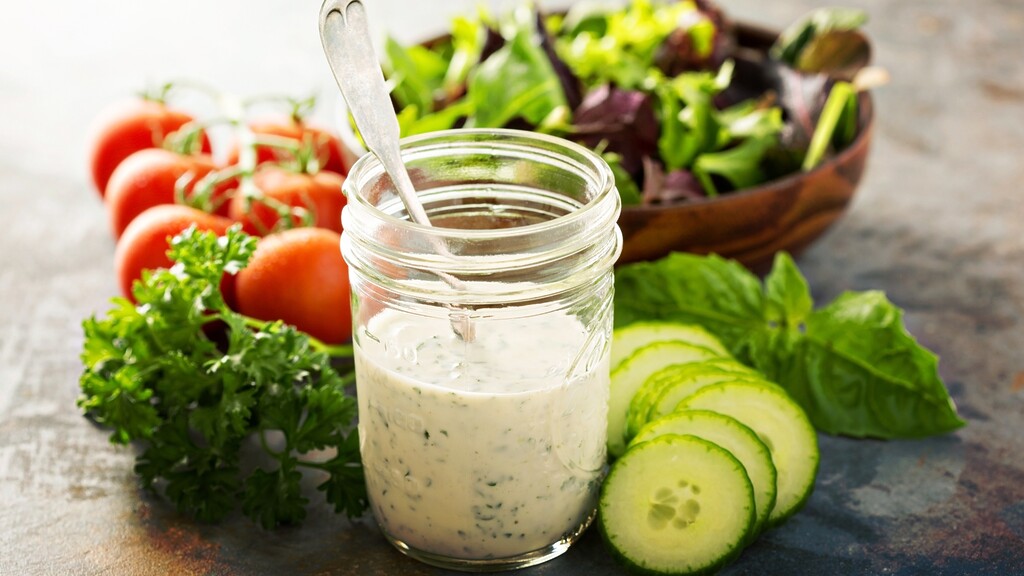
Every Sunday, I blend one versatile sauce. It takes about three minutes. Sometimes it is a heavy garlic vinaigrette. Other weeks it is a spicy tahini dressing or a creamy cilantro-lime sauce.
Having a high-flavor condiment ready in a jar rescues the most basic meals. You can take a handful of those washed greens, top them with the pre-cooked chicken, and drown it in your homemade sauce. You instantly have a restaurant-quality meal without turning on the stove.
The Weekday Reality
Getting your nutrition right does not require endless willpower. It requires a better environment. When you use a fraction of your Sunday to prep components, clean your vegetables, and mix a sauce, you are simply doing your future self a massive favor.
You wake up on Monday knowing the hard parts are handled. You can open the fridge, grab three containers, and build something fresh in the time it takes the oven to preheat. Consistency is what protects your health in the long run. Make the system so easy that consistency happens by default.
Sources
- Low Carbohydrate Versus Low Fat Diets in Type 2 Diabetes — Nutrients, 2022.
- Keeping Salad Greens Fresh — Oklahoma State University Extension, 2026.




One Response