

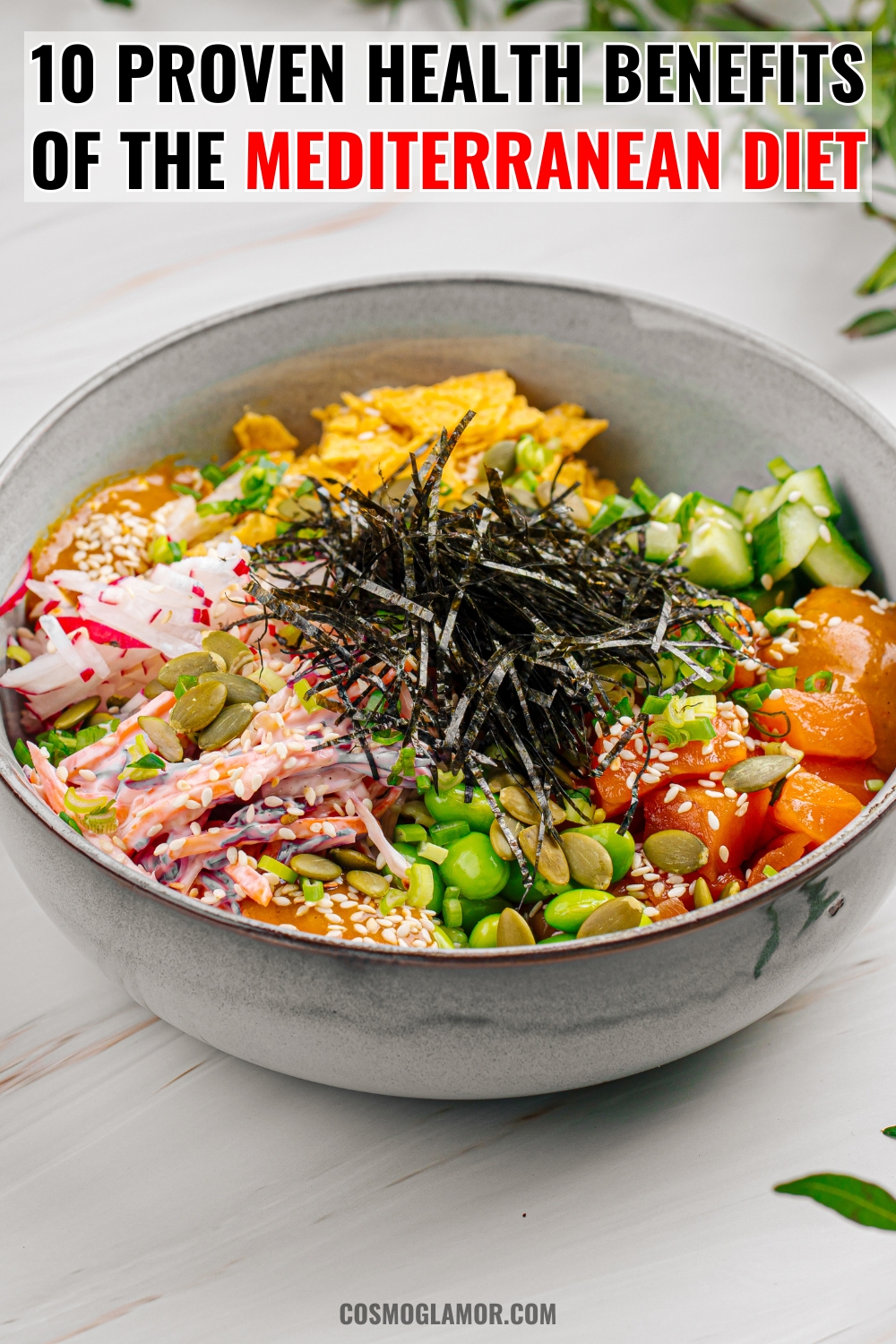
When I got my wake-up call – a dual Type 2 diabetes and high blood pressure diagnosis – I assumed my future was dry chicken and steamed broccoli. I refused to live like that. I started digging through clinical data instead, looking for an eating pattern that actually repaired metabolic health without requiring misery. One approach kept outperforming the rest across almost every measurable health marker, and it actively encourages eating food that tastes good.
Jump to the 10 scientific reasons
The Mediterranean diet isn't really a “diet” in the American sense of the word. There are no points to track, no macros to hit perfectly, and no banned food lists. It is a regional eating pattern that happens to be one of the most rigorously studied nutritional models in the world. If you are on the fence about changing how you eat, here is what the research says happens when you switch.
1. It directly improves heart function and blood pressure
Cardiovascular health is where this eating pattern made its name. Studies consistently link the Mediterranean diet to lower blood pressure and a lower risk of heart disease and stroke. The high intake of monounsaturated fats, primarily from extra virgin olive oil, helps keep blood vessels flexible and reduces arterial stiffness.
This isn't just theoretical for me. When I was diagnosed, my blood pressure was sitting at an uncomfortable 145/95 mmHg. By shifting away from processed foods and leaning heavily into this way of eating, I eventually brought it down to a consistent 120/80 mmHg. The healthy fats and high potassium from the vegetables work together to help relax blood vessel walls.
2. It stabilizes blood sugar and repairs insulin sensitivity
A plate built around fibrous vegetables, healthy fats, and lean proteins is a nightmare for blood sugar spikes – in the best way possible. Fiber slows down digestion, which drips glucose into your bloodstream slowly instead of dumping it all at once.
My own A1C dropped from 7.8% to 6.1% over 18 months using this framework. Actually, let me clarify that – it wasn't just the food itself, it was how the food is combined. Eating carbohydrates after olive oil can blunt the blood sugar rise. You don't have to cut carbs to zero to fix your metabolic health; you just have to change the package they come in. Always talk to your physician before altering your diet if you are managing a metabolic condition, but the clinical data here is incredibly strong.
3. It quiets systemic inflammation
Chronic inflammation is the quiet engine behind almost every modern disease, from arthritis to cardiovascular disease. The Mediterranean diet is essentially an anti-inflammatory protocol disguised as dinner.
Extra virgin olive oil contains a specific compound called oleocanthal. Research suggests oleocanthal operates on the same COX pathways as ibuprofen. When you replace heavily processed fats with high-quality olive oil, you are shifting toward one of the anti-inflammatory anchors of this eating pattern.

4. It supports sustainable, data-backed weight loss
Most diets fail because white-knuckling through hunger isn't a long-term strategy. The Mediterranean diet naturally limits processed, hyper-palatable foods that bypass our fullness cues.
I lost 50 pounds without ever feeling like I was starving, mostly because the meals are physically heavy and nutrient-dense. Foods high in water and fiber physically stretch the stomach, sending mechanical fullness signals to the brain long before you've overeaten. It is a slow, steady weight management tool, not a crash diet.
5. It builds a bulletproof gut microbiome
Your gut bacteria dictate everything from your digestion to your immune system, and they are incredibly picky eaters. They thrive on diverse plant fibers.
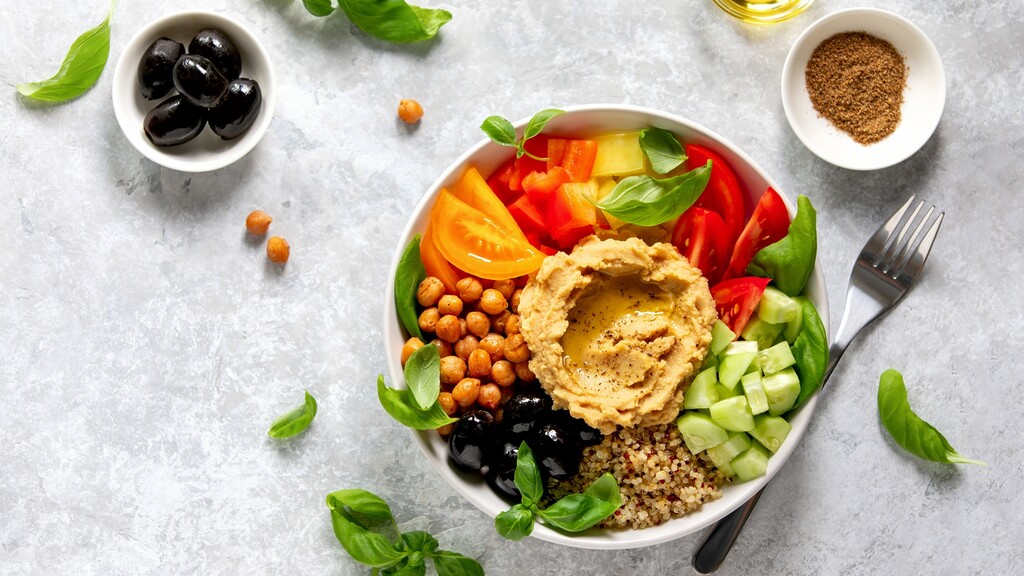
The average American diet is desperately low in fiber, feeding only a narrow range of gut flora. The Mediterranean focus on beans, lentils, whole grains, nuts, and diverse vegetables provides the exact prebiotic fuel required to cultivate a diverse, resilient microbiome. A healthier gut lining means better nutrient absorption and fewer digestive issues.
6. It protects against cognitive decline
What is good for the heart is good for the brain. The brain requires immense amounts of energy and relies on a pristine network of blood vessels to deliver it.
Observational studies routinely link Mediterranean eating patterns to slower rates of cognitive decline and a reduced risk of Alzheimer's disease. The high concentration of omega-3 fatty acids from fish, combined with antioxidants from berries and leafy greens, helps protect neural pathways from oxidative stress as we age.
7. It eases chronic joint pain
If you wake up stiff or deal with nagging joint aches, your diet might be keeping the fire lit. When I was rebuilding my body after a decade of chronic back pain, I designed functional movement routines, but the physical therapy only clicked when my diet changed.
Lowering systemic inflammation takes the pressure off irritated joints. When you cut back on added sugars and processed meats – known inflammatory triggers – and replace them with omega-3s and antioxidants, your joints often find relief. You still have to move correctly, but you stop fighting your own biology.
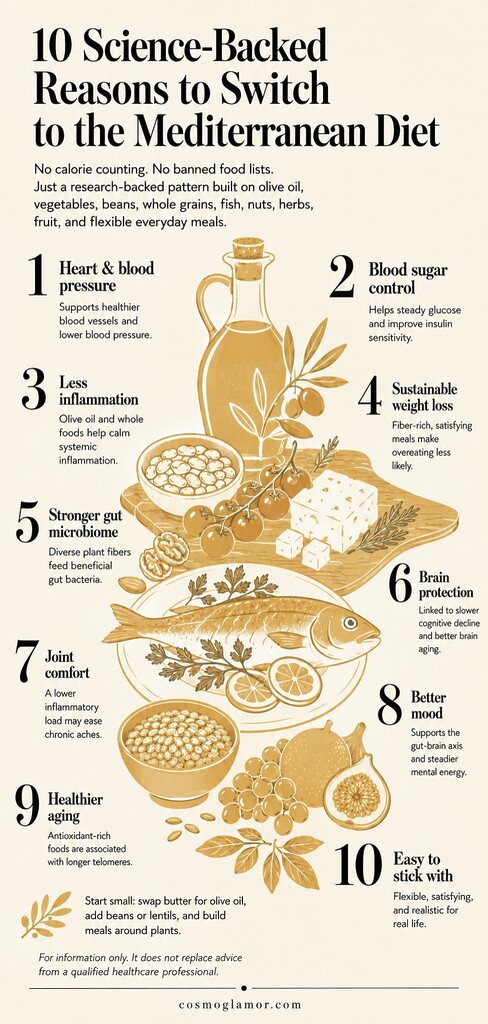
8. It positively impacts your mood and mental health
The gut-brain axis is a two-way street. A massive percentage of your body's serotonin – the neurotransmitter responsible for mood stability – is produced in the digestive tract.
When you feed your gut a diverse, nutrient-rich diet, you support the physical infrastructure of your mental health. Nutritional psychiatry is a growing field, and early research indicates that Mediterranean-style dietary support can improve depressive symptoms for some adults. It isn't a cure-all, but it removes the blood sugar crashes that often mimic anxiety and fatigue.
9. It slows down cellular aging
Telomeres are the protective caps at the ends of your DNA strands. As we age, these caps naturally shorten, eventually leading to cell death.
Fascinating observational research links Mediterranean-style eating with longer telomere length. The dense concentration of antioxidants in the vegetables, herbs, and olive oil helps neutralize free radicals before they can damage your DNA. It is one of the more literal anti-aging clues we can measure at a microscopic level.
10. It has one of the most practical adherence profiles
The most scientifically perfect diet in the world is useless if you quit doing it after three weeks. This is where the Mediterranean diet holds its own in one long-term trial: people can actually stick to it.
Because no major food groups are entirely eliminated, there is very little psychological deprivation. You can go to a restaurant, you can have a glass of wine, and you can eat cheese. It works because it is flexible enough to survive a busy Tuesday night with kids, a holiday party, and a stressful week at work.
You don't need to overhaul your entire refrigerator tonight. Pick one thing. Swap your butter for olive oil when you cook eggs tomorrow, or throw a handful of walnuts onto your afternoon yogurt. The science suggests that even small shifts toward this way of eating can change your blood work, your energy, and your future.
Sources
- Effects of a Mediterranean diet on blood pressure – Journal of Hypertension, 2021.
- Effects of fat on gastric emptying and glycemic response – Journal of Clinical Endocrinology & Metabolism, 2006.
- Oleocanthal and ibuprofen-like anti-inflammatory activity – Nature Clinical Practice Rheumatology, 2005.
- Mediterranean diet intervention alters the gut microbiome – Gut, 2020.
- Mediterranean diet and cognitive health meta-analysis – GeroScience, 2024.
- Dietary improvement for adults with major depression – BMC Medicine, 2017.
- Mediterranean diet and telomere length in Nurses' Health Study – BMJ, 2014.
- Weight loss with low-carbohydrate, Mediterranean, or low-fat diet – New England Journal of Medicine, 2008.