


When my A1C came back at 7.8 percent, the sheer volume of unsolicited advice was overwhelming. It turns out most of what people tell you about blood sugar is just outdated panic masquerading as medicine. Here is what the research actually says.

Myth 1: Eating Sugar Directly Causes Diabetes
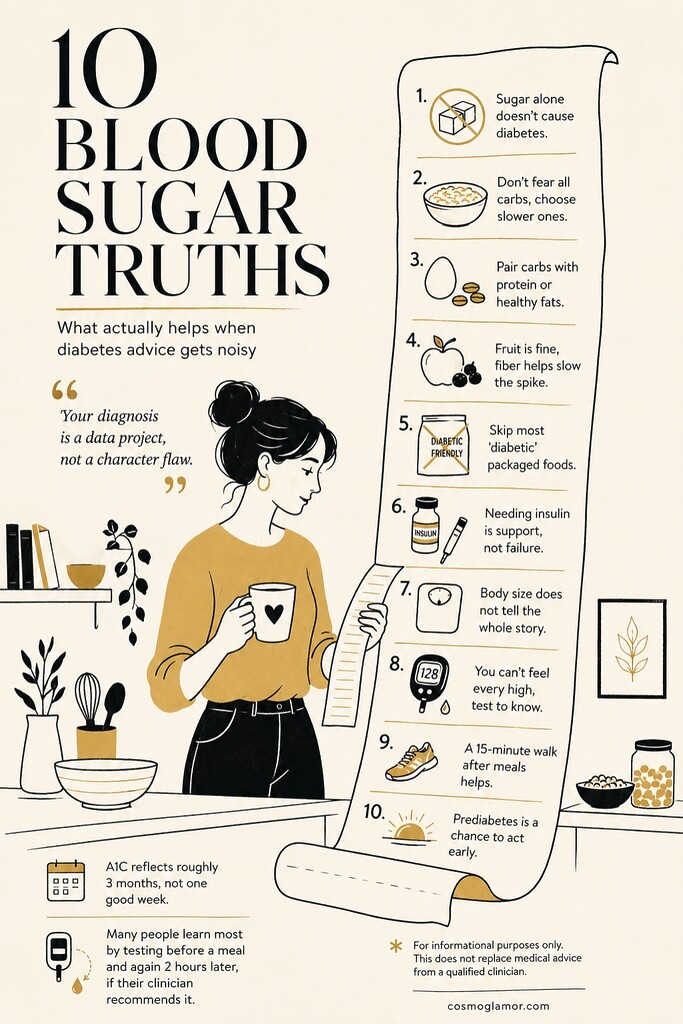
People love a simple villain. But sipping a regular soda does not instantly break your pancreas. Type 1 diabetes is an autoimmune condition where the body attacks its own insulin-producing cells. Type 2 diabetes develops when your cells gradually stop responding to insulin, which involves genetics, age, and overall lifestyle factors. Chronic insulin resistance builds over years, not from a single slice of birthday cake.
Myth 2: You Must Cut Out All Carbohydrates
This is the fastest way to make yourself miserable, and it is entirely unnecessary. Carbohydrates break down into glucose, which your brain and body need for energy. The goal is to choose complex carbohydrates that digest slowly, like black beans, quinoa, or steel-cut oats. Pairing a carb with protein or healthy fats delays gastric emptying. That means the glucose enters your bloodstream at a steady trickle instead of a sudden flood.
Myth 3: Fruit Is Off-Limits Because It Is Too Sweet

A lot of newly diagnosed people are terrified of bananas and grapes. While fruit does contain natural sugars, it also packs a massive amount of fiber. Fiber acts as a physical barrier in your digestive tract, slowing down how quickly the sugar gets absorbed. You can absolutely enjoy fruit, especially when you eat it alongside a handful of walnuts or a scoop of Greek yogurt to anchor the digestion process.
Myth 4: You Need Special Diabetic Foods
The diet industry makes a fortune selling sugar-free cookies and low-carb keto bars. Most of these rely on sugar alcohols that can cause severe stomach upset and bloating. You are almost always better off eating whole foods. A plain apple with a spoonful of peanut butter stabilizes your numbers far better than a processed snack bar wrapped in medical marketing. Save your dollars and focus on the perimeter of the grocery store.
Myth 5: Needing Insulin Means You Failed
Type 2 diabetes is a progressive condition. Over time, your pancreas can simply get tired and produce less insulin, no matter how perfectly you eat or how much weight you lose. Taking insulin is just giving your body a hormone it can no longer make enough of. Stop treating medication like a moral failing. It is a vital tool to protect your heart, eyes, and kidneys.
Your diagnosis is a data project to manage, not a character flaw to hide.
Myth 6: Only Heavy People Get Type 2 Diabetes

You cannot diagnose metabolic health just by looking at someone. While excess weight can increase insulin resistance, plenty of thin individuals develop Type 2 diabetes. Sometimes it comes down to visceral fat wrapped around internal organs, which you cannot see from the outside. Age, chronic stress, and family history often hold the steering wheel.
Myth 7: You Will Feel It If Your Blood Sugar Is High
You might expect a massive sugar rush or a sudden crash, but high blood sugar is notoriously quiet. Many people walk around with elevated numbers for years without realizing it. The symptoms are often as subtle as feeling slightly more tired than usual in the afternoon or having a dry throat that makes you crave ice water. A reliable way to truly know your numbers is to test them with a meter or CGM. Do not rely on how you feel to guess your blood glucose levels.
Myth 8: You Have to Do Intense Workouts to See Results
When I first started trying to lower my blood pressure and A1C, I thought I had to run miles every day. That just left me exhausted and sore. Research suggests that a 15-minute walk after a meal can help. Muscle contractions pull glucose out of your bloodstream to use for energy without requiring insulin to open the cellular doors. Always consult your physician before starting any new exercise program, but remember that even light movement matters.
Myth 9: Prediabetes Is Just a Warning
Prediabetes is not diabetes yet, but it is blood sugar trouble in motion. But it is also the best window of opportunity you will ever get. Making small mechanical shifts right now, like swapping fruit juice for whole fruit or committing to that 15-minute walk after dinner, reduces the daily demand on your pancreas. Those exact actions can lower your risk before the pattern becomes harder to reverse.
Myth 10: Your Entire Life Will Revolve Around Your Diagnosis

In the beginning, managing your health feels like a part-time job. You are reading every label and logging every meal. But after a few months, it just becomes background noise. You learn your go-to orders at local restaurants and figure out which snacks travel well in your bag. It stops being a strict regimen and simply becomes the way you live.
Common Questions After Diagnosis
How long does it take for diet changes to affect my A1C?
Your A1C measures your average blood sugar over the lifespan of your red blood cells, which is roughly three months. You might see better daily numbers on your home monitor within a week, but the official A1C shift reflects a longer-term average, not just one good week.
Should I test my blood sugar every time I eat?
Follow your doctor's specific guidance on testing frequency. However, many people find that testing before a meal and two hours afterward during their first month provides a brilliant personal data map. It shows you exactly which foods your specific body handles well and which ones cause a spike.
A diagnosis requires your attention, but it does not have to dictate your joy.
Sources
- Gut-Based Strategies to Reduce Postprandial Glycaemia in Type 2 Diabetes — Frontiers in Endocrinology, 2021.
- Managing Diabetes — National Institute of Diabetes and Digestive and Kidney Diseases, 2026.
- Manage Blood Sugar — Centers for Disease Control and Prevention, 2024.
- Effect of Postprandial Moderate-Intensity Walking for 15-min — Diabetology International, 2020.
- Prediabetes: Your Chance to Prevent Type 2 Diabetes — Centers for Disease Control and Prevention, 2024.
- The A1C Test & Diabetes — National Institute of Diabetes and Digestive and Kidney Diseases, 2026.
- Glucose, Exercise and Insulin: Emerging Concepts — The Journal of Physiology, 2001.