

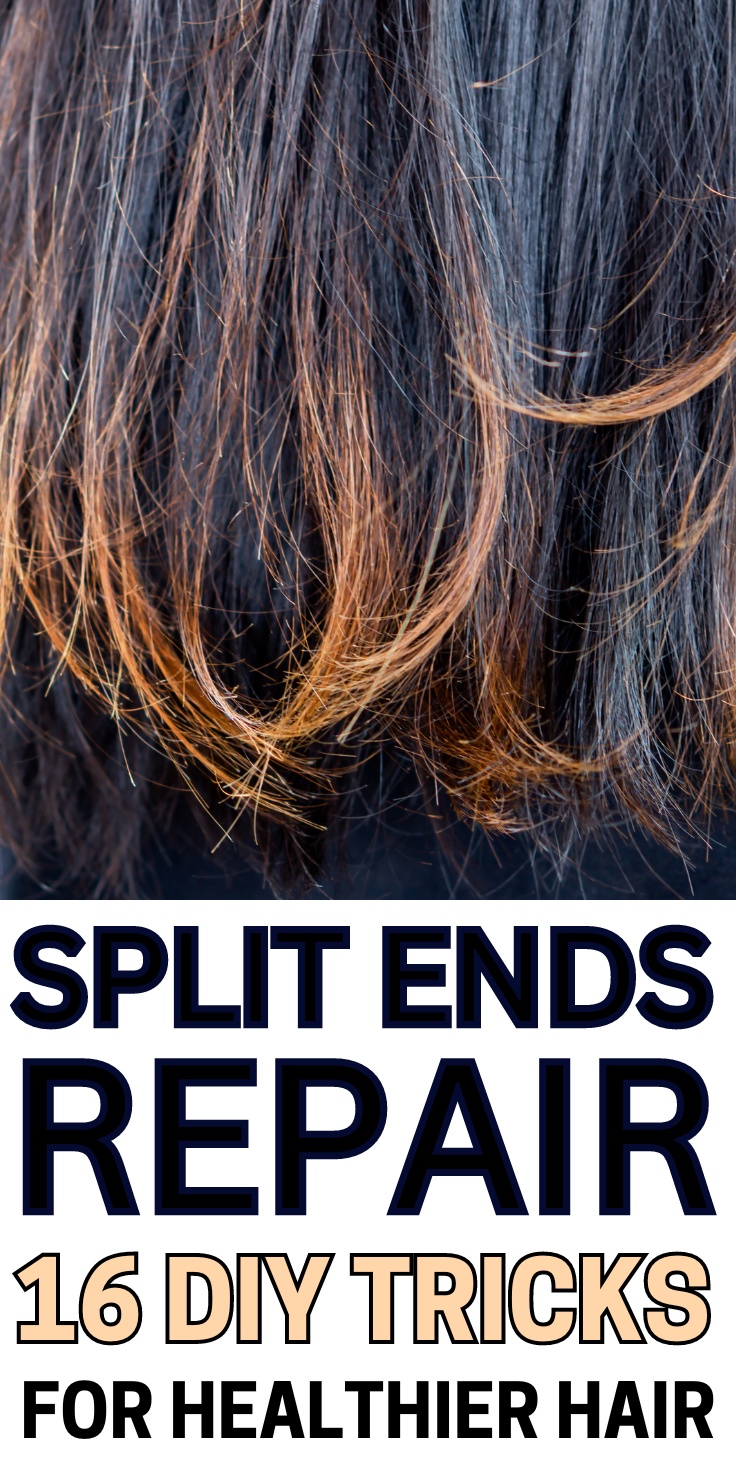

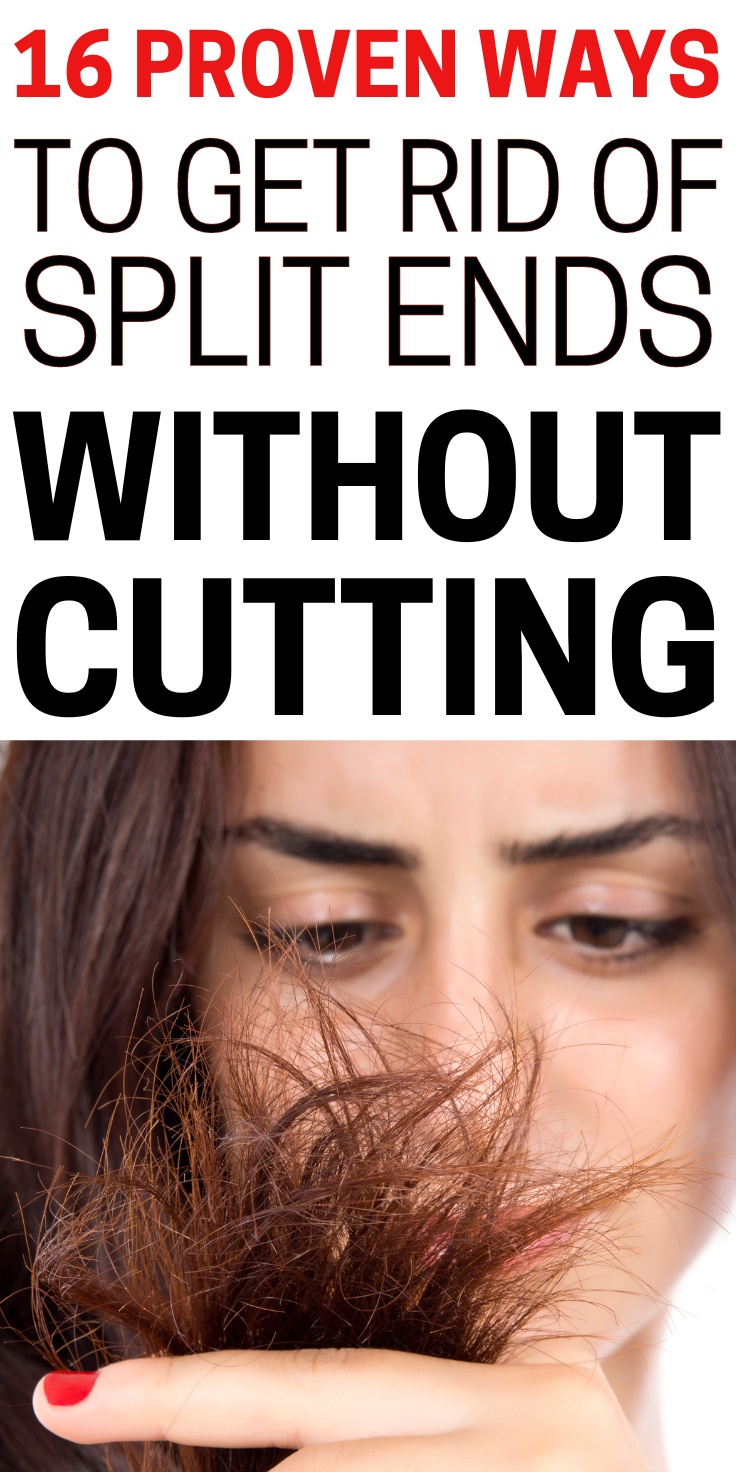
You know a trim is the ultimate reset, but sometimes you just aren't ready to sacrifice three inches of hard-earned growth. Fixing split ends without cutting is about two things: cosmetic damage control to hide the fraying today, and stopping friction to save your length tomorrow.
Jump to the 16 split end fixes
Immediate Fixes to Seal and Hide the Damage
When you have a dinner date in two hours, prevention is off the table. You need aesthetic triage. These fixes temporarily seal the cuticle down so your hair looks polished and intact.

1. Micro-Dose Your Hair Oil
Most of us apply hair oil incorrectly by raking it indiscriminately through the bottom half of our hair. To effectively mask damage, warm one drop of argan or jojoba oil for fine hair, or up to three drops for thick hair, between your palms and gently press it directly into the bottom inch of your dry hair. The pressing motion temporarily seals the frayed cuticle flat against the hair shaft, while the oil adds a reflective shine that camouflages the rough texture.
2. The Vaseline Hack (Use Sparingly)
If you are completely out of styling products, a microscopic dab of petroleum jelly works in an emergency. Wash your hands first so you aren't sealing dust into the strand. Rub an amount no larger than a grain of rice between your fingertips until it melts, then pinch it onto the most stubborn flyaways. It is too heavy for daily use, but it acts as an occlusive barrier that physically holds the split fibers together until your next wash.
3. Apply a Leave-In Conditioner on Sopping Wet Hair
Waiting until your hair is merely damp to apply products is a missed opportunity. Your hair cuticle is most open and receptive right when you step out from under the water. Raking a dime-sized amount of leave-in conditioner into sopping wet hair traps maximum moisture inside the core of the strand, which plumps the hair and makes the ends look less brittle once dry.
4. Switch to a Bond-Building Serum
If you are looking for an actual treatment rather than just a styling trick, skip the generic smoothing creams and look for bond-building formulas containing peptides. These sink beneath the surface to temporarily link broken protein bonds. Check your specific bottle, but most require you to skip regular conditioner, apply a pea-sized pump to damp hair, and wait roughly four minutes before brushing or styling. They wash out eventually, but they offer the closest thing to structural repair available outside a salon.
5. Tuck Them Away
Sometimes the smartest way to deal with frayed ends is to make them invisible. Styles that loop, twist, or tuck the bottom inches of your hair completely hide the damage while protecting those fragile tips from rubbing against your shoulders all day.
Daily Habits to Prevent Further Splitting
Once you've hidden the existing damage, your focus has to shift. Preventing split ends is about identifying and eliminating the tiny sources of friction that tear the protective outer layer of your hair on a daily basis.

6. Swap Your Bath Towel for Microfiber
Standard terrycloth bath towels are covered in thousands of tiny woven loops. When you rub wet hair with them, those loops catch on the raised cuticles of your hair and rip them upward. Squeeze the excess water out with a flat-weave microfiber towel or an old cotton t-shirt instead. The smooth surface absorbs moisture without roughing up the delicate outer layer of your strands.
7. Sleep on Silk or Satin
Cotton pillowcases absorb natural oils from your hair and create significant drag when you toss and turn. Switching to a silk or high-quality satin pillowcase allows your hair to glide across the surface. This drastically reduces the overnight friction that causes mid-shaft breakage and frayed ends.
8. Pre-Poo with Coconut Oil
Shampoo is designed to strip away grease, but your fragile ends rarely need that level of cleansing. Fifteen minutes before you get in the shower, melt roughly a tablespoon of solid coconut oil in your hands and coat the bottom three inches of your hair. Coconut oil has a unique molecular structure that penetrates the hair shaft rather than just sitting on top, creating a protective barrier against the harsh surfactants in your shampoo.
9. Shampoo the Roots Only
When you do wash your hair, focus the lather exclusively on your scalp. As you rinse, the suds will naturally travel down the length of your hair, washing away the excess coconut oil and daily grime without actively scrubbing the fragile ends.
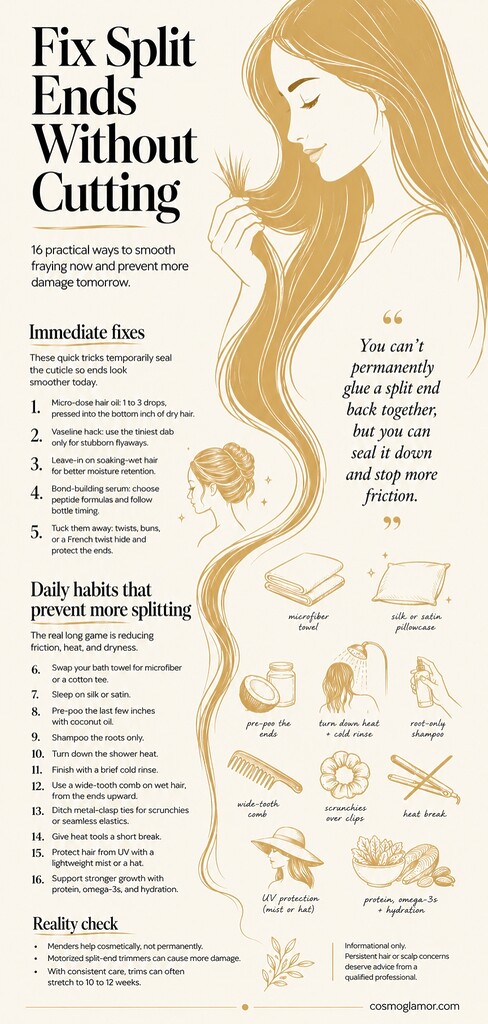
You can't permanently glue a broken hair fiber back together, but you can absolutely seal it down so nobody else knows it's there.
10. Turn Down the Shower Heat
Hot water feels incredible, especially in December, but it forces the hair cuticle to swell and lift. Washing and rinsing in lukewarm water keeps the cuticle laying flat, which locks your moisture treatments inside and leaves the hair visibly smoother.
11. The Final Cold Water Rinse
If you can tolerate it, blast your hair with cold water for the final ten seconds of your shower. Temperature drops cause the cuticle layer to snap tightly shut, giving your ends a glossy, reflective finish once dry.
12. Use a Wide-Tooth Comb on Wet Hair
Hair is highly elastic and at its absolute weakest when wet. Dragging a densely packed bristle brush through damp hair will snap it. Always detangle wet hair with a wide-tooth comb, starting from the very bottom and slowly working your way up to the root.
13. Ditch the Metal-Clasp Hair Ties
Those classic elastic bands with the little metal connectors are a disaster for your length. The metal crimps snag individual hairs and slice right through them when you pull the tie out. Switch to silk scrunchies, spiral plastic ties, or completely seamless elastics.
14. Drop the Heat Tools for a Week
Give your flat iron a vacation. Heat styling boils the internal moisture of the hair fiber, causing it to blister and eventually split. Try committing to air-drying just two extra days a week to give the keratin bonds time to stabilize.
15. Protect Your Hair from UV Rays
We remember sunscreen for our faces, but UV radiation actively degrades the protein structure of your hair, leaving the ends brittle and faded. If you are spending hours outside, mist a lightweight UV-protectant hair milk from the mid-lengths down, or simply throw on a hat.
16. Feed Your Hair from the Inside
No amount of expensive serum can fix a structural protein deficiency. Hair is built from keratin, and your body prioritizes vital organs over hair growth when resources are low. Ensuring you get adequate daily protein, omega-3 fatty acids, and hydration gives your follicles the raw materials they need to produce stronger, more resilient hair fibers that resist splitting in the first place.
Frequently Asked Questions
Do split end menders actually work?
Over-the-counter split end serums that promise to “heal” your hair are heavily reliant on silicones. They work incredibly well as cosmetic makeup for your hair, temporarily gluing the frayed ends together until your next shampoo, but they do not reverse the structural damage. Think of them as a great bandage, not a cure.
Are motorized split-end trimmer tools worth trying?
They look satisfying in social media videos, but those handheld devices essentially run a tiny blade down the hair shaft. Unless the blade is kept perfectly sharp and your hair is pinned perfectly straight during use, the machine can chew the healthy cuticle and cause more micro-tears. You often end up with frizzier hair a few weeks later.
How long can I really go without a trim?
If your goal is growing your hair out, you can typically stretch your salon visits to 10 or 12 weeks, provided you are rigorous about your daily care habits. However, if you let splits travel too far up the shaft, the hair will eventually snap off on its own, leaving your ends looking thin and uneven regardless of how long you wait.