
Building a meatless plate often leads straight to a block of soy. But if you want to diversify your rotation, you already have an incredible lineup of plant based Mediterranean proteins waiting in the pantry.
Traditional Mediterranean cooking has relied on seeds, legumes, and hearty grains for centuries. You do not need highly processed substitutes to build a filling meal.
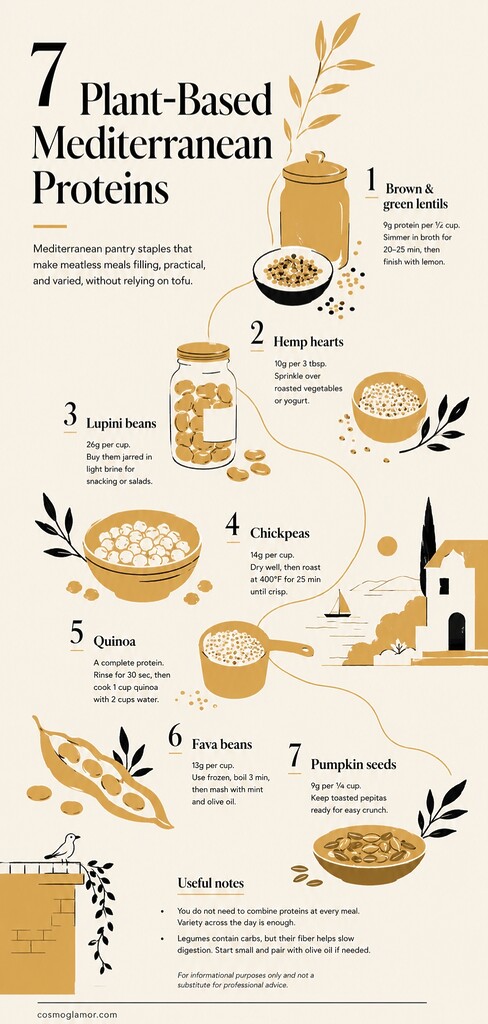
7 Tofu Alternatives for Protein on a Mediterranean Diet
Most of these ingredients are shelf-stable, inexpensive, and prep-friendly. They make transitioning to a plant-heavy lifestyle manageable for a busy week.
1. Brown and Green Lentils
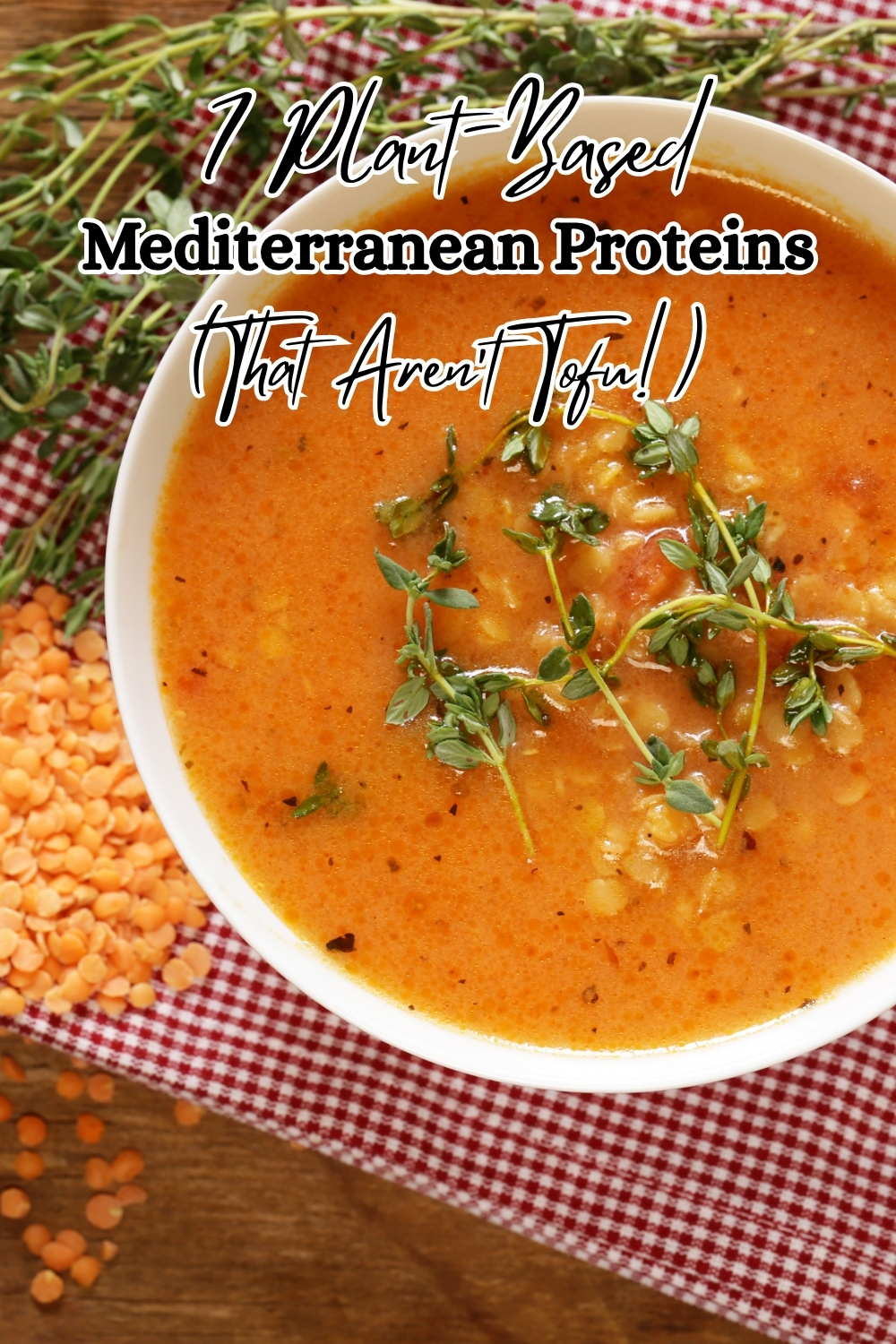
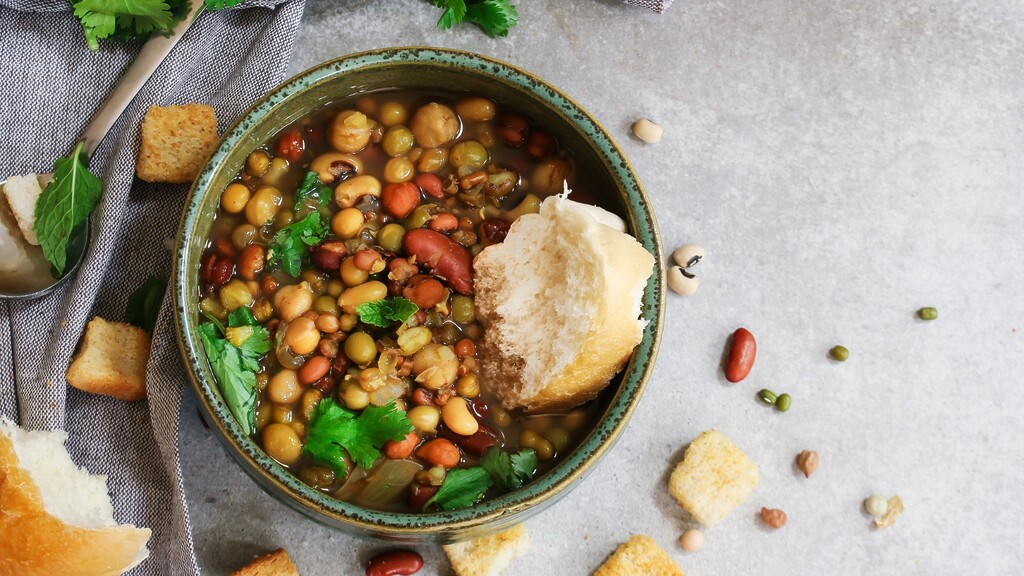
Lentils are the undisputed workhorse of Mediterranean diet plant proteins. A half-cup serving delivers about 9 grams of protein alongside a heavy dose of fiber. They hold their shape beautifully in salads and soups.
Skip boiling them in plain water. Simmer one cup of lentils in three cups of rich vegetable broth for about 20 to 25 minutes. Add a bay leaf and a smashed garlic clove to the pot to build flavor from the inside out. Finishing the drained lentils with a heavy squeeze of fresh lemon juice brightens the earthy taste and can help your body absorb more plant-based iron.
2. Hemp Hearts
When you need protein but do not have time to cook, hemp hearts are the answer. Just three tablespoons pack roughly 10 grams of protein. They have a mild, nutty flavor that blends into almost anything.
You can sprinkle them heavily over roasted vegetables or fold them into a morning bowl of yogurt. They also carry a balanced ratio of omega-6 to omega-3 fatty acids, adding plant-based fats that can fit neatly into an anti-inflammatory eating pattern.
3. Lupini Beans
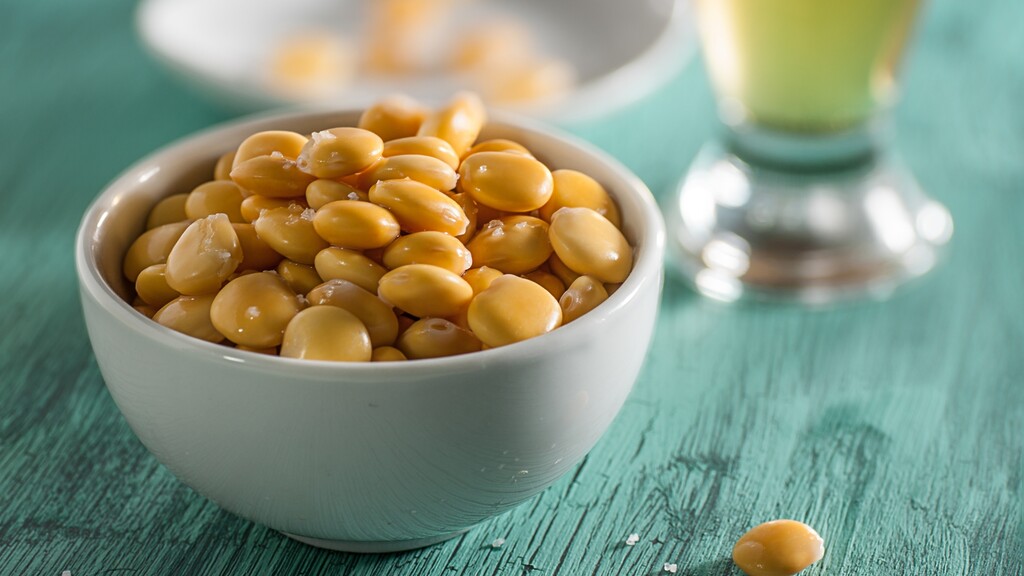
Lupini beans are a traditional snack across Italy and the broader Mediterranean. They are incredibly dense in protein, offering about 26 grams per cup, and are relatively low in net carbohydrates for a bean.
Cooking them from scratch takes days of soaking and rinsing to remove their natural bitterness. Buy them jarred in a light brine instead. You can pop them right out of their skins for a fast afternoon snack or toss them directly into a leafy salad for instant substance.
4. Chickpeas (Garbanzo Beans)
Most people associate chickpeas strictly with hummus. While a good dip is essential, whole chickpeas offer much more culinary range. They provide about 14 grams of protein per cup and are highly affordable.
Roast them at 400°F for 25 minutes until crispy to replace croutons. The secret is patting a rinsed can of chickpeas completely dry with a paper towel before tossing them with olive oil, smoked paprika, and sea salt. If they go into the oven wet, they steam instead of crisping. The crunch satisfies the craving for a savory snack while keeping your blood sugar steadier than a refined crunchy snack.
5. Quinoa
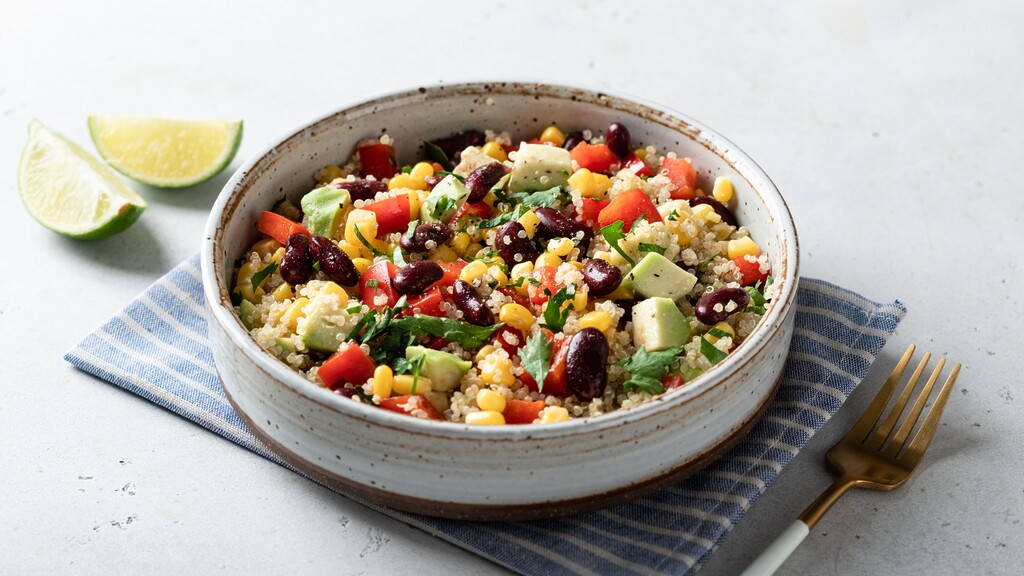
While native to South America, quinoa has become a modern staple in global Mediterranean kitchens. It is one of the rare plant foods considered a complete protein, meaning it contains all nine essential amino acids your body cannot make on its own.
Quinoa has a natural coating called saponin that tastes bitter. Rinse the grains under cold water in a fine mesh sieve for thirty seconds before cooking to strip that coating away. Combine one cup of rinsed quinoa with two cups of water, simmer covered for about 15 minutes until the liquid absorbs, and use it as a protein-heavy base for tabbouleh instead of traditional bulgur wheat.
A Mediterranean approach to plant protein isn't about replacing meat with processed substitutes. It is about letting legumes, seeds, and ancient grains carry the meal.
6. Fava Beans (Broad Beans)
Fava beans offer a buttery texture and a slightly sweet flavor that defines spring Mediterranean cooking. A single cup provides around 13 grams of protein.
Fresh fava beans require shelling, blanching, and peeling, a process that takes real time. For everyday meals, keep frozen shelled fava beans on hand. You can drop frozen fava beans into boiling water for exactly three minutes. Drain them, mash them roughly with mint and olive oil, and spread the mixture thickly over toasted sourdough.
7. Pumpkin Seeds (Pepitas)
Pumpkin seeds do more than garnish a soup. At roughly 9 grams of protein per quarter-cup, they are a dense nutritional tool. They are also one of the best whole-food sources of magnesium, a mineral involved in muscle function and healthy blood pressure regulation.
Keep a jar of pre-toasted pepitas on your counter so you actually remember to use them. If you only have raw seeds, warm them in a dry skillet over medium heat for about three minutes until they start to pop. Toss them into trail mixes, blend them into a dairy-free pesto, or use them to add a necessary crunch to softer meals like oatmeal or roasted eggplant.
Common Questions About Plant Protein
Do I need to combine these proteins at every meal?
You do not need to eat rice and beans in the exact same sitting to build a complete protein. Research shows your body pools amino acids throughout the day. As long as you eat a varied diet of seeds, nuts, grains, and legumes over a 24-hour period, your body will assemble what it needs.
Will eating this many beans spike my blood sugar?
It is a common fear, especially if you are watching your metabolic health. While legumes do contain carbohydrates, they are also packed with dietary fiber. That fiber acts like a net, slowing down digestion and preventing the rapid glucose spikes you would see from refined breads or sugars. Start with smaller portions (like a half-cup) to let your digestion adjust, and always pair them with a healthy fat like olive oil.
Pick just one new ingredient to add to your grocery list this week, put it where you can see it in the kitchen, and see how easily it fits into your routine.
Sources
- Iron fact sheet for health professionals – NIH Office of Dietary Supplements, 2025.
- Dietary hempseed and cardiovascular health – Frontiers in Nutrition, 2025.
- Boiled mature seeds lupins nutrition data – USDA FoodData Central via Melio, 2019.
- Chickpea and postprandial blood glucose responses – Nutrition Journal, 2025.
- Quinoa nutrition overview – Harvard T.H. Chan School of Public Health, accessed 2026.
- Magnesium fact sheet for health professionals – NIH Office of Dietary Supplements, accessed 2026.