
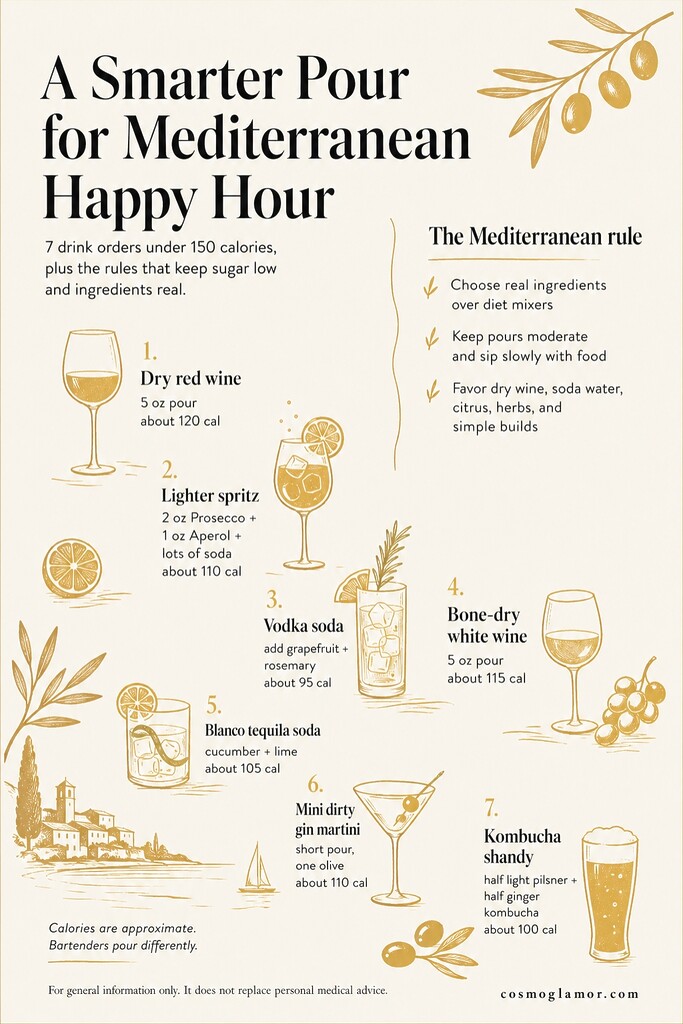
Pouring a drink shouldn't feel like unraveling a week of good choices. If you eat a Mediterranean diet, you do not have to skip happy hour. You just need a smarter order. Here are seven low-calorie alcoholic drinks that actually fit the lifestyle.
The Mediterranean Approach to Happy Hour
Most popular advice for low-calorie drinking relies on artificial sweeteners and highly processed diet mixers. That completely clashes with the whole-food philosophy of the Mediterranean lifestyle. When I overhauled my own habits to manage my blood sugar, the sugary restaurant margaritas were the first things to go. But I refused to replace them with chemicals.
The Mediterranean framework is about quality over quantity. It favors drinks that are naturally low in sugar, rich in botanical flavors, and meant to be sipped slowly with food.
The goal isn't to trick your body with artificial sweeteners. It is to choose drinks you can sip slowly and actually enjoy.
Instead of hacking a massive cocktail down to zero calories, the better move is pouring a moderate amount of something real.
7 Mediterranean-Friendly Drinks Under 150 Calories
These orders keep the sugar low, skip the artificial syrups, and rely on real ingredients. The calorie counts are approximate, as every bartender pours a little differently.
1. Dry Red Wine (Pinot Noir or Tempranillo)
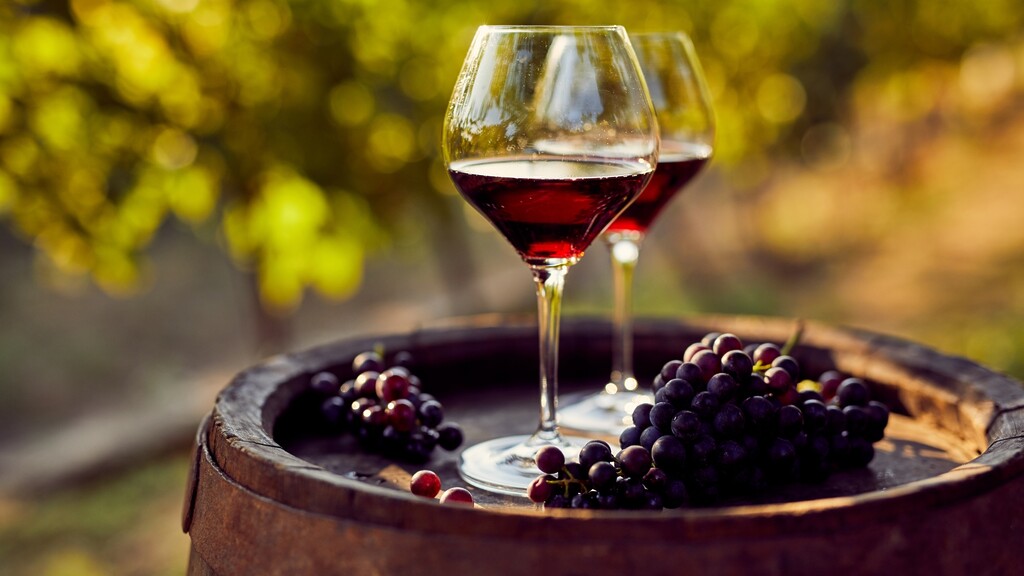
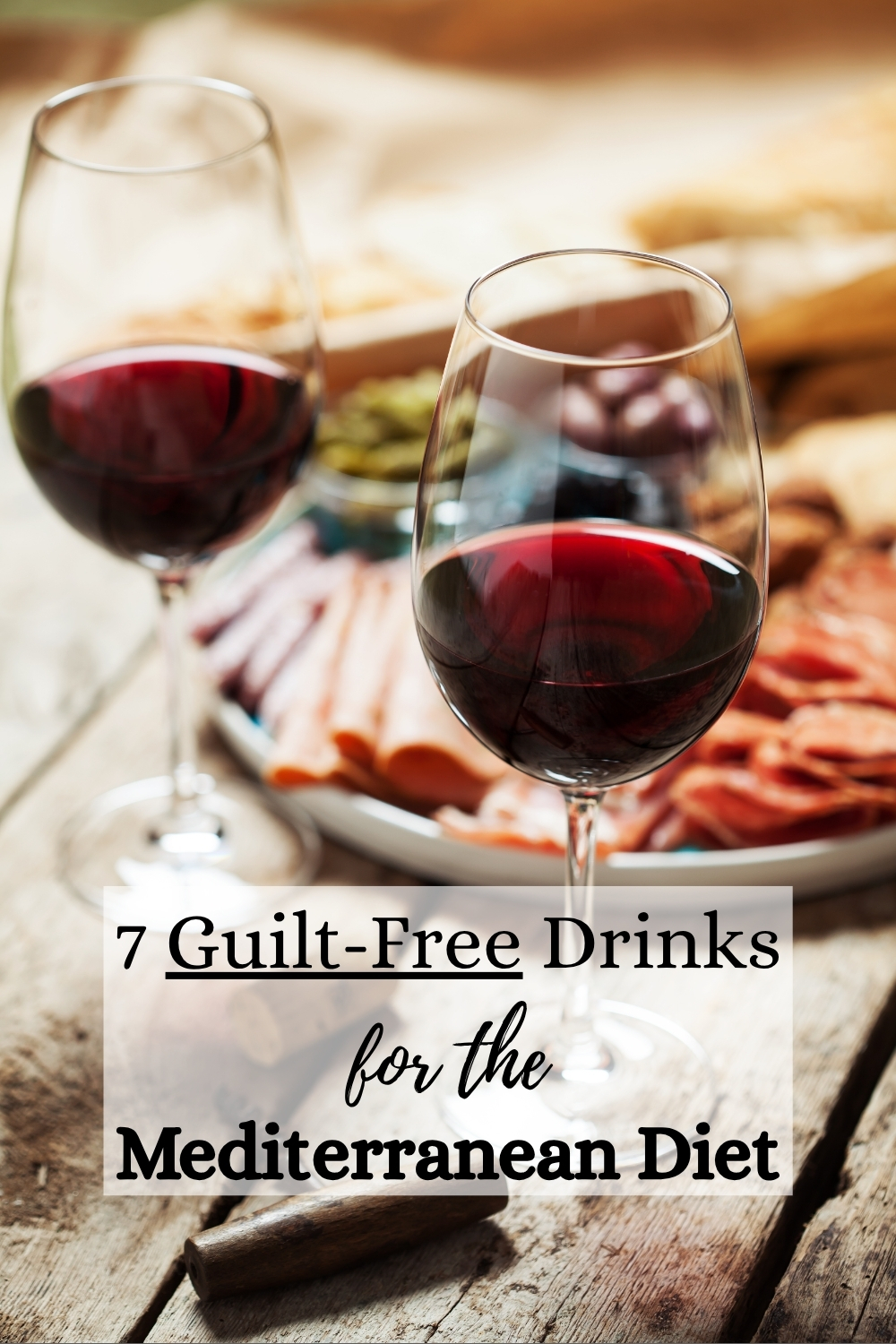
Wine is the alcohol most explicitly mentioned in traditional Mediterranean diet studies. A standard 5-ounce pour contains roughly 120 calories and minimal residual sugar. Pinot Noir and Tempranillo are excellent choices because they tend to be drier and lighter on the palate.
The skin of the dark grapes provides a small dose of resveratrol. This plant compound acts as an antioxidant in the body. You do not need to drink wine to get it, but if you are having a drink anyway, sticking to a 5-ounce pour of dry red is the most historically accurate choice.
2. The Diluted Aperol Spritz
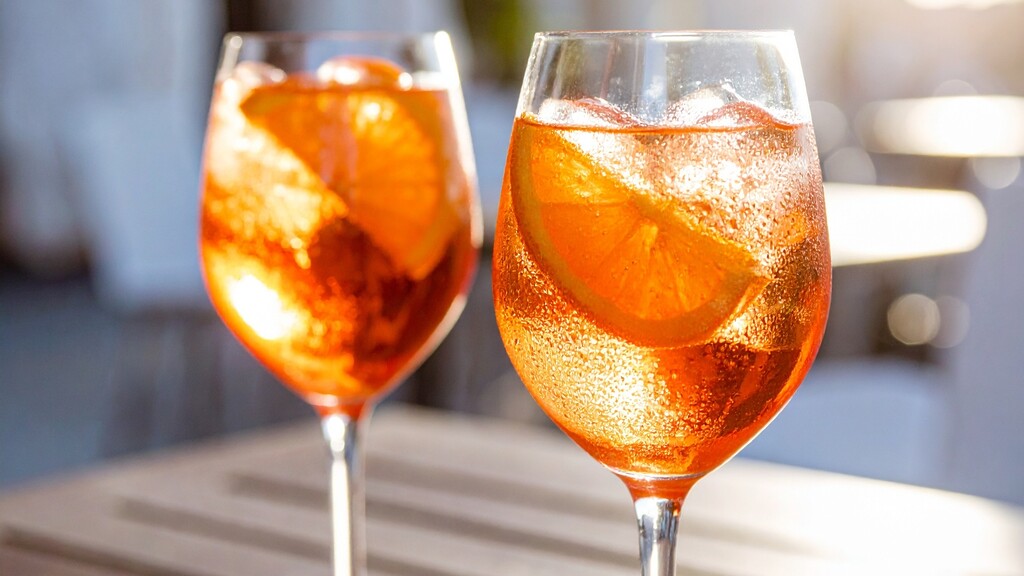
A standard spritz can easily hide 200 calories and a steep spike of sugar. You can keep the vibrant orange ritual while softening the metabolic hit by changing the ratios. The classic recipe uses more Prosecco than Aperol, plus soda water.
Instead, ask for two ounces of Prosecco and just one ounce of Aperol, topped with a heavy pour of sparkling water. The extra club soda dilutes the sugar content without killing the fizz. This brings the drink down to roughly 110 calories while extending how long it takes you to drink it.
3. Vodka Soda with Rosemary and Grapefruit
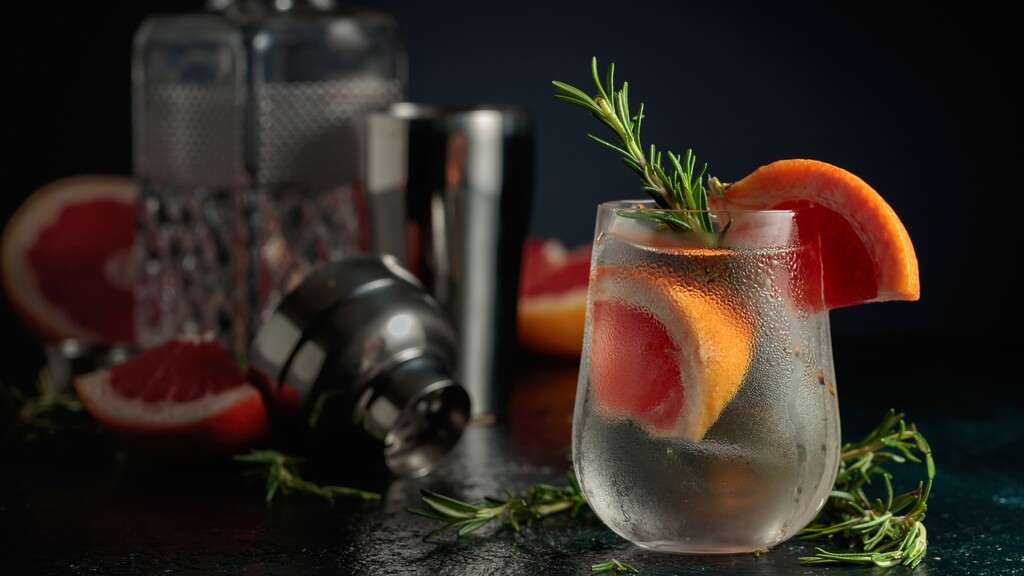
Clear liquors like vodka contain zero carbs and zero sugar. A standard 1.5-ounce shot runs about 95 calories. The mistake most people make is burying that liquor in tonic water, which can carry more than 30 grams of carbs in a 12-ounce serving.
Order your vodka with plain club soda. To make it feel like a crafted cocktail instead of a college drink, add a squeeze of fresh grapefruit and a sprig of rosemary. The herb releases fragrant oils into the bubbles as you sip. It elevates the flavor profile without adding a single calorie.
4. Bone-Dry White Wine (Sauvignon Blanc)
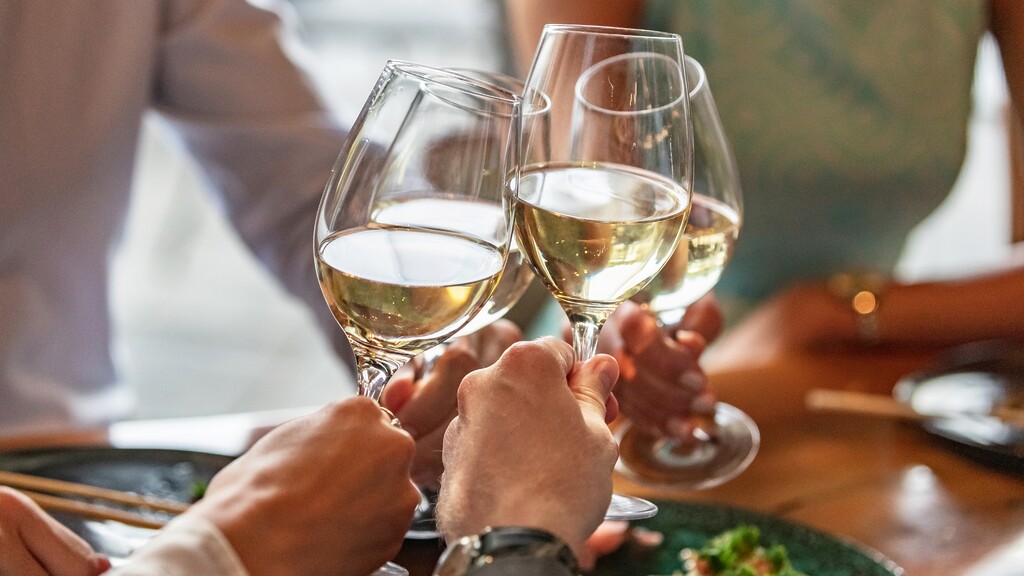
White wine absolutely fits a Mediterranean table, provided you know which bottles to look for. Sweet wines like Riesling or Moscato carry a high sugar load. A crisp, bone-dry Sauvignon Blanc or Pinot Grigio can drop the sugar to around a gram or less per glass.
A 5-ounce pour sits right around 115 calories. Look for wines labeled “bone dry” or sourced from cool climates (like New Zealand or northern Italy). Grapes grown in cooler weather produce less natural sugar, resulting in a tart, highly refreshing glass that pairs perfectly with seafood.
5. Blanco Tequila with Muddled Cucumber
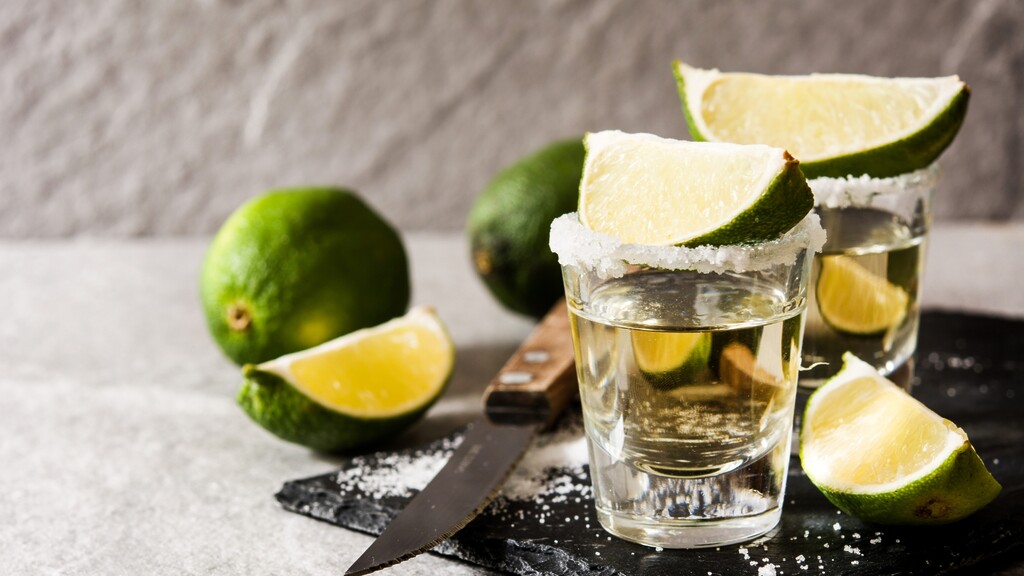
Margaritas are delicious, but the standard restaurant mix is essentially a glass of neon sugar syrup. You can capture the exact same refreshing, acidic bite by taking a more stripped-down approach.
Order 1.5 ounces of blanco tequila with muddled cucumber and fresh lime juice, topped with soda water. Blanco tequila skips the oak-aging process, keeping the drink clean and free of sugary mixers. The cucumber provides a subtle, spa-like freshness that balances the bite of the liquor for around 105 calories.
6. The Dirty Gin Martini (Mini)
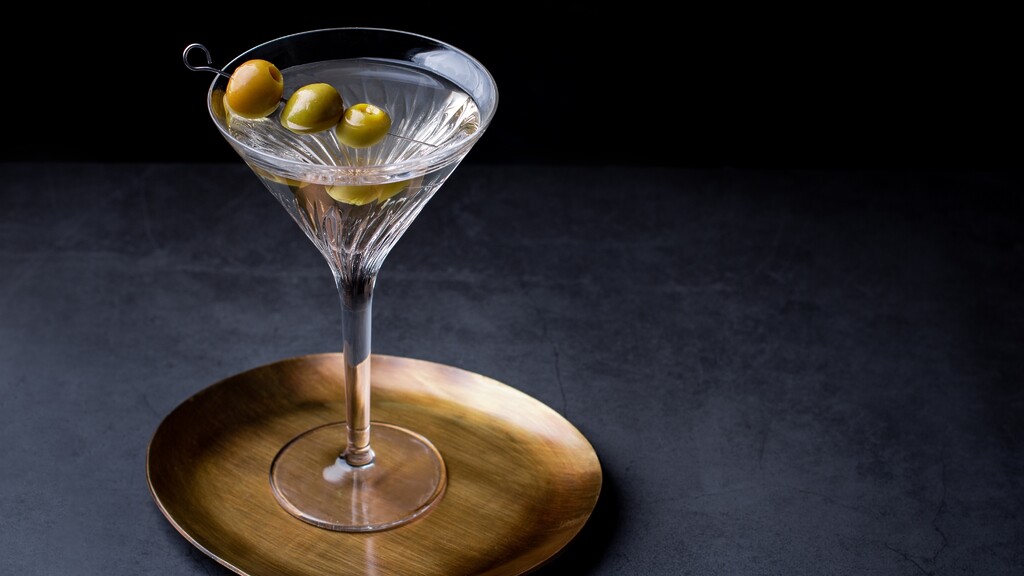
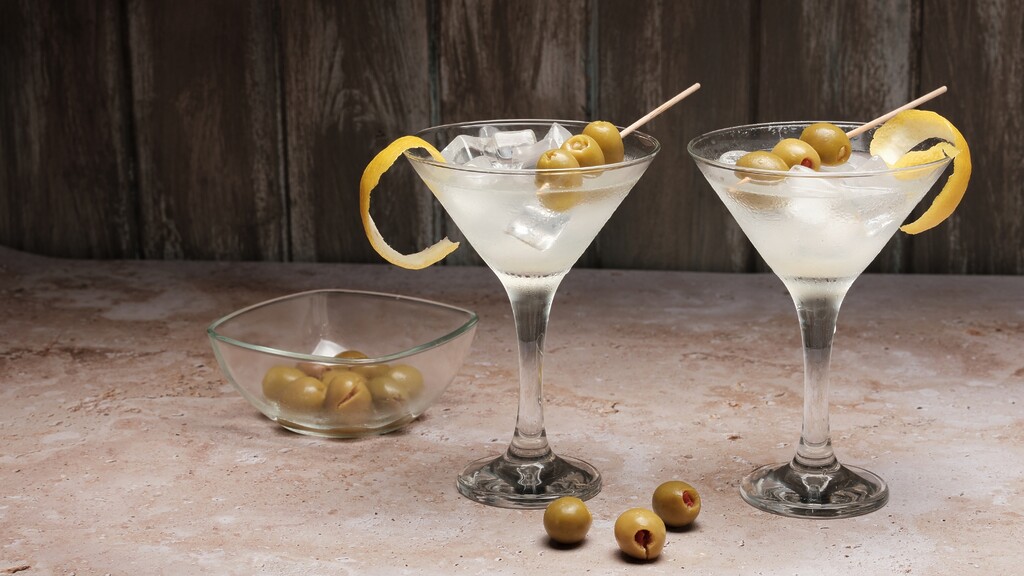
If you prefer savory over sweet, a dirty martini is a brilliant option. It is entirely free of sugar and relies on olive brine for its signature salty kick. The only danger is the sheer volume. Modern cocktail bars often pour three or four ounces of liquor into a single massive glass, turning a reasonable drink into a 300-calorie event.
The fix is asking the bartender to make it a short pour or a mini martini. Request 1.5 ounces of gin, a splash of dry vermouth, and one large olive. You get all the icy, botanical flavor of a classic martini for about 110 calories.
7. The Kombucha Shandy
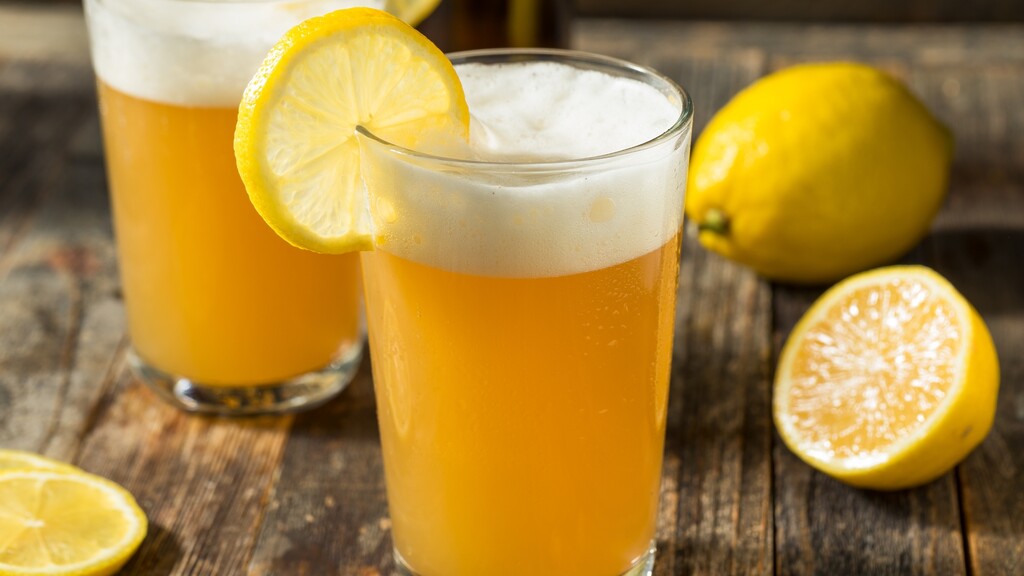
Beer is tough on a calorie budget, and many light beers sacrifice flavor to hit their numbers. A shandy traditionally mixes beer with lemonade, but you can upgrade the nutrition profile by swapping the sugary juice for a fermented tea.
Mix half a light pilsner with half a bottle of ginger kombucha. This cuts the beer portion down, landing you around 100 calories for a tall glass, depending on the kombucha. The kombucha adds carbonation and flavor while bringing in live cultures if you choose an unpasteurized brand, creating a complex drink that feels heavy but drinks light.
Frequently Asked Questions
Does hard liquor fit the Mediterranean diet?
The traditional studies focus almost exclusively on wine. Hard liquor is not a health food. However, the modern Mediterranean lifestyle emphasizes flexibility and whole foods. Clear liquors like vodka, gin, and tequila are simply distilled spirits without the heavy carbohydrates found in beer. If you mix them with sparkling water and fresh citrus instead of sugary syrups, they fit perfectly into a balanced weekend.
What about zero-calorie diet mixers?
Technically, mixing your rum with a diet soda keeps the calorie count low. But it breaks the core philosophy of Mediterranean eating. This lifestyle prioritizes real, recognizable ingredients over highly processed food products. Artificial sweeteners can bother some people's digestion. You are always better off drinking 100 calories of something real than zero calories of something artificial.
A good drink is supposed to signal the end of the workday, not the start of a sugar crash. Pour something simple, add a slice of real fruit, and go sit on the porch.
Sources
- Wine consumption, Mediterranean diet, and cardiovascular risk – European Heart Journal, 2026.
- The pharmacological properties of resveratrol – Nutrients, 2023.
- Spritz – International Bartenders Association, n.d.
- Tonic water nutrition facts – USDA data via FatSecret, n.d.
- Complementary definitions relating to sugar content – International Organisation of Vine and Wine, 2015.
- Advances in kombucha tea fermentation – Applied Microbiology, 2022.
- Coffee, alcohol, and artificial sweeteners with gastrointestinal symptoms – Digestive Diseases and Sciences, 2024.
- Lower-calorie choices for alcoholic drinks – MedlinePlus, 2024.